Galaxy S20 Ultra • Unlocked vs Galaxy S21 Ultra 5G • Unlocked

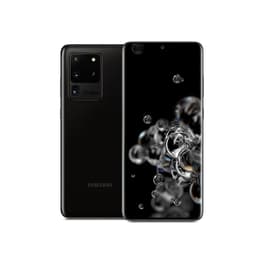
Galaxy S20 Ultra • Unlocked
Starting at

Refurbished price:$214.66

Versus $1,399.00 new

See options
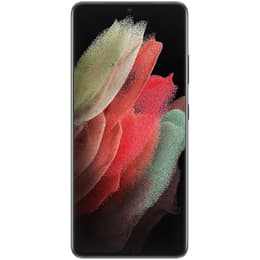
Galaxy S21 Ultra 5G • Unlocked
Starting at

Refurbished price:$199.99

Versus $1,299.99 new

See options

Ratings

The Samsung Galaxy S20 Ultra, released in February 2020, and the Samsung Galaxy S21 Ultra 5G, launched in January 2021, represent two generations of Samsung's top-tier smartphone offerings. While both devices aim to deliver a premium Android experience with large displays and advanced camera systems, the S21 Ultra introduces refinements in display technology, camera capabilities, and connectivity, alongside the notable addition of S Pen support.

Scores

Durability

When considering the long-term usability of these devices, their release timelines and software support play a significant role.

  • Release Timeline: The Galaxy S20 Ultra was released in February 2020, while the Galaxy S21 Ultra 5G followed in January 2021. This one-year difference means the S21 Ultra will generally receive software updates for a longer period.
  • OS Support: The Galaxy S20 Ultra launched with Android 10 and is expected to receive major Android updates up to Android 13. The Galaxy S21 Ultra 5G, starting with Android 11, is anticipated to receive updates up to Android 15, offering an additional year of software longevity.
  • Repairability: Both devices present challenges for repair. The S20 Ultra received an iFixit repairability score of 3 out of 10, primarily due to strong adhesives and a glued-down battery. The S21 Ultra 5G also scored 3 out of 10 from iFixit, facing similar difficulties with adhesive and glass construction.

Release Year

2020

2021

Last OS Compatibility

No

Yes

OS

Android

Android

Foldable

No

No

Performance

Both the Galaxy S20 Ultra and S21 Ultra 5G are equipped with powerful internal components designed for demanding tasks, though the newer model brings generational improvements.

  • Processing Power: The Galaxy S20 Ultra features a processor capable of handling intensive applications and multitasking smoothly. The Galaxy S21 Ultra 5G incorporates a newer generation processor, providing enhanced speed and greater energy efficiency, which translates to even smoother performance for demanding apps and gaming.
  • Multitasking and Storage: Both models offer substantial RAM options, typically 12GB or 16GB, ensuring efficient multitasking and app management. Storage configurations range from 128GB to 512GB, providing ample space for applications, media, and files.
  • Battery Behavior: Both devices are powered by a 5000mAh battery. The S21 Ultra 5G's more efficient processor and adaptive refresh rate display contribute to optimized battery usage, often resulting in consistent performance throughout a full day of typical use.

Memory

12 GB

12 GB

Screen quality

The display experience is a highlight for both Ultra models, offering large, vibrant panels, but the S21 Ultra 5G introduces key advancements.

  • Display Technology and Size: Both phones feature a Dynamic AMOLED 2X display. The S20 Ultra has a 6.9-inch screen, while the S21 Ultra 5G has a slightly smaller 6.8-inch display. Both offer a sharp 3200x1440 pixel resolution.
  • Refresh Rate and Brightness: The S20 Ultra supports a 120Hz refresh rate, but only at Full HD+ resolution. The S21 Ultra 5G improves upon this by offering an adaptive refresh rate (10-120Hz) that can operate at the full Quad HD+ resolution, providing a smoother visual experience without compromising clarity. The S21 Ultra also boasts a higher peak brightness of 1500 nits compared to the S20 Ultra's 1342 nits, enhancing outdoor visibility.
  • Durability: The S20 Ultra uses Corning Gorilla Glass 6 for screen protection. The S21 Ultra 5G features the tougher Corning Gorilla Glass Victus on both the front and back, offering improved scratch and drop resistance.

Resolution

1440 x 3200

1440 x 3200

Screen type

Dynamic AMOLED 2X

Dynamic AMOLED 2X

Audiovisual

Both devices feature advanced camera systems, but the Galaxy S21 Ultra 5G brings significant enhancements, particularly in zoom capabilities and autofocus reliability.

  • Main Camera: Both phones are equipped with a 108MP main sensor. The S20 Ultra initially faced autofocus issues with its main sensor, which were largely addressed in the S21 Ultra 5G through an improved sensor and the addition of a laser autofocus system.
  • Zoom Capabilities: The S20 Ultra features a 48MP telephoto lens with 10x hybrid optic zoom and up to 100x digital 'Space Zoom'. While impressive on paper, the 100x zoom often resulted in soft, less usable images. The S21 Ultra 5G introduces a dual telephoto system with two 10MP lenses, offering dedicated 3x and 10x optical zoom, which provides more consistent and higher-quality zoomed images, even at higher magnifications.
  • Video and Other Features: Both models support 8K video recording. The S21 Ultra 5G also offers features like Director's View for video recording and improved low-light performance. The front-facing cameras on both are 40MP, capable of capturing detailed selfies.

Main camera

108 megapixels

108 megapixels

Front camera

40 megapixels

40 megapixels

Miscellaneous

Beyond the core features, several practical elements differentiate these two flagship smartphones.

  • Connectivity: Both devices support 5G networks. The S21 Ultra 5G advances connectivity with support for Wi-Fi 6E, offering more bandwidth and potentially faster internet speeds, and includes Ultra-wideband (UWB) capabilities for enhanced spatial awareness and device interactions.
  • Ports and Sensors: Both phones utilize a USB Type-C port for charging and data transfer. Neither includes a 3.5mm headphone jack. For biometric security, both feature an in-display ultrasonic fingerprint sensor and face recognition.
  • S Pen Support: A significant addition to the S21 Ultra 5G is its compatibility with the S Pen, previously exclusive to the Note series. This allows for note-taking and drawing, though the S Pen is sold separately. The S20 Ultra does not support S Pen input.
  • Build Materials and Dimensions: Both phones feature a glass front and back with an aluminum frame and are IP68 rated for dust and water resistance. The S20 Ultra measures 166.9 x 76.0 x 8.8 mm and weighs 222g. The S21 Ultra 5G is slightly more compact at 165.1 x 75.6 x 8.9 mm and weighs 227g or 229g depending on the variant.

Weight

8 oz

8 oz

Screen size (inches)

6.9

6.8

Network

LTE

5G

SIM card

Physical SIM + eSIM

Physical SIM + eSIM

Carrier compatibility

Unlocked

Unlocked

Connector

USB-C

USB-C

User sentiment often highlights the Galaxy S20 Ultra's impressive display and powerful hardware for its time. Common praise points included its large screen and robust camera system, despite some initial autofocus concerns. Criticisms frequently revolved around the inconsistent performance of the 100x Space Zoom and the battery drain when using the 120Hz refresh rate at lower resolutions.

The Galaxy S21 Ultra 5G generally received positive feedback for addressing many of its predecessor's shortcomings. Users often praised its refined camera system with improved autofocus and more practical optical zoom, the ability to use the 120Hz refresh rate at full resolution, and the inclusion of S Pen support. Some users noted that while the S21 Ultra was a significant upgrade, its repairability remained a challenge, similar to the S20 Ultra.

Users prioritizing a slightly larger display and a still-capable camera system might find the Galaxy S20 Ultra suitable. However, those who value a more refined and versatile camera experience, especially for zoom photography, along with a more advanced display that supports a high refresh rate at maximum resolution, and the added functionality of S Pen compatibility, will likely find the Galaxy S21 Ultra 5G better suited to their needs. The S21 Ultra also offers extended software support and newer connectivity standards like Wi-Fi 6E. For those considering either device, exploring quality-assured refurbished options can be an eco-friendly alternative to extend the life cycle of these advanced smartphones.

See all articles

Our recent comparisons