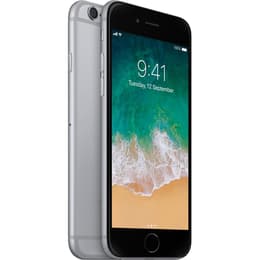
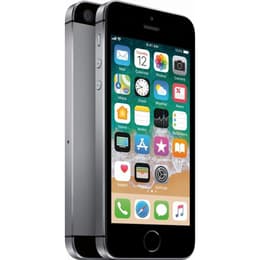
iPhone 6 • Unlocked vs iPhone SE (2016) • Unlocked

iPhone 6 • Unlocked
iPhone 6 • Unlocked
See options
iPhone SE (2016) • Unlocked
Starting at

Refurbished price:$75.00

Versus $249.00 new

See options

Ratings

The iPhone 6, released in September 2014, and the iPhone SE (2016), launched in March 2016, represent distinct approaches to smartphone design from Apple. While the iPhone 6 introduced a larger display and a new rounded aesthetic, the iPhone SE (2016) brought updated internal components into a more compact, classic form factor. These differences primarily impact screen size, processing power, and camera capabilities, catering to users with varying preferences for device handling and performance needs.

Scores

Durability

When considering the practical lifespan of these devices, their release timelines and subsequent software support are key factors.

  • Release Timeline: The iPhone 6 was introduced in 2014, making it an older device compared to the iPhone SE (2016), which arrived in 2016. This two-year difference in release impacts their respective support cycles.
  • OS Support Duration: The iPhone 6 received its last major iOS update with iOS 12.5.8, released in January 2026, while the iPhone SE (2016) extended its support to iOS 15.8.7, released in March 2026. This means the iPhone SE (2016) benefits from a longer period of software updates, offering access to newer features and security patches for a longer duration.
  • Repairability: The iPhone 6 generally received a repairability score of 7 out of 10 from experts, noting that the display is relatively easy to remove, simplifying screen repairs. The iPhone SE (2016) scored slightly lower at 6 out of 10, with the placement of the Touch ID making it a bit more intricate to open, though the battery remains accessible for replacement.

Release Year

2014

2016

Last OS Compatibility

No

No

OS

iOS

iOS

Foldable

No

No

Performance

The performance of these two smartphones varies due to their internal hardware, affecting how smoothly they handle applications and multitasking.

  • Processor Capabilities: The iPhone SE (2016) incorporates a more advanced processor, which translates to faster app loading times and a more responsive user experience compared to the iPhone 6. This newer processor also contributes to better overall system responsiveness, especially when navigating the interface or switching between applications.
  • Multitasking and Responsiveness: Users of the iPhone SE (2016) may experience smoother multitasking and quicker transitions between apps due to its more capable internal components. The iPhone 6, with its older generation processor, may show more noticeable delays when running demanding applications or handling multiple tasks simultaneously.
  • Battery Behavior: Despite the iPhone SE (2016) having a slightly smaller battery capacity (1624 mAh) than the iPhone 6 (1810 mAh), its more efficient processor and smaller display can result in comparable or even better real-world battery endurance for typical usage. Some users have reported good standby battery life on the iPhone SE (2016).

Memory

1 GB

2 GB

Screen quality

The display is a primary interface for any smartphone, and these two models offer different viewing experiences primarily due to their size.

  • Display Technology and Size: The iPhone 6 features a 4.7-inch IPS LCD display, providing a larger viewing area. In contrast, the iPhone SE (2016) has a more compact 4.0-inch IPS LCD screen, which some users find ideal for one-handed operation. Both displays offer a pixel density of 326 pixels per inch (ppi), meaning text and images appear similarly sharp on both devices.
  • Resolution and Clarity: The iPhone 6 offers a resolution of 1334 x 750 pixels, while the iPhone SE (2016) has a resolution of 1136 x 640 pixels. Despite the difference in total pixels, the consistent pixel density ensures a clear viewing experience on both, though the larger screen of the iPhone 6 provides more screen real estate.
  • Brightness and Viewing Experience: Both models typically offer a maximum brightness of around 500 cd/m², providing adequate visibility in various lighting conditions. The iPhone 6's larger screen is often praised for making media consumption and web browsing more comfortable.

Resolution

750 x 1334

640 x 1136

Audiovisual

The camera systems on the iPhone 6 and iPhone SE (2016) present notable differences, particularly in their main rear cameras and video capabilities.

  • Main Camera System: The iPhone 6 is equipped with an 8-megapixel rear camera, which was considered capable at its release. The iPhone SE (2016) features a 12-megapixel rear camera, offering higher resolution and improved image processing capabilities due to its newer processor. This often results in sharper details and better color fidelity in photos taken with the iPhone SE (2016).
  • Video Recording Quality: A significant advantage for the iPhone SE (2016) is its ability to record 4K video at 30 frames per second, a feature not available on the iPhone 6, which is limited to 1080p video recording. This provides a noticeable upgrade in video detail and clarity for the SE.
  • Front Camera and Photography Performance: Both devices feature a 1.2-megapixel front-facing camera, which is suitable for basic video calls and selfies but may struggle in low-light conditions. While the iPhone 6's camera was well-regarded for its time, the iPhone SE (2016) generally delivers a more modern photography experience, especially in terms of detail and processing.

Miscellaneous

Beyond the core features, several other aspects contribute to the overall user experience and practical utility of these devices.

  • Connectivity and Ports: Both the iPhone 6 and iPhone SE (2016) support 4G LTE, Wi-Fi 802.11ac, and Bluetooth. They both retain the 3.5mm headphone jack, a feature that some users prefer. Both also utilize the Lightning port for charging and data transfer.
  • Sensors and Security: Both models include Touch ID for fingerprint recognition, providing a secure and convenient method for unlocking the device and authorizing purchases. The iPhone SE (2016) features a first-generation Touch ID sensor.
  • Physical Design and Handling: The iPhone 6 introduced a thinner, more rounded design, weighing 129 grams. The iPhone SE (2016) adopted the more angular, compact design of earlier iPhones, weighing 113 grams, making it lighter and easier for one-handed use for many. The iPhone 6's smooth aluminum finish was sometimes noted as being slippery.

Weight

8000 oz

4 oz

Screen size (inches)

4.7

4

Network

LTE

LTE

SIM card

Physical SIM

Physical SIM

Carrier compatibility

Unlocked

Unlocked

Connector

Lightning

Lightning + Jack 3.5mm

User sentiment for the iPhone 6 often highlighted its larger screen as a significant improvement over previous models, making media consumption more enjoyable. Its design was generally well-received, though some users found it slippery to hold. Criticisms sometimes focused on its battery life for heavy users and the protruding camera lens. The iPhone SE (2016) garnered praise for its powerful performance packed into a compact, one-handed friendly design, and its improved camera capabilities for its size. Common concerns included its older aesthetic and the relatively low-resolution front camera.

Users prioritizing a larger display for media and web browsing may find the iPhone 6 more suitable. Conversely, those who value a compact form factor, enhanced processing power for smoother app performance, and a more capable rear camera, especially for video recording, will likely lean towards the iPhone SE (2016). The iPhone SE (2016) also offers a longer period of software support, which can be a deciding factor for users planning to keep their device for an extended time.

For those considering either of these models, exploring quality-assured refurbished options can provide an eco-friendly alternative to purchasing new devices.
See all articles

Our recent comparisons