'%3e%3cpath%20fill='%23f0f0f0'%20d='M40%200H0v26.667h40V0'/%3e%3cpath%20fill='%23d80027'%20d='M40%2024.5v2.1H0v-2.1h40m0-2.15H0v-2.1h40v2.1m0-4H0v-2.1h40v2.1m0-4H0v-2.1h40v2.1m0-4.25H0V8h40v2.1m0-4H0V4h40v2.1m0-4H0V0h40v2.1'/%3e%3cpath%20fill='%232e52b2'%20d='M20%200H0v14.36h20V0'/%3e%3cpath%20fill='%23f0f0f0'%20d='M1.927%2012.964H2.5l-.464.337.178.545L1.75%2013.51l-.464.336.178-.545L1%2012.964h.573L1.75%2012.42l.177.545m3.172%200h.573l-.464.337.177.545-.463-.336-.464.336.178-.545-.464-.337h.573l.177-.545.177.545m3.172%200h.573L8.38%2013.301l.177.545-.463-.336-.464.336.177-.545-.463-.337h.572l.178-.545.177.545m3.171%200h.574l-.464.337.177.545-.463-.336-.464.336.177-.545-.463-.337h.572l.178-.545.176.545m3.485%200H15.5l-.464.337.178.545-.464-.336-.464.336.178-.545L14%2012.964h.573l.177-.545.177.545m3.5%200H19l-.464.337.178.545-.464-.336-.464.336.178-.545-.464-.337h.573l.177-.545.177.545m-15-1.406H4l-.464.337.178.545-.464-.337-.464.337.178-.545L2.5%2011.558h.573l.177-.545.177.545m3.172%200h.573l-.464.337.177.545-.463-.337-.464.337.178-.545-.464-.337h.573l.177-.545.177.545m3.172%200h.573L9.88%2011.895l.177.545-.463-.337L9.13%2012.44l.177-.545-.463-.337h.572l.178-.545.177.545m3.171%200h.574l-.464.337.177.545-.463-.337-.464.337.177-.545-.463-.337h.572l.178-.545.176.545m3.485%200H17l-.464.337.178.545-.464-.337-.464.337.178-.545-.464-.337h.573l.177-.545.177.545m-14.5-1.57H2.5l-.464.337.178.545-.464-.337-.464.337.178-.545L1%209.988h.573L1.75%209.443l.177.545m3.172%200h.573l-.464.337.177.545-.463-.337-.464.337.178-.545-.464-.337h.573l.177-.545.177.545m3.172%200h.573L8.38%2010.325l.177.545-.463-.337L7.63%2010.87l.177-.545-.463-.337h.572l.178-.545.177.545m3.171%200h.574l-.464.337.177.545-.463-.337-.464.337.177-.545-.463-.337h.572l.178-.545.176.545m3.485%200H15.5l-.464.337.178.545-.464-.337-.464.337.178-.545L14%209.988h.573l.177-.545.177.545m3.5%200H19l-.464.337.178.545-.464-.337-.464.337.178-.545L17.5%209.988h.573l.177-.545.177.545m-15-1.43H4L3.536%208.895%203.714%209.44%203.25%209.103%202.786%209.44l.178-.545L2.5%208.558h.573L3.25%208.013l.177.545m3.172%200h.573L6.708%208.895%206.885%209.44%206.422%209.103%205.958%209.44l.178-.545-.464-.337h.573l.177-.545.177.545m3.172%200h.573L9.88%208.895l.177.545-.463-.337L9.13%209.44l.177-.545-.463-.337h.572l.178-.545.177.545m3.171%200h.574l-.464.337.177.545-.463-.337-.464.337.177-.545-.463-.337h.572l.178-.545.176.545m3.485%200H17l-.464.337.178.545-.464-.337-.464.337.178-.545L15.5%208.558h.573l.177-.545.177.545m-14.5-1.547H2.5L2.036%207.348l.178.545L1.75%207.556%201.286%207.893l.178-.545L1%207.011h.573L1.75%206.466l.177.545m3.172%200h.573L5.208%207.348l.177.545-.463-.337-.464.337.178-.545-.464-.337h.573l.177-.545.177.545m3.172%200h.573L8.38%207.348l.177.545-.463-.337L7.63%207.893l.177-.545-.463-.337h.572l.178-.545.177.545m3.171%200h.574l-.464.337.177.545-.463-.337-.464.337.177-.545-.463-.337h.572l.178-.545.176.545m3.485%200H15.5l-.464.337.178.545-.464-.337-.464.337.178-.545L14%207.011h.573l.177-.545.177.545m3.5%200H19l-.464.337.178.545-.464-.337-.464.337.178-.545L17.5%207.011h.573l.177-.545.177.545m-15-1.453H4L3.536%205.895%203.714%206.44%203.25%206.103%202.786%206.44l.178-.545L2.5%205.558h.573L3.25%205.013l.177.545m3.172%200h.573L6.708%205.895%206.885%206.44%206.422%206.103%205.958%206.44l.178-.545-.464-.337h.573l.177-.545.177.545m3.172%200h.573L9.88%205.895l.177.545-.463-.337L9.13%206.44l.177-.545-.463-.337h.572l.178-.545.177.545m3.171%200h.574l-.464.337.177.545-.463-.337-.464.337.177-.545-.463-.337h.572l.178-.545.176.545m3.485%200H17l-.464.337.178.545-.464-.337-.464.337.178-.545L15.5%205.558h.573l.177-.545.177.545m-14.5-1.523H2.5L2.036%204.37l.178.545L1.75%204.58%201.286%204.916l.178-.545L1%204.035h.573L1.75%203.49l.177.545m3.172%200h.573L5.208%204.37l.177.545L4.922%204.58%204.458%204.916l.178-.545-.464-.336h.573L4.922%203.49l.177.545m3.172%200h.573L8.38%204.37l.177.545L8.094%204.58%207.63%204.916l.177-.545-.463-.336h.572L8.094%203.49%208.27%204.035m3.171%200h.574L11.552%204.37l.177.545-.463-.337-.464.337.177-.545-.463-.336h.572l.178-.545.176.545m3.485%200H15.5L15.036%204.37l.178.545L14.75%204.58l-.464.337.178-.545L14%204.035h.573L14.75%203.49l.177.545m3.5%200H19L18.536%204.37l.178.545L18.25%204.58l-.464.337.178-.545L17.5%204.035h.573L18.25%203.49l.177.545m-15-1.477H4L3.536%202.895%203.714%203.44%203.25%203.103%202.786%203.44l.178-.545L2.5%202.558h.573L3.25%202.013l.177.545m3.172%200h.573L6.708%202.895%206.885%203.44%206.422%203.103%205.958%203.44l.178-.545-.464-.337h.573l.177-.545.177.545m3.172%200h.573L9.88%202.895l.177.545-.463-.337L9.13%203.44l.177-.545-.463-.337h.572l.178-.545.177.545m3.171%200h.574l-.464.337.177.545-.463-.337-.464.337.177-.545-.463-.337h.572l.178-.545.176.545m3.485%200H17l-.464.337.178.545-.464-.337-.464.337.178-.545L15.5%202.558h.573l.177-.545.177.545m-14.5-1.5H2.5L2.036%201.395%202.214%201.94%201.75%201.603%201.286%201.94l.178-.545L1%201.058h.573L1.75.513l.177.545m3.172%200h.573L5.208%201.395%205.385%201.94%204.922%201.603%204.458%201.94l.178-.545-.464-.337h.573l.177-.545.177.545m3.172%200h.573L8.38%201.395%208.557%201.94%208.094%201.603%207.63%201.94l.177-.545-.463-.337h.572l.178-.545.177.545m3.171%200h.574l-.464.337.177.545-.463-.337-.464.337.177-.545-.463-.337h.572l.178-.545.176.545m3.485%200H15.5l-.464.337.178.545-.464-.337-.464.337.178-.545L14%201.058h.573l.177-.545.177.545m3.5%200H19l-.464.337.178.545-.464-.337-.464.337.178-.545L17.5%201.058h.573l.177-.545.177.545'/%3e%3c/g%3e%3cdefs%3e%3cclipPath%20id='country-flag-us-a'%3e%3cpath%20fill='%23fff'%20d='M0%200h40v26.67H0z'/%3e%3c/clipPath%3e%3c/defs%3e%3c/svg%3e)
'%3e%3cpath%20fill='%23f0f0f0'%20d='M40%200H0v26.666h40V0'/%3e%3cpath%20fill='%23d80027'%20d='M40%200H0v8.889h40V0m0%2017.778H0v8.888h40v-8.888'/%3e%3c/g%3e%3cdefs%3e%3cclipPath%20id='country-flag-at-a'%3e%3cpath%20fill='%23fff'%20d='M0%200h40v26.67H0z'/%3e%3c/clipPath%3e%3c/defs%3e%3c/svg%3e)
'%3e%3cpath%20fill='%2310338c'%20d='M0%200h40v26.67H0V0'/%3e%3cpath%20fill='%23fff'%20d='m9.899%2016.971.856%201.828%201.922-.455-.856%201.82%201.549%201.261-1.93.447.008%202.028-1.55-1.27-1.54%201.27.008-2.028-1.93-.447%201.548-1.26-.863-1.82%201.93.454.848-1.828m20.226%203.552.404.87.919-.215-.413.87.74.599-.919.207v.974l-.732-.607-.739.607.008-.974-.918-.207.739-.599-.412-.87.918.215.405-.87M25.097%209.986l.405.87.918-.215-.412.87.74.599-.92.215v.966l-.73-.607-.74.607.008-.966-.926-.215.739-.599-.412-.87.918.215.412-.87m5.028-7.2.404.87.919-.215-.413.87.74.598-.919.216V6.09l-.732-.607-.739.607.008-.966-.918-.216.739-.598-.412-.87.918.215.405-.87m4.552%205.245.405.87L36%208.685l-.413.87.74.599-.918.207v.974l-.732-.606-.74.606v-.974l-.918-.207.74-.599-.413-.87.919.216.412-.87m-2.91%205.26.319%201.014h1.035l-.84.623.326%201.013-.84-.63-.84.63.318-1.014-.833-.622h1.036l.319-1.014M19.922%200v2.443l-3.51%202.003h3.51V9.18h-4.599l4.6%202.618v1.828h-2.079l-5.72-3.264v3.264H7.799v-3.88l-6.802%203.88H0v-2.442L3.518%209.18H0V4.446h4.6L0%201.82V0h2.078l5.72%203.257V0h4.326v3.88L18.935%200h.988'/%3e%3cpath%20fill='%23d80027'%20d='M11.206%200h-2.49v5.532H0v2.554h8.716v5.54h2.49v-5.54h8.716V5.532h-8.716V0'/%3e%3cpath%20fill='%230052b4'%20d='m12.125%209.18%207.797%204.446v-1.26L14.335%209.18h-2.21'/%3e%3cpath%20fill='%23fff'%20d='m12.125%209.18%207.797%204.446v-1.26L14.335%209.18h-2.21'/%3e%3cpath%20fill='%23d80027'%20d='m12.125%209.18%207.797%204.446v-1.26L14.335%209.18h-2.21m-6.53%200L0%2012.365v1.261L7.798%209.18H5.595'/%3e%3cpath%20fill='%230052b4'%20d='M7.798%204.446%200%200v1.253l5.595%203.193h2.203'/%3e%3cpath%20fill='%23fff'%20d='M7.798%204.446%200%200v1.253l5.595%203.193h2.203'/%3e%3cpath%20fill='%23d80027'%20d='M7.798%204.446%200%200v1.253l5.595%203.193h2.203m6.537%200%205.587-3.193V0l-7.798%204.446h2.21'/%3e%3c/g%3e%3cdefs%3e%3cclipPath%20id='country-flag-au-a'%3e%3cpath%20fill='%23fff'%20d='M0%200h40v26.67H0z'/%3e%3c/clipPath%3e%3c/defs%3e%3c/svg%3e)
'%3e%3cpath%20fill='%23ffda44'%20d='M40%200H0v26.67h40V0'/%3e%3cpath%20fill='%23000'%20d='M13.333%200H0v26.67h13.333V0'/%3e%3cpath%20fill='%23d80027'%20d='M40%200H26.667v26.67H40V0'/%3e%3c/g%3e%3cdefs%3e%3cclipPath%20id='country-flag-be-a'%3e%3cpath%20fill='%23fff'%20d='M0%200h40v26.67H0z'/%3e%3c/clipPath%3e%3c/defs%3e%3c/svg%3e)
'%3e%3cpath%20fill='%23000'%20d='M40%200H0v8.89h40V0'/%3e%3cpath%20fill='%23d80027'%20d='M40%208.89H0v8.89h40V8.89'/%3e%3cpath%20fill='%23ffda44'%20d='M40%2017.78H0v8.89h40v-8.89'/%3e%3c/g%3e%3cdefs%3e%3cclipPath%20id='country-flag-de-a'%3e%3cpath%20fill='%23fff'%20d='M0%200h40v26.67H0z'/%3e%3c/clipPath%3e%3c/defs%3e%3c/svg%3e)
'%3e%3cpath%20fill='%23ffda44'%20d='M40%200H0v26.667h40V0'/%3e%3cpath%20fill='%23d80027'%20d='M40%200H0v8.889h40V0m0%2017.777H0v8.89h40v-8.89'/%3e%3c/g%3e%3cdefs%3e%3cclipPath%20id='country-flag-es-a'%3e%3cpath%20fill='%23fff'%20d='M0%200h40v26.67H0z'/%3e%3c/clipPath%3e%3c/defs%3e%3c/svg%3e)
'%3e%3cpath%20fill='%23f0f0f0'%20d='M40%200H0v26.667h40V0'/%3e%3cpath%20fill='%232e52b2'%20d='M40%2011.667V15H14.348v11.667h-3.334V15H0v-3.333h11.014V0h3.334v11.667H40'/%3e%3c/g%3e%3cdefs%3e%3cclipPath%20id='country-flag-fi-a'%3e%3cpath%20fill='%23fff'%20d='M0%200h40v26.67H0z'/%3e%3c/clipPath%3e%3c/defs%3e%3c/svg%3e)
'%3e%3cpath%20fill='%23f0f0f0'%20d='M40%200H0v26.667h40V0'/%3e%3cpath%20fill='%230052b4'%20d='M13.333%200H0v26.667h13.333V0'/%3e%3cpath%20fill='%23d80027'%20d='M40%200H26.667v26.667H40V0'/%3e%3c/g%3e%3cdefs%3e%3cclipPath%20id='country-flag-fr-a'%3e%3cpath%20fill='%23fff'%20d='M0%200h40v26.67H0z'/%3e%3c/clipPath%3e%3c/defs%3e%3c/svg%3e)
'%3e%3cpath%20fill='%23f0f0f0'%20d='M40%200H0v26.667h40V0'/%3e%3cpath%20fill='%23d80027'%20d='M22.5%200h-5v10.833H0v5h17.5v10.833h5V15.833H40v-5H22.5V0'/%3e%3cpath%20fill='%230052b4'%20d='M30.765%2017.97%2040%2023.102v-5.13h-9.235m-6.417-.002L40%2026.667v-2.459l-11.226-6.236h-4.426m11.482%208.694-11.482-6.38v6.38H35.83'/%3e%3cpath%20fill='%23f0f0f0'%20d='M24.348%2017.97%2040%2026.667v-2.459l-11.226-6.236h-4.426'/%3e%3cpath%20fill='%23d80027'%20d='M24.348%2017.97%2040%2026.667v-2.459l-11.226-6.236h-4.426'/%3e%3cpath%20fill='%230052b4'%20d='M7.058%2017.97%200%2021.891v-3.92h7.058m8.594%201.105v7.59H1.992l13.66-7.59'/%3e%3cpath%20fill='%23d80027'%20d='M11.226%2017.97%200%2024.208v2.46l15.652-8.696h-4.426'/%3e%3cpath%20fill='%230052b4'%20d='M9.235%208.696%200%203.565v5.13h9.235m6.417.001L0%200v2.459l11.226%206.237h4.426M4.17%200l11.482%206.38V0H4.17'/%3e%3cpath%20fill='%23f0f0f0'%20d='M15.652%208.696%200%200v2.459l11.226%206.237h4.426'/%3e%3cpath%20fill='%23d80027'%20d='M15.652%208.696%200%200v2.459l11.226%206.237h4.426'/%3e%3cpath%20fill='%230052b4'%20d='M32.942%208.696%2040%204.774v3.922h-7.058M24.348%207.59V0h13.66l-13.66%207.59'/%3e%3cpath%20fill='%23d80027'%20d='M28.774%208.696%2040%202.459V0L24.348%208.696h4.426'/%3e%3c/g%3e%3cdefs%3e%3cclipPath%20id='country-flag-gb-a'%3e%3cpath%20fill='%23fff'%20d='M0%200h40v26.67H0z'/%3e%3c/clipPath%3e%3c/defs%3e%3c/svg%3e)
'%3e%3cpath%20fill='%23f0f0f0'%20d='M40%200H0v26.666h40V0'/%3e%3cpath%20fill='%23338af3'%20d='M40%200H0v3.333h40V0m0%206.667H0V10h40V6.667m0%206.667H0v3.333h40v-3.334M40%2020H0v3.333h40V20'/%3e%3cpath%20fill='%23338af3'%20d='M14.782%200H0v13.334h14.782V0'/%3e%3cpath%20fill='%23f0f0f0'%20d='M14.782%205.186H0v2.962h14.782V5.186'/%3e%3cpath%20fill='%23f0f0f0'%20d='M8.872%200H5.91v13.334h2.962V0'/%3e%3c/g%3e%3cdefs%3e%3cclipPath%20id='country-flag-gr-a'%3e%3cpath%20fill='%23fff'%20d='M0%200h40v26.67H0z'/%3e%3c/clipPath%3e%3c/defs%3e%3c/svg%3e)
'%3e%3cpath%20fill='%23f0f0f0'%20d='M40%200H0v26.666h40V0'/%3e%3cpath%20fill='%236da544'%20d='M13.333%200H0v26.667h13.333V0'/%3e%3cpath%20fill='%23ff9811'%20d='M40%200H26.667v26.667H40V0'/%3e%3c/g%3e%3cdefs%3e%3cclipPath%20id='country-flag-ie-a'%3e%3cpath%20fill='%23fff'%20d='M0%200h40v26.67H0z'/%3e%3c/clipPath%3e%3c/defs%3e%3c/svg%3e)
'%3e%3cpath%20fill='%23f0f0f0'%20d='M26.667%200H0v26.667h40V0H26.667'/%3e%3cpath%20fill='%236da544'%20d='M13.333%200H0v26.667h13.333V0'/%3e%3cpath%20fill='%23d80027'%20d='M40%200H26.667v26.667H40V0'/%3e%3c/g%3e%3cdefs%3e%3cclipPath%20id='country-flag-it-a'%3e%3cpath%20fill='%23fff'%20d='M0%200h40v26.67H0z'/%3e%3c/clipPath%3e%3c/defs%3e%3c/svg%3e)
'%3e%3cpath%20fill='%23f0f0f0'%20fill-rule='evenodd'%20d='M0%20.86h40v26.67H0V.86'%20clip-rule='evenodd'/%3e%3cpath%20fill='%23d80027'%20d='M20%2021.835a8.5%208.5%200%201%200%200-17%208.5%208.5%200%200%200%200%2017'/%3e%3c/g%3e%3cdefs%3e%3cclipPath%20id='country-flag-jp-a'%3e%3cpath%20fill='%23fff'%20d='M0%200h40v26.67H0z'/%3e%3c/clipPath%3e%3c/defs%3e%3c/svg%3e)
'%3e%3cpath%20fill='%23a2001d'%20d='M40%200H0v8.89h40V0'/%3e%3cpath%20fill='%23f0f0f0'%20d='M40%208.89H0v8.89h40V8.89'/%3e%3cpath%20fill='%230052b4'%20d='M40%2017.78H0v8.89h40v-8.89'/%3e%3c/g%3e%3cdefs%3e%3cclipPath%20id='country-flag-nl-a'%3e%3cpath%20fill='%23fff'%20d='M0%200h40v26.67H0z'/%3e%3c/clipPath%3e%3c/defs%3e%3c/svg%3e)
'%3e%3cpath%20fill='%23d80027'%20d='M40%200H0v26.666h40V0'/%3e%3cpath%20fill='%236da544'%20d='M15.363%200v26.666H0V0h15.363'/%3e%3cpath%20fill='%23ffda44'%20d='M15.363%2018.335a5%205%200%201%200%200-10%205%205%200%200%200%200%2010'/%3e%3cpath%20fill='%23d80027'%20d='M12.55%2010.835v3.125a2.813%202.813%200%200%200%205.625%200v-3.125H12.55'/%3e%3cpath%20fill='%23f0f0f0'%20d='M15.362%2014.898a.94.94%200%200%201-.937-.938v-1.25H16.3v1.25a.94.94%200%200%201-.938.938'/%3e%3c/g%3e%3cdefs%3e%3cclipPath%20id='country-flag-pt-a'%3e%3cpath%20fill='%23fff'%20d='M0%200h40v26.67H0z'/%3e%3c/clipPath%3e%3c/defs%3e%3c/svg%3e)
'%3e%3cpath%20fill='%230052b4'%20d='M40%200H0v26.667h40V0'/%3e%3cpath%20fill='%23ffda44'%20d='M15%200h-5v10.833H0v5h10v10.834h5V15.833h25v-5H15V0'/%3e%3c/g%3e%3cdefs%3e%3cclipPath%20id='country-flag-se-a'%3e%3cpath%20fill='%23fff'%20d='M0%200h40v26.67H0z'/%3e%3c/clipPath%3e%3c/defs%3e%3c/svg%3e)
'%3e%3cpath%20fill='%23f0f0f0'%20d='M40%200H0v26.666h40V0'/%3e%3cpath%20fill='%230052b4'%20d='M40%208.696H0v9.275h40V8.696'/%3e%3cpath%20fill='%23d80027'%20d='M40%2017.97H0v8.696h40v-8.695'/%3e%3cpath%20fill='%23f0f0f0'%20d='M10.115%207.538v6.651c0%203.784%204.942%204.943%204.942%204.943S20%2017.972%2020%2014.189V7.538h-9.885'/%3e%3cpath%20fill='%23d80027'%20d='M11.416%207.733v6.402a2.7%202.7%200%200%200%20.283%201.21h6.717a2.7%202.7%200%200%200%20.283-1.21V7.733h-7.283'/%3e%3cpath%20fill='%23f0f0f0'%20d='M17.29%2012.196h-1.675v-1.115h1.116V9.965h-1.116V8.849H14.5v1.116h-1.115v1.116H14.5v1.115h-1.673v1.116H14.5v1.116h1.116v-1.116h1.674v-1.116'/%3e%3cpath%20fill='%230052b4'%20d='M13.221%2016.902a8%208%200%200%200%201.836.83%208%208%200%200%200%201.836-.83q1.09-.685%201.523-1.558a1.94%201.94%200%200%200-1.57-.306%201.953%201.953%200%200%200-3.576%200%201.96%201.96%200%200%200-1.57.306q.433.872%201.521%201.558'/%3e%3c/g%3e%3cdefs%3e%3cclipPath%20id='country-flag-sk-a'%3e%3cpath%20fill='%23fff'%20d='M0%200h40v26.67H0z'/%3e%3c/clipPath%3e%3c/defs%3e%3c/svg%3e)


Black Friday

Updated on March 18, 2026
March 18, 2026
12 mins read

Sam Davies
Freelance journalist
The Collectors is a new feature series that celebrates the intimate communities that congregate around tech and how these alternative families keep devices relevant. For Part 2, Sam Davies speaks to passionate “funtographers” keeping the Game Boy Camera alive and relevant.
Artist Jim Lockey remembers getting a Game Boy Camera when they first came out. “I got it for Christmas that year,” he recalls. “I would have been 11. I was really quite annoying with it. I’d bring it into school and make animations, being rude about all the teachers.” It was 1998: Google had just been founded, while Sega had recently released its final console in the Dreamcast. At the time, there was no other device quite like the Game Boy Camera [which was released on February 21 in Japan and from June 1 in North America and Europe]. “I’ve always been fascinated by miniaturisation. In 1998, it was tiny. Obviously these days, compared to a phone, it's bulky, but at the time, it seemed impossible that a camera could be so small.”
Nintendo launched the Game Boy Camera in a pre-millennium era before digital cameras were widespread...and long before most people even had a camera on their mobile phone. It was essentially a game cartridge that plugged into a Game Boy like any other game, except with a lens attached to it and, at $49.95, it was one of the cheapest cameras on the market, which helped make this hobby more accessible to the masses. “Make fun of everyone,” went the tagline to Nintendo’s wacky ads, in which the Game Boy Camera could diffuse a situation between a bully and his victims, or even spark a romance between two young lovers.
It took pictures rendered in 128 x 112 pixels and four colours: black, white and two shades of grey. Its memory could store 30 photographs, each of which you could customise using Nintendo’s typically quirky gaming interface, which let users add cartoons to their grainy snaps or edit the balance of light in their primitive images. The device also allowed you to transpose the images you shot into various mini games, meaning you could take a grainy photo of your gran and put it on the head of an alien. Nintendo themselves prioritised an air of fun in their marketing of the Game Boy Camera, but also a pride in the device’s precocious technology: “with the press of a few buttons any amateur’s photo can look like the work of a pro,” they wrote in their official magazine Nintendo Power.

Artist Jim Lockey is a proud Game Boy Camera collector and has even filmed a music video with one.
The Game Boy Camera’s swivelling lens - what Nintendo called its “Roving Eye” - predated the front and back facing phone camera by many years. Adverts for the device claimed that through this eye, hidden realities would be revealed, and in the company's official US magazine Nintendo Power, user guides coined a new art form: they called it “funtography”.
The Game Boy Camera was broadly speaking a success, shifting half a million units in the first week of its release in Japan alone. In 2000, Neil Young used a picture taken by his daughter with a Game Boy Camera for the cover of his 25th studio album Silver & Gold. But as first digital cameras, then cameraphones, and finally smartphones became more affordable and widespread, amateur photographers stopped carrying Game Boys in their pockets in favour of more streamlined options.
Yet the Game Boy Camera has miraculously survived and retained relevancy among a certain sect of passionate collectors. Today an online community of funtographers share their four-colour shots on Instagram and the Game Boy Camera Club on Discord, which has more than 1,800 members. Some, like Lockey, owned Game Boy Cameras as kids and have since rediscovered them in later life. Others have come to it fresh. Whatever their route to the Game Boy Camera, all of its proponents speak highly of its limitations.

A collection of Game Boy Camera devices, some of which have been upgraded by modders.
“Honestly, that’s kind of the fun part!” explains Josh Arter, a photographer and Game Boy Camera fan who publishes his pictures to Instagram under the name 8bitmke. “I feel like nowadays people shoot a bunch of photos, they shoot a bunch of videos, but it just sits on their phone and nothing ever happens with it. So the Game Boy Camera really does feel like a more purposeful approach. It is challenging, but it’s fun.” He says sometimes he'll see something he wants to shoot, but the light won't be right, making it almost impossible to capture in just four colours. “So it's like, okay, I’ll add it to my list. I’ll go back and get that one when I can.” The Game Boy Camera’s rudimentary results are part of its appeal; rather than spend ages messing around with filters and 0.5 zooms, funtographers need only to point, capture and move onto the next image. And up against the gleaming 4K images and hyper-real AI slop that dominates our Instagram feeds in 2026, photos taken with a Game Boy Camera are refreshingly raw and simple.
Arter is an enthusiast of both photography and video games, so when he first heard of the Game Boy Camera around 2017, he was fascinated. “When I was growing up, my grandmother had a Game Boy Color and a bag of games,” he says. “I remember playing them as a kid. And then when she passed, my grandpa was like: ‘You’re the only one who’s ever loved this thing. It’s yours. Have fun with it.’”
Like all Game Boy games of that era, the Game Boy Camera was compatible with several iterations of the console. Many funtographers now use it with the original Game Boy, while others use a Game Boy Pocket, a Game Boy Colour or a Game Boy Advance. A natural tinkerer, Arter also used the Game Boy Camera with a foldable Game Boy Advance SP, but he lost it to a project that went wrong when he tried to give it a custom paint job in his garage. “I don’t have that one anymore,” he adds. “But I do have the wide, flat Game Boy Advance and the OG classic grey brick Game Boy.”


Much of Arter’s best work features 8-bit photos of Milwaukee, his beloved hometown - hence the Insta handle 8bitmke. On his page you'll find lovely shots of the Milwaukee Art Museum; vistas of fly-over motorways; and portraits of the many cats, dogs and skateboarders he's encountered around the city. Aside from the challenge of capturing such beauty with such a limited tool, the online gallery begs another question: how do you get your 30 photos from a 30-year old games console onto a website that was only invented in 2010?
The Game Boy Camera was designed to work with a Game Boy Printer, sold separately, that could dish out cards with your pictures on them, Polaroid-style. To get them onto your computer or phone, Funtographers share a number of solutions on various forums online. Arter’s preferred method is using a Raspberry Pi chip, developed by another enthusiast to emulate the Game Boy Printer, that enables users to save their 30 photos onto an SD card, which can then be uploaded onto a computer. “It was like, 100 bucks,” Arter says. “I bought one and the rest is history. I’ve been running around shooting with it ever since.”
Also visible on 8bitmke’s Insta are snaps taken outside of Milwaukee, like one of the Eiffel Tower, which Arter has managed to render in colour. This is not something you could do using Nintendo's original technology, so how did he do it? “There was somebody using the Game Boy Camera on Instagram who started posting colour photos,” he says. "I was like, okay, this is kind of wild. What the heck?” He reached out and was pointed towards an AI colourisation website, designed for adding colour to old black-and-white photos. Arter inputted some Game Boy Camera pictures and out they came in glorious technicolour.

The Game Boy Camera was first released in Japan on February 21, 1998, as the "Pocket Camera".
But there are other methods. Lockey first achieved coloured Game Boy Camera photos by placing red, blue and green sweet wrappers over his lens, taking several pictures and combining them on picture editing software ImageJ later on. Once he’d proved to himself it was possible, he ordered some coloured gels and put them in a spray bottle which he can now attach to the camera, switching between colours as he pleases. “It looks really naff, but it works quite well for me,” he says. “I can just about get away with doing it handheld, because I can change the filter so quickly just by twisting it around.”
Other times he’ll colour his photos using universal lighting in a dark room, using different coloured lights to colour his subjects and splicing together the results. Whatever his technique, the results can be dazzling, like his shot of the residential balconies overlooking the British south coast in his hometown of Folkestone, or equally brilliant shots of seagulls, trains, caravans and fish.
Both Lockey and Arter have also succeeded in taking videos with the Game Boy Camera, another goal of many a funtographer that can be achieved through a few different methods. The challenge first fell into Arter’s lap when a musician friend came to him with a concept for a music video: in it, the musician would find an old robot toy in his cupboard, and the robot would come alive and follow him around for a day. He wanted Game Boy Camera footage to represent the robot’s point of view.
“I spent a day running around with him, with a skateboard with my laptop on it that was hooked up to my Super Nintendo with a USB capture card and cable,” says Arter. “Then all of that was hooked up to a little portable generator, so I could carry this whole setup and capture real-time video with it.” You can see the harebrained results in the shape of Paper Holland’s “Slouches” music video.
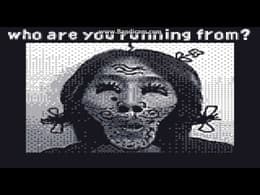
Lockey has also filmed a music video with a Game Boy Camera, for a band called SKIES, using one of his most impressive projects: a Game Boy Advance that he’s Frankensteined into a camcorder, as detailed in an explainer vid on his Instagram. After creating a camcorder-like device by sticking his Game Boy in a carry case with a hole cut in the front of it, he convinced SKIES to let him make the video for their next single and set about piecing together some arty, grainy shots of the band.
Among his other inventions is the Fishboy Camera: a Game Boy Camera fitted with a fisheye lens, which Lockey sculpted himself to look — of course — like a fish. So enthusiastic is Lockey about the thrills of the Game Boy Camera that he’s even hosted workshops teaching children about it, proving that the device’s appeal goes beyond nostalgic millennials, reaching also into Gen Z and younger.
“That’s really fun, seeing how archaic the Game Boy seems to them, contrasted with how futuristic it seemed to me when I was their age,” he says. “Because you’re working with such a limited group of pixels and colour range, it forces you to learn about composition, it forces you to think about lighting much more than with a modern camera. Then you can take those principles back into more traditional photography.” Working with kids who have grown up using smartphones and Nintendo Switches, the Game Boy Camera offers an unlikely gateway into photography. “Even if these kids have not touched the Game Boy before, they’ve used consoles before, so I think in that sense it’s quite a friendly interface. Whereas if you give a 10-year-old a DSLR and it's got 1,000 buttons, it’s quite intimidating.”
Could this be the beginning of the next generation embracing the Game Boy Camera? What other directions could they take it in? Time will only tell. For now, Arter and Lockey are two of a modest online cluster of photographers finding new ways to create art and hours of enjoyment with a toy that was made nearly 30 years ago. Lockey is currently working on a Game Boy Camera mosaic, painstakingly painting tiny cubes of clay in four colours to eventually assemble into a recreation of one of his photographs. Arter has taken to lending his Game Boy Cameras to other Milwaukee citizens, sending them out into the world and poring over their 30 photos when they return.

A selfie artist Jim Lockey took via the Nintendo Game Boy Camera.
What’s clear is that the Game Boy Camera should never be forgotten and, in these hands, it won’t be. Its resurgence in recent years reflects a desire among many to reject the hyperrealism of our lives and timelines. “With a camera in everyone’s pocket and trillions of digital photos taken and shared by humanity every year, Game Boy Camera photography is a refreshing inverse to increasingly cookie-cutter photography,” wrote Raymond Wong in an Input magazine review in 2021. As pictures and videos from ambiguous sources try to convince us that they’re real, there’s something comforting about an image rendered in four colours and 0.014 megapixels.
“The thing that is difficult to reason is, between the late 90s and early 2000s, how quickly everything changed,” says Lockey. “It’s hard to believe, even though it happened.” Selfies, smartphones and Instagram filters came in the years that followed, but the Game Boy Camera did it first. “The desire was there to do those things,” Lockey adds. “A year later there were lots of options for digital cameras and within seven years the iPhone was launched. It’s strange that it appeared on this device that people view as a toy, but it was actually a remarkable piece of technology.”
Ahead of its time in so many ways, the original success of the Game Boy Camera may well have let other tech companies know that people wanted handheld cameras, front-and-back-facing lenses and grainy photographs, speeding up the arrival of camera phones in the process. But what’s more amazing is the people who are still finding new ways to have fun with it today, more than a quarter of a century after its release.
Perhaps Nintendo even predicted the Game Boy Camera’s stubborn longevity with this throwaway line in the Nintendo Power handbook: “The world is constantly changing, and while much of it goes unremembered, your camera’s eye can take notice.” From its quirky, quintessentially Nintendo design to the hundreds of photographers who have exchanged their Game Boy Camera stories online, the device has opened up new possibilities and brought people together across multiple decades; and that’s what the best tech should always do.

Artist Jim Lockey proudly wearing his Game Boy Camera. All photos by Sam Dearden.
Sam is a freelance journalist who writes about music, film, video games, sport, tech, politics and just about anything broadly definable as 'culture'. His writing has been published by the BBC, Guardian, Financial Times, Rolling Stone, GQ and Vice.