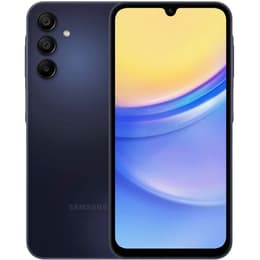
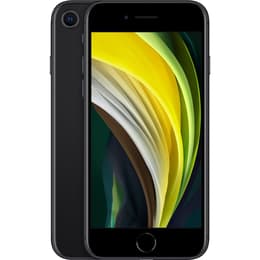

Galaxy A15 5G • Unlocked vs iPhone SE (2020) • Unlocked

Galaxy A15 5G • Unlocked
Starting at

Refurbished price:$108.00

Versus $207.99 new

See options
iPhone SE (2020) • Unlocked
Starting at

Refurbished price:$107.00

Versus $399.00 new

See options

Ratings

The Samsung Galaxy A15 5G, released in late 2023 and early 2024, and the iPhone SE 2020, launched in April 2020, represent distinct approaches to smartphone design and functionality. While the Galaxy A15 5G operates on the Android platform, offering a larger display and multi-camera system, the iPhone SE 2020 runs on iOS, featuring a compact form factor and a powerful processor. These differences cater to varying user preferences, from operating system ecosystem to physical design and camera capabilities.

Scores

Durability

When considering the long-term usability of these devices, their release timelines and software support policies are key factors.

  • Software Longevity: The Samsung Galaxy A15 5G, being a newer device, benefits from Samsung's commitment to four generations of Android OS upgrades and five years of security updates, extending its software support until approximately 2029. The iPhone SE 2020, while older, has a strong track record of receiving iOS updates for an extended period, typically around 5-6 years from its release, and currently supports iOS 26.
  • Physical Durability: The iPhone SE 2020 features an IP67 rating for dust and water resistance, offering a degree of protection against immersion. The Galaxy A15 5G does not carry an official IP rating, suggesting less resistance to dust and water exposure.
  • Repairability: The iPhone SE 2020 has been noted for its moderate repairability, with an iFixit score of 6 out of 10, partly due to the interchangeability of some components with the iPhone 8. Information regarding the specific repairability score for the Galaxy A15 5G is not as readily available, but generally, budget Android devices can present varying levels of repair ease.

Release Year

2023

2020

Last OS Compatibility

Yes

Yes

OS

Android

iOS

Foldable

No

No

Performance

The performance of a smartphone is crucial for daily tasks, app usage, and overall responsiveness, with both devices offering different strengths.

  • Processing Power: The iPhone SE 2020 is equipped with a processor that, at its release, was considered very capable, allowing it to handle demanding applications and multitasking smoothly. The Galaxy A15 5G features a processor that capably manages everyday tasks and general app usage, though some users might experience slight delays with more intensive applications or during rapid multitasking.
  • Storage and Multitasking: The Galaxy A15 5G offers flexible storage options, including expandable storage up to 1TB via a microSD card, which is a notable advantage for users who require extensive space for media and files. It comes with various RAM configurations, supporting efficient multitasking. The iPhone SE 2020 provides fixed internal storage options without expansion capabilities and includes 3GB of RAM, which is sufficient for typical iOS multitasking.
  • Battery Behavior: The Galaxy A15 5G is known for its substantial 5000mAh battery, often providing up to two days of moderate use on a single charge, making it suitable for users who prioritize extended battery life. The iPhone SE 2020, with its smaller battery capacity, typically requires more frequent charging, especially for heavy users, though it supports faster wired charging and wireless charging.

Memory (GB)

4 GB

3 GB

Screen quality

The visual experience is a primary interaction point for users, and these devices offer distinct display technologies and characteristics.

  • Display Technology and Size: The Samsung Galaxy A15 5G features a larger 6.5-inch Super AMOLED display, providing vibrant colors and deep blacks, which enhances the viewing experience for media consumption. The iPhone SE 2020 has a more compact 4.7-inch Retina HD IPS LCD display, known for its color accuracy and wide viewing angles, fitting users who prefer a smaller form factor.
  • Resolution and Brightness: Both devices offer a clear viewing experience, with the Galaxy A15 5G featuring a 1080x2340 (FHD+) resolution and the iPhone SE 2020 a 1334x750 resolution. The Galaxy A15 5G can reach up to 800 nits in high brightness mode, which aids visibility in bright outdoor conditions.
  • Refresh Rate: The Galaxy A15 5G includes a 90Hz refresh rate, contributing to smoother scrolling and a more fluid visual experience compared to the iPhone SE 2020's standard 60Hz refresh rate.

Resolution

1080 x 2340

750 x 1334

Screen type

Super AMOLED

Retina IPS LCD

Audiovisual

Camera capabilities are a significant consideration for many users, and both smartphones offer different photographic strengths.

  • Rear Camera System: The Samsung Galaxy A15 5G features a versatile triple-camera setup on the rear, including a 50MP main sensor, a 5MP ultrawide lens, and a 2MP macro lens, allowing for various photographic perspectives. The iPhone SE 2020 relies on a single 12MP rear camera, which, despite its single lens, benefits significantly from the device's advanced computational photography for image processing, including Portrait mode and Smart HDR.
  • Photography Performance: In well-lit conditions, both devices can capture detailed images. The Galaxy A15 5G's main camera produces balanced colors, while its ultrawide and macro lenses offer additional creative options. The iPhone SE 2020 excels in color accuracy and dynamic range, though it lacks a dedicated Night Mode for very low-light scenarios and the versatility of multiple lenses.
  • Video Recording: The iPhone SE 2020 supports 4K video recording at up to 60 frames per second on its rear camera, with optical image stabilization, providing high-quality video capture. The Galaxy A15 5G records video at 1080p at 30 frames per second. Both devices feature front-facing cameras suitable for video calls and selfies, with the Galaxy A15 5G offering a 13MP sensor and the iPhone SE 2020 a 7MP sensor.

Main camera

50 megapixels

12 megapixels

Front camera

13 megapixels

7 megapixels

Miscellaneous

Beyond core features, several practical elements contribute to the overall user experience and device utility.

  • Connectivity and Ports: The Galaxy A15 5G supports 5G networks, offering faster mobile data speeds where available, along with Wi-Fi 5 and Bluetooth 5.3. It includes a 3.5mm headphone jack and a USB-C 2.0 port. The iPhone SE 2020 supports 4G LTE, Wi-Fi 6, and Bluetooth 5.0, utilizing a Lightning port for charging and data transfer, and does not feature a headphone jack.
  • Biometric Security: The Galaxy A15 5G incorporates a side-mounted fingerprint sensor for secure unlocking. The iPhone SE 2020 features Touch ID, an integrated fingerprint sensor in its home button, for biometric authentication.
  • Design and Handling: The Galaxy A15 5G has a larger footprint and a plastic build, weighing 200g. The iPhone SE 2020 is more compact and lighter at 148g, with a glass front and back and an aluminum frame, appealing to users who prefer a smaller device for one-handed use.

Weight

7 oz

5 oz

Screen size (inches)

6.5

4.7

Network

5G

LTE

SIM card

Physical SIM

Physical SIM + eSIM

Carrier compatibility

Unlocked

Unlocked

Connector

USB-C

Lightning

User feedback for the Samsung Galaxy A15 5G often highlights its impressive battery life and vibrant Super AMOLED display as strong advantages, particularly for its segment. Some common criticisms point to its processing power, which, while adequate for daily use, can feel less responsive with demanding applications. The iPhone SE 2020 is frequently praised for its compact design, powerful processor, and the consistent iOS experience. However, its battery life is often cited as a limitation for heavy users, and the display technology is considered less advanced compared to newer devices.

For users prioritizing extended battery life, a larger, more vibrant display, and the flexibility of expandable storage, the Samsung Galaxy A15 5G may be a more suitable choice. Its multi-camera system also offers more versatility for different types of photography. Conversely, individuals who value a compact form factor, a highly capable processor for smooth performance, and the long-term software support and ecosystem of iOS might find the iPhone SE 2020 aligns better with their needs. Both devices offer distinct advantages, catering to different user priorities in the smartphone market. Exploring quality-assured refurbished options for either model can provide an eco-friendly alternative for consumers.

See all articles

Our recent comparisons