
Galaxy A16 5G • Unlocked vs OnePlus 10 Pro • Unlocked

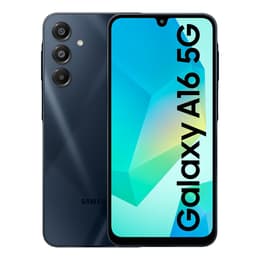
Galaxy A16 5G • Unlocked
Starting at

Refurbished price:$145.73

Versus $195.00 new

See options
OnePlus 10 Pro • Unlocked
Starting at

Refurbished price:$369.00

Versus $999.00 new

See options

Ratings

The Samsung Galaxy A16 5G, released in late 2024, and the OnePlus 10 Pro, launched in early 2022, represent distinct offerings in the smartphone market. While both are Android devices, they cater to different user expectations, with the Galaxy A16 5G focusing on extended software support and essential features, and the OnePlus 10 Pro emphasizing high-end performance and advanced display technology. These differences are evident across their core specifications and overall user experience.

Scores

Durability

The practical lifespan of a smartphone is influenced by its release timeline, software support, and physical resilience.

  • Software Longevity: The Samsung Galaxy A16 5G, released in October 2024, stands out with a commitment to six years of Android operating system updates and six years of security patches, extending support until October 2030. This offers a significantly longer software lifespan compared to the OnePlus 10 Pro, which launched in January 2022 and is expected to receive approximately four years of software updates.
  • Physical Durability: The Galaxy A16 5G features an IP54 rating for dust and water resistance, providing a degree of protection against splashes and dust ingress. The OnePlus 10 Pro, while featuring a glass back, does not carry an official IP rating for water resistance, though some sources suggest it is not best-in-class in this regard. Repairability scores for the OnePlus 10 Pro have been noted around 6 out of 10 or 7.8 out of 10, indicating average ease of repair.
  • Build Materials: The Galaxy A16 5G utilizes plastic materials in its construction, contributing to its overall design. The OnePlus 10 Pro features a glass back, offering a different tactile experience.

Release Year

2024

2022

OS

Android

Android

Foldable

No

No

Performance

Performance in daily use is shaped by a device's internal components, affecting everything from app responsiveness to multitasking capabilities.

  • Processing Power: The OnePlus 10 Pro is equipped with a high-end processor, enabling smooth handling of demanding applications and graphics-intensive games. The Samsung Galaxy A16 5G, depending on the region, uses either an Exynos 1330 or MediaTek Dimensity 6300 processor, which capably handles everyday tasks like web browsing, email, and media consumption, though users might experience minor delays when switching between many apps or taking burst photos.
  • Memory and Storage: The Galaxy A16 5G offers various configurations, including 4GB, 6GB, or 8GB of RAM and 128GB or 256GB of internal storage, with expandable memory via microSD card up to 1.5TB. The OnePlus 10 Pro comes with 8GB or 12GB of RAM and 128GB or 256GB of internal storage, but its storage is not expandable.
  • Battery Endurance: Both devices feature a 5000mAh battery. The Galaxy A16 5G generally provides over a day of mixed use. The OnePlus 10 Pro also offers strong battery life, often lasting a full day with heavy usage and potentially longer with lighter use. The OnePlus 10 Pro supports significantly faster wired charging at 80W (65W in the US) and 50W wireless charging, while the Galaxy A16 5G supports 25W fast charging.

Memory (GB)

4 GB

12 GB

Screen quality

The display is a primary interface for users, and differences in technology and specifications can significantly impact the viewing experience.

  • Display Technology and Resolution: The Samsung Galaxy A16 5G features a 6.7-inch Super AMOLED display with a Full HD+ resolution (1080x2340 pixels), offering vibrant colors and deep blacks. The OnePlus 10 Pro also has a 6.7-inch display, but it uses a Fluid AMOLED with LTPO 2.0 technology, providing a sharper QHD+ resolution (3216x1440 pixels) and enhanced color accuracy.
  • Refresh Rate and Brightness: The Galaxy A16 5G offers a 90Hz refresh rate for smoother scrolling and an average brightness of 800 nits. The OnePlus 10 Pro features an adaptive 120Hz refresh rate, which can dynamically scale from 1Hz to 120Hz for power efficiency and smoother visuals, along with a peak brightness of 1300 nits, making it highly visible in various lighting conditions.
  • Design and Features: The OnePlus 10 Pro's display is curved and supports HDR10+, offering an immersive viewing experience. The Galaxy A16 5G has a flat display with minimized bezels and a U-shaped notch for the front camera.

Resolution

1080x2340

1440 x 3216

Screen type

Super AMOLED

LTPO2 Fluid AMOLED

Audiovisual

Camera capabilities are a key consideration for many users, with differences in sensor technology and software processing impacting photo and video quality.

  • Rear Camera Systems: The Galaxy A16 5G includes a triple rear camera setup: a 50MP main sensor, a 5MP ultrawide, and a 2MP macro lens. The main camera performs adequately in good lighting, but the ultrawide may lack detail. The OnePlus 10 Pro features a more advanced triple camera system developed with Hasselblad, comprising a 48MP main sensor with optical image stabilization (OIS), a 50MP ultrawide camera with a 150-degree field of view, and an 8MP telephoto lens with 3.3x optical zoom and OIS.
  • Photography Performance: The OnePlus 10 Pro generally produces bright, colorful photos with good detail in daylight, and decent low-light performance, though some users note color inconsistencies between lenses. The Galaxy A16 5G's main camera captures decent shots, but low-light images can appear muddy.
  • Video Recording and Front Camera: The Galaxy A16 5G can record 4K video with decent stabilization, and features a 13MP front camera. The OnePlus 10 Pro supports 4K video at up to 120fps and 8K video at 24fps, and has a 32MP front-facing camera.

Miscellaneous

Beyond core features, several practical elements contribute to the overall user experience and device utility.

  • Connectivity and Ports: Both devices support 5G connectivity. The Galaxy A16 5G includes Wi-Fi 802.11 ac and Bluetooth 5.3, along with a USB Type-C 2.0 port and NFC. It does not have a 3.5mm headphone jack. The OnePlus 10 Pro supports Wi-Fi 6 (802.11 ax) and Bluetooth 5.2, featuring a USB Type-C port and NFC.
  • Biometrics and Audio: The Galaxy A16 5G incorporates a side-mounted fingerprint sensor. The OnePlus 10 Pro features an under-display optical fingerprint sensor and includes stereo speakers for a more immersive audio experience. The Galaxy A16 5G has bottom-ported speakers and lacks stereo sound.
  • Physical Characteristics: The Galaxy A16 5G weighs 200g and measures 164.4 x 77.9 x 7.9mm. The OnePlus 10 Pro is slightly heavier at 200.5g and has dimensions of 163 x 73.9 x 8.55mm.

Weight

7 oz

7 oz

Screen size (inches)

6.7

6.7

Network

5G

5G

SIM card

Physical SIM

Physical SIM

Carrier compatibility

Unlocked

Unlocked

The Samsung Galaxy A16 5G and the OnePlus 10 Pro offer distinct value propositions for different user needs. User feedback for the Galaxy A16 5G often praises its long software support, vibrant AMOLED display, and solid battery life for everyday use. Common criticisms tend to focus on its performance for demanding tasks and the quality of its secondary cameras. The OnePlus 10 Pro is frequently lauded for its powerful performance, fast charging capabilities, and high-quality display. However, some users have noted that its camera system, while good, may not always match the best in its class, and there have been concerns regarding its structural durability in extreme tests.

Users prioritizing long-term software updates and a reliable device for essential daily tasks will find the Samsung Galaxy A16 5G well-suited to their needs. Its extended support window makes it an eco-friendly alternative for those seeking a quality-assured refurbished option that remains current for many years. Conversely, users who require top-tier processing power for gaming or intensive applications, coupled with a high-resolution, adaptive refresh rate display and rapid charging, may lean toward the OnePlus 10 Pro. Both devices offer compelling features, and choosing between them depends on whether a user values extended software longevity and core functionality or cutting-edge performance and display technology.

See all articles

Our recent comparisons