
Compare models
Galaxy A53 5G • Unlocked vs Galaxy S21 Ultra 5G • Unlocked
- 1-year warranty
- Free standard shipping
- Free 30-day returns
Differences at a glance
The Samsung Galaxy A53 5G, released in March 2022, and the Samsung Galaxy S21 Ultra 5G, launched in January 2021, represent different segments of Samsung's smartphone offerings. While both devices operate on the Android platform, the S21 Ultra 5G was a flagship model at its release, emphasizing advanced features and performance, whereas the A53 5G is positioned as a mid-range option focusing on essential capabilities and extended software support. Key differentiators lie in their display technology, camera systems, and overall processing power.
Available Models
Color
Storage (GB)
Scores
Durability
When considering the long-term usability of these devices, their release timelines and software support policies are important factors.
- Release Timeline: The Galaxy A53 5G was released in March 2022, making it a newer device compared to the Galaxy S21 Ultra 5G, which launched in January 2021. This difference in release date impacts their remaining software support.
- Software Longevity: The Galaxy A53 5G was promised four years of Android OS updates and five years of security updates, meaning it is expected to receive updates up to Android 16 and security patches until 2027. The Galaxy S21 Ultra 5G, having launched earlier, received four years of OS updates (up to Android 15) and five years of security updates, with its monthly security updates concluding in January 2025 and transitioning to a quarterly schedule until January 2026. This means the A53 5G offers a longer period of guaranteed software and security updates from the current date.
- Build and Repairability: The Galaxy A53 5G features a plastic back and Gorilla Glass 5 on the front, along with an IP67 rating for dust and water resistance. The Galaxy S21 Ultra 5G presents a more robust build with Gorilla Glass Victus on both the front and back, an aluminum frame, and an IP68 rating, indicating a higher level of dust and water protection. While specific repairability scores vary, the S21 Ultra's premium materials generally suggest a more durable construction against everyday wear and tear.
Release Year
2022
2021
Last OS Compatibility
Yes
Yes
OS
Android
Android
Foldable
No
No
Performance
The performance capabilities of these two smartphones cater to different user expectations, primarily influenced by their internal components.
- Processing Power: The Galaxy S21 Ultra 5G, equipped with a flagship-tier processor from its generation, delivers robust performance suitable for demanding applications, intensive multitasking, and graphic-heavy gaming. Users report a consistently snappy and responsive experience. In contrast, the Galaxy A53 5G features a mid-range processor, which handles everyday tasks like browsing, social media, and light gaming smoothly. However, some users have noted occasional lag or stuttering, particularly with more intensive use or after significant software updates.
- Multitasking and Storage: The S21 Ultra 5G offers higher RAM configurations, typically 12GB or 16GB, which allows for seamless switching between numerous applications and maintaining many apps open in the background without performance degradation. It also comes with larger internal storage options, up to 512GB, though it lacks expandable storage. The A53 5G typically comes with 6GB or 8GB of RAM, which is sufficient for most users but may show limitations during heavy multitasking. It offers 128GB or 256GB of internal storage and includes a microSD card slot for expansion, providing flexibility for users who need more space for media and files.
- Battery Endurance: Both devices are equipped with a 5000 mAh battery. User experiences indicate that the Galaxy S21 Ultra 5G provides outstanding battery life, often lasting more than a full day even with heavy usage. The Galaxy A53 5G also offers solid battery life, with many users reporting it can comfortably last through a full day of typical use.
Screen quality
The visual experience on both devices is a significant aspect of their design, with notable differences in display technology and specifications.
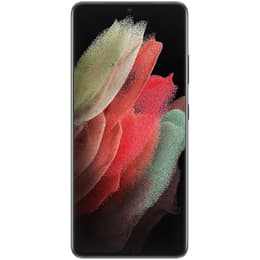
- Display Technology and Resolution: The Galaxy S21 Ultra 5G features a 6.8-inch Dynamic AMOLED 2X display with a high resolution of 1440 x 3200 pixels, resulting in a very sharp and detailed image with a pixel density of 515 ppi. This display technology provides deep blacks, vibrant colors, and excellent contrast. The Galaxy A53 5G has a 6.5-inch Super AMOLED display with a resolution of 1080 x 2400 pixels, offering clear visuals and good color reproduction, though not as sharp as the S21 Ultra 5G.
- Refresh Rate and Brightness: Both phones feature a 120Hz refresh rate for smooth scrolling and fluid animations. However, the S21 Ultra 5G's display is adaptive, meaning it can dynamically adjust its refresh rate based on content to conserve battery, while the A53 5G maintains a fixed 120Hz or 60Hz setting. The S21 Ultra 5G also boasts higher peak brightness, making it more comfortable to view in bright outdoor conditions. The A53 5G offers a peak brightness of 800 nits, which is generally sufficient for most environments.
- Screen Protection: The Galaxy S21 Ultra 5G utilizes Gorilla Glass Victus for enhanced scratch and drop resistance. The Galaxy A53 5G is protected by Gorilla Glass 5.
Resolution
1080 x 2400
1440 x 3200
Screen type
Super AMOLED
Dynamic AMOLED 2X
Audiovisual
The camera systems on the Galaxy A53 5G and Galaxy S21 Ultra 5G are designed for different levels of photographic capability and versatility.
- Rear Camera System: The Galaxy S21 Ultra 5G features a comprehensive quad-camera setup, including a 108 MP main sensor, a 12 MP ultrawide lens, and two 10 MP telephoto lenses (one with 3x optical zoom and another periscope lens with 10x optical zoom). This configuration provides exceptional detail, wide-angle shots, and significant optical zoom capabilities, which users praise for capturing distant subjects with clarity. The Galaxy A53 5G also has a quad-camera system, with a 64 MP main sensor with optical image stabilization (OIS), a 12 MP ultrawide, a 5 MP macro, and a 5 MP depth sensor. This setup is capable of producing good photos in well-lit conditions.
- Low-Light and Video Performance: The S21 Ultra 5G excels in various lighting conditions, offering strong low-light performance and advanced video recording features, including 8K video capture. Its camera system is generally considered more versatile and capable for professional-grade photography and videography. The A53 5G performs well in daylight, but user feedback suggests that its low-light photography can be mediocre, and video stabilization may be less effective, particularly at higher resolutions. Both devices offer 4K video recording.
- Front Camera: For selfies and video calls, the S21 Ultra 5G is equipped with a 40 MP front camera, delivering high-resolution images. The A53 5G features a 32 MP front camera, which also provides detailed self-portraits.
Main camera
64 megapixels
108 megapixels
Front camera
32 megapixels
40 megapixels
Miscellaneous
Beyond core performance and display, several practical features and design elements differentiate these two Samsung smartphones.
- Connectivity and Ports: Both devices support 5G connectivity and modern Wi-Fi standards. The Galaxy S21 Ultra 5G includes Wi-Fi 6E for potentially faster and more stable wireless connections in compatible environments. Both utilize a USB-C port for charging and data transfer. A notable difference is the absence of a 3.5mm headphone jack on both models.
- Biometric Security: The S21 Ultra 5G features an ultrasonic in-display fingerprint sensor, which is generally fast and reliable. The A53 5G also uses an in-display fingerprint sensor, which users describe as functional but potentially less rapid or consistent than flagship implementations. Both offer facial recognition for unlocking.
- Design and Handling: The Galaxy S21 Ultra 5G has a more premium feel with its glass and aluminum construction, but it is also a larger and heavier device at 165.1 x 75.6 x 8.9 mm and 227g. Some users find its size and weight, along with a prominent camera bump, can make it somewhat bulky and less comfortable for one-handed use. The Galaxy A53 5G is lighter and slightly more compact at 159.6 x 74.8 x 8.1 mm and 189g, featuring a plastic back that contributes to its lighter feel.
- S Pen Support: A unique feature of the Galaxy S21 Ultra 5G is its compatibility with the S Pen (sold separately), offering enhanced productivity and creative input for users who prefer stylus interaction. The A53 5G does not support S Pen functionality.
Weight
7 oz
8 oz
Screen size (inches)
6.5
6.8
Network
5G
5G
SIM card
Physical SIM
Physical SIM + eSIM
Carrier compatibility
Unlocked
Unlocked
What the community thinks
User feedback for the Galaxy A53 5G often highlights its strong battery life, vibrant Super AMOLED display, and Samsung's commitment to extended software support as positive aspects. However, some users have expressed concerns regarding its processor performance, noting occasional lag or stuttering, especially with demanding applications or over time. The camera performance is generally considered good in bright conditions but can be inconsistent in low light.
Conversely, the Galaxy S21 Ultra 5G receives consistent praise for its exceptional display quality, powerful performance, versatile camera system with impressive zoom capabilities, and long-lasting battery. Common criticisms often revolve around its larger size and weight, which some find less comfortable for extended use, and the absence of a microSD card slot.
Users prioritizing a device with a longer guaranteed software update lifespan and expandable storage for media and files may find the Galaxy A53 5G well-suited to their needs. It offers a balanced experience for everyday tasks and casual photography. For those who require top-tier performance for intensive applications, a highly advanced and versatile camera system, a superior display, and S Pen compatibility, the Galaxy S21 Ultra 5G remains a compelling option. Both devices are available as quality-assured refurbished options, providing an eco-friendly alternative for consumers.