
Galaxy S10 • Unlocked vs iPhone 12 • Unlocked

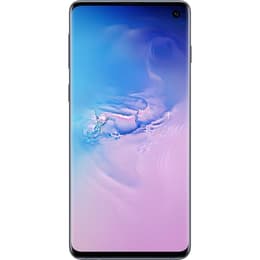
Galaxy S10 • Unlocked
Starting at

Refurbished price:$148.00

Versus $669.00 new

See options
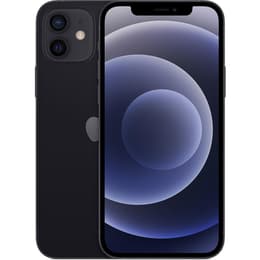
iPhone 12 • Unlocked
Starting at

Refurbished price:$172.96

Versus $629.00 new

See options

Ratings

The Samsung Galaxy S10, an Android smartphone, was released in March 2019, while the Apple iPhone 12, an iOS device, followed in October 2020. These two smartphones represent different generations and operating systems, offering distinct user experiences. The primary differences lie in their software ecosystems, design philosophies, and hardware capabilities, reflecting their respective launch timelines.

Scores

Durability

The longevity of a smartphone is influenced by its release date, software support, and physical durability. Both devices offer robust builds, but their software support timelines differ significantly due to their respective launch years.

  • Software Support: The Galaxy S10 received its last major operating system upgrade to Android 12 in January 2022, with security updates for most models concluding in March 2023. In contrast, the iPhone 12, released later, is expected to receive major iOS updates for approximately 5-7 years from its launch, potentially extending its security support until around 2027-2030.
  • Repairability: The Galaxy S10 received a repairability score of 3 out of 10 from iFixit, indicating challenges in self-repair due to components like the soldered USB-C port and glued battery. The iPhone 12, on the other hand, scored 6 out of 10, suggesting a more modular design, though some repairs may require proprietary tools for full functionality.
  • Physical Durability: The Galaxy S10 features Gorilla Glass 6 on the front and Gorilla Glass 5 on the back, providing a good level of scratch and drop resistance. The iPhone 12 introduced Ceramic Shield on its front display, which Apple states offers enhanced drop performance, alongside a glass back. Both devices carry an IP68 rating for dust and water resistance.

Release Year

2019

2020

Last OS Compatibility

No

Yes

OS

Android

iOS

Foldable

No

No

Performance

Performance in daily use is a key factor for many users, encompassing how smoothly applications run, how quickly tasks are completed, and how efficiently the device manages power.

  • Processing Power: The Galaxy S10, depending on the region, is powered by either a Snapdragon 855 or an Exynos 9820 processor, paired with 8GB of RAM. This configuration allows for smooth multitasking and handling of most applications. The iPhone 12 features the A14 Bionic chip and 4GB of RAM. Users generally report that the iPhone 12 offers robust performance, handling demanding applications and graphics-intensive games with ease.
  • Battery Behavior: The Galaxy S10 is equipped with a 3400 mAh battery. User feedback often indicates that its battery life is generally acceptable for a full day of moderate use, though heavy users might find themselves needing to recharge before the day ends. The iPhone 12 has a 2815 mAh battery. While its battery capacity is smaller, the efficiency of its processor helps it achieve comparable, and often good, all-day battery performance for many users, though some note it might not last as long as its predecessor, the iPhone 11.
  • Storage Options: The Galaxy S10 offers internal storage options of 128GB and 512GB. The iPhone 12 is available with 64GB, 128GB, or 256GB of internal storage. For users who store many large files or applications, the 64GB base model of the iPhone 12 can be limiting.

Memory (GB)

8 GB

4 GB

Screen quality

The display is a primary interface for smartphone interaction, and both devices offer high-quality viewing experiences with distinct characteristics.

  • Display Technology and Clarity: The Galaxy S10 features a 6.1-inch Dynamic AMOLED display with a resolution of 1440 x 3040 pixels, resulting in a sharp and detailed image. The iPhone 12 also has a 6.1-inch display, utilizing Super Retina XDR OLED technology with a resolution of 1170 x 2532 pixels. Both OLED panels deliver deep blacks and vibrant colors, enhancing the visual experience for media consumption and general use.
  • Brightness and Refresh Rate: Both the Galaxy S10 and iPhone 12 feature a standard 60Hz refresh rate, providing a smooth experience for typical scrolling and content viewing. The iPhone 12's display offers good brightness levels, making it suitable for outdoor visibility.
  • Design and Viewing Experience: The Galaxy S10 incorporates a curved display, which contributes to a more immersive feel and a perception of thinner bezels. The iPhone 12 features a flat-edged design with its display.

Resolution

1440 x 3040

1170 x 2532

Screen type

Dynamic AMOLED

Super Retina XDR OLED

Audiovisual

Camera capabilities are a significant consideration for many users, and both the Galaxy S10 and iPhone 12 offer versatile systems for capturing photos and videos.

  • Rear Camera Systems: The Galaxy S10 is equipped with a triple-camera setup on the rear, consisting of a 12-megapixel wide-angle lens, a 12-megapixel telephoto lens with 2x optical zoom, and a 16-megapixel ultrawide-angle lens. This provides flexibility for various shooting scenarios, from expansive landscapes to zoomed-in subjects. The iPhone 12 features a dual-camera system on the rear, with a 12-megapixel wide-angle lens and a 12-megapixel ultrawide-angle lens. It does not include a dedicated telephoto lens.
  • Photography Performance: In well-lit conditions, both devices produce detailed and color-accurate photos. The Galaxy S10 performs well in good lighting, but its low-light performance, while solid, may not match the best in its class. The iPhone 12 offers improved low-light performance, with Night Mode available across all its cameras, including the front-facing one, enhancing clarity in dim environments.
  • Video Recording and Audio: The Galaxy S10 supports 4K video recording at 60 frames per second. The iPhone 12 stands out with its ability to record video in 4K Dolby Vision HDR, offering enhanced dynamic range and color accuracy for video content. Both devices provide good microphone quality for calls and recordings, and their speakers deliver clear audio for media consumption.

Main camera

12 megapixels

12 megapixels

Front camera

10 megapixels

12 megapixels

Miscellaneous

Beyond core features, several practical elements contribute to the overall user experience and daily convenience of a smartphone.

  • Connectivity: The Galaxy S10 supports 4G LTE, Wi-Fi 6, and Bluetooth 5.0. The iPhone 12 introduced 5G connectivity, offering faster cellular data speeds where available, alongside Wi-Fi 6 and Bluetooth 5.0.
  • Ports and Biometrics: The Galaxy S10 includes a USB-C port for charging and data transfer, and notably retains a 3.5mm headphone jack. It utilizes an ultrasonic in-display fingerprint sensor for biometric authentication. The iPhone 12 uses a Lightning port for charging and data. It relies on Face ID for secure facial recognition.
  • Design and Handling: The Galaxy S10 measures 149.9 x 70.4 x 7.8 mm and weighs 157 grams. The iPhone 12 is slightly more compact and lighter, with dimensions of 146.7 x 71.5 x 7.4 mm and a weight of 162 grams. The iPhone 12 also features MagSafe technology, allowing for magnetic attachment of accessories and wireless charging.

Weight

6 oz

7 oz

Screen size (inches)

6.1

6.1

Network

LTE

5G

SIM card

Physical SIM

Physical SIM + eSIM

Carrier compatibility

Unlocked

Unlocked

The Samsung Galaxy S10 and iPhone 12, while both capable smartphones, cater to different preferences and priorities. User feedback for the Galaxy S10 often praises its inclusion of a 3.5mm headphone jack and expandable storage, features that have become less common in newer devices. Its versatile triple-camera system also receives positive remarks for offering a range of photographic options. However, some users have noted that its battery life can be merely adequate, and a significant point of consideration is that its software support has concluded, meaning no further major Android updates or regular security patches.

For the iPhone 12, common praise centers on its strong overall performance, the quality of its OLED display, and its improved camera capabilities, particularly in low-light conditions. Users also appreciate Apple's extended software support, which ensures the device remains current with new features and security updates for a longer period. Criticisms sometimes point to the base 64GB storage option being insufficient for modern usage and the absence of a telephoto lens in its camera system.

Users prioritizing a traditional Android experience with features like a headphone jack and expandable storage may find the Galaxy S10 well-suited to their needs. Those who value long-term software support, a streamlined operating system, and robust performance for demanding tasks might lean towards the iPhone 12. Both devices offer a quality experience, and choosing between them often comes down to individual ecosystem preference and specific feature requirements. For those considering either model, exploring quality-assured refurbished options can provide an eco-friendly alternative.

See all articles

Our recent comparisons