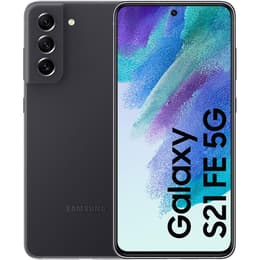
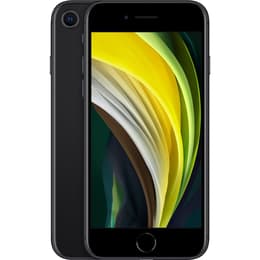

Galaxy S21 FE 5G • Unlocked vs iPhone SE (2020) • Unlocked

Galaxy S21 FE 5G • Unlocked
Starting at

Refurbished price:$133.00

Versus $699.99 new

See options
iPhone SE (2020) • Unlocked
Starting at

Refurbished price:$107.00

Versus $399.00 new

See options

Ratings

The Samsung Galaxy S21 FE 5G, released in January 2022, and the iPhone SE 2020, launched in April 2020, offer distinct smartphone experiences. While the Galaxy S21 FE presents a modern design with a larger display and a versatile camera system, the iPhone SE 2020 maintains a compact form factor with a classic home button design. These devices operate on different ecosystems, Android and iOS respectively, influencing user interaction and software availability. Both models continue to be relevant choices for users seeking reliable performance.

Scores

Durability

The release timelines of these two devices significantly impact their expected software longevity and practical lifespan.

  • Release Timeline and OS Support: The Galaxy S21 FE 5G, being a 2022 release, benefits from a more extended period of software and security updates compared to the iPhone SE 2020, which was released in 2020. Samsung typically provides several years of Android operating system upgrades and security patches, while Apple generally supports its iPhones with iOS updates for approximately five to six years from their release. By 2026, the iPhone SE 2020 is nearing the end of its official software support cycle, whereas the Galaxy S21 FE 5G is expected to receive updates for a longer duration.
  • Physical Resilience: Both devices offer dust and water resistance. The Galaxy S21 FE 5G features an IP68 rating, allowing submersion up to 1.5 meters for 30 minutes, and uses Gorilla Glass Victus on the front. The iPhone SE 2020 has an IP67 rating, protecting against immersion up to 1 meter for 30 minutes, and features glass on both the front and back. The Galaxy model's plastic rear panel may be less prone to shattering than the iPhone SE's glass back.
  • Repairability: The iPhone SE 2020 has received a repairability score of 6 out of 10 from iFixit, indicating that common repairs like screen and battery replacements are relatively straightforward, with some parts being interchangeable with the iPhone 8. However, its glass back is considered impractical to replace. Information on the specific repairability score for the Galaxy S21 FE 5G is less widely available, but both manufacturers have established repair networks.

Release Year

2022

2020

Last OS Compatibility

Yes

Yes

OS

Android

iOS

Foldable

No

No

Performance

Performance differences between these two smartphones are most evident when handling demanding applications and multitasking scenarios.

  • System Responsiveness: The Galaxy S21 FE 5G handles modern applications and heavy multitasking smoothly, benefiting from its processing capabilities and higher amount of temporary memory. This allows more applications to remain active in the background without needing to reload. The iPhone SE 2020 remains responsive for everyday tasks such as messaging, web browsing, and light gaming, but may exhibit slower performance with more intensive modern applications or extensive multitasking.
  • Battery Behavior: The Galaxy S21 FE 5G is equipped with a larger battery capacity, generally providing a full day of use for most users under typical conditions. It also supports faster wired and wireless charging. The iPhone SE 2020, with its smaller battery, often requires more frequent charging, especially for users with moderate to heavy usage patterns. Users report that its battery life can be a limiting factor for extended use without access to a charger.
  • Storage Options: Both devices offer various internal storage configurations. The Galaxy S21 FE 5G is available with 128GB or 256GB of storage, paired with 6GB or 8GB of RAM. The iPhone SE 2020 comes with 64GB, 128GB, or 256GB storage options, typically with 3GB of RAM. The higher RAM in the Galaxy S21 FE 5G can contribute to smoother multitasking.

Memory (GB)

6 GB

3 GB

Screen quality

The display technologies and specifications of these two phones offer distinct visual experiences.

  • Display Technology and Clarity: The Galaxy S21 FE 5G features a 6.4-inch Dynamic AMOLED 2X display, which provides deep blacks, high contrast, and vibrant colors, making it well-suited for media consumption and detailed viewing. Its resolution is 1080 x 2400 pixels. The iPhone SE 2020 uses a 4.7-inch Retina IPS LCD screen with a resolution of 750 x 1334 pixels, offering natural color reproduction but lacking the deep contrast and energy efficiency of an AMOLED panel.
  • Refresh Rate and Smoothness: The Galaxy S21 FE 5G boasts an adaptive refresh rate of up to 120Hz, resulting in noticeably smoother scrolling, animations, and a more fluid overall interface experience. The iPhone SE 2020 has a standard 60Hz refresh rate, which is adequate for daily use but does not offer the same level of visual fluidity.
  • Brightness and Outdoor Visibility: The Galaxy S21 FE 5G's display can reach peak brightness levels of around 700-800 nits, contributing to good visibility in bright outdoor conditions. The iPhone SE 2020 also offers good brightness for an LCD panel, but the AMOLED technology in the S21 FE 5G generally provides better contrast and readability under direct sunlight.

Resolution

1080 x 2340

750 x 1334

Screen type

Dynamic AMOLED 2X

Retina IPS LCD

Audiovisual

The camera systems of the Galaxy S21 FE 5G and iPhone SE 2020 cater to different photography needs and preferences.

  • Camera System Versatility: The Galaxy S21 FE 5G features a triple-lens rear camera setup, including a 12MP wide-angle lens, a 12MP ultrawide lens, and an 8MP telephoto lens with 3x optical zoom. This provides greater flexibility for capturing various scenes, from expansive landscapes to distant subjects. The iPhone SE 2020 relies on a single 12MP wide-angle rear camera. While it captures high-quality photos in good lighting, it lacks the dedicated ultrawide and telephoto capabilities for diverse shots.
  • Photography Performance: Both devices excel in well-lit conditions, producing clear and detailed images. The Galaxy S21 FE 5G is known for vibrant colors and good detail, especially with its main camera. The iPhone SE 2020 benefits from computational photography, offering features like Portrait mode for people, which effectively blurs backgrounds. However, the iPhone SE 2020 does not feature a dedicated Night Mode, which can limit its performance in very low-light environments where the Galaxy S21 FE 5G tends to pull more detail from shadows.
  • Video Recording and Front Camera: Both phones are capable of recording 4K video at 60 frames per second with their rear cameras. The Galaxy S21 FE 5G also features a high-resolution 32MP front camera, capable of 4K 60fps video, which is beneficial for high-quality video calls and selfies. The iPhone SE 2020 has a 7MP front camera that records 1080p video, suitable for standard video calls and selfies.

Main camera

12 megapixels

12 megapixels

Front camera

32 megapixels

7 megapixels

Miscellaneous

Beyond core features, several practical elements differentiate these two smartphones in daily use.

  • Connectivity Options: The Galaxy S21 FE 5G supports 5G networks, offering faster download and upload speeds in areas with 5G coverage. It also features Wi-Fi 6 and Bluetooth 5.0. The iPhone SE 2020 is limited to 4G LTE connectivity, along with Wi-Fi and Bluetooth. For users in areas with robust 5G infrastructure or those who prioritize future-proofing their connectivity, the S21 FE 5G offers an advantage.
  • Port Types and Sensors: The Galaxy S21 FE 5G uses a USB-C port for charging and data transfer and includes an optical in-display fingerprint sensor for biometric authentication. The iPhone SE 2020 utilizes Apple's proprietary Lightning port and features a physical home button with Touch ID (fingerprint sensor) for unlocking and authentication. Neither device includes a traditional 3.5mm headphone jack.
  • Dimensions, Weight, and Build Materials: The Galaxy S21 FE 5G is a larger and slightly heavier device, measuring 155.7 x 74.5 x 7.9 mm and weighing 177g. It features an aluminum frame with a glass front and a plastic back. The iPhone SE 2020 is more compact and lighter at 138.4 x 67.3 x 7.3 mm and 148g, with an aluminum frame and glass on both the front and back. The choice between them often comes down to preference for screen size versus one-handed usability.

Weight

7 oz

5 oz

Screen size (inches)

6.4

4.7

Network

5G

LTE

SIM card

Physical SIM

Physical SIM + eSIM

Carrier compatibility

Unlocked

Unlocked

User sentiment for the Galaxy S21 FE 5G often highlights its vibrant display, capable performance for everyday tasks, and versatile camera system as strong points. Some users have noted its battery life as generally sufficient for a full day. Criticisms sometimes revolve around its similarity to other models in its series and its initial positioning in the market.

For the iPhone SE 2020, common praise centers on its compact size, the familiarity of its design with the physical home button, and its performance for general use, benefiting from Apple's optimized software. However, frequent criticisms include its relatively short battery life for moderate to heavy users and its dated design with larger bezels compared to more modern smartphones. The single camera, while good in bright conditions, is also noted for lacking the versatility of multi-lens systems and a dedicated Night Mode.

Users prioritizing a larger, more immersive display with a high refresh rate, a multi-lens camera system for diverse photography, and 5G connectivity may find the Galaxy S21 FE 5G better suited to their needs. Its longer expected software support also makes it a more future-proof option. Conversely, users who prefer a smaller, more pocketable device, appreciate the classic iPhone design with Touch ID, and primarily use their phone for everyday tasks and casual photography in good lighting, may lean towards the iPhone SE 2020. For those considering either device, exploring quality-assured refurbished options can provide an eco-friendly alternative.

See all articles

Our recent comparisons