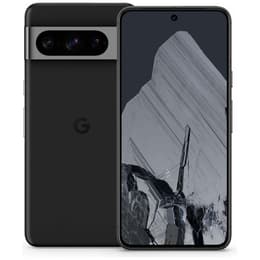

Galaxy S21 Ultra 5G • Unlocked vs Google Pixel 8 Pro • Unlocked

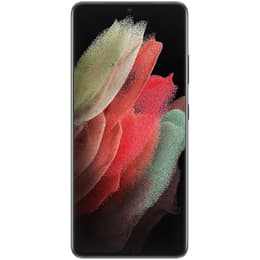
Galaxy S21 Ultra 5G • Unlocked
Starting at

Refurbished price:$257.00

Versus $1,199.99 new

See options
Google Pixel 8 Pro • Unlocked
Starting at

Refurbished price:$296.00

Versus $899.99 new

See options

Ratings

The Samsung Galaxy S21 Ultra 5G, released in January 2021, and the Google Pixel 8 Pro, launched in October 2023, represent distinct approaches to the premium smartphone experience. While both devices operate on the Android platform, they differentiate themselves through their camera philosophies, software support commitments, and overall design. This comparison aims to highlight the practical differences to help users determine which device aligns best with their needs.

Scores

Durability

When considering the long-term usability of these devices, their release timelines and software support policies are key factors. The Pixel 8 Pro offers a significantly longer commitment to updates, impacting its practical lifespan.

  • Release Timeline: The Galaxy S21 Ultra 5G was released in January 2021, making it an older device compared to the Google Pixel 8 Pro, which launched in October 2023. This age difference inherently affects their remaining support windows.
  • Software Longevity: The Google Pixel 8 Pro stands out with an industry-leading commitment of seven years of OS upgrades, security updates, and Feature Drops, extending its support until 2030. In contrast, the Galaxy S21 Ultra 5G received four major Android OS updates, concluding with Android 15 in May 2025, and its security updates ended in February 2026.
  • Repairability: The Galaxy S21 Ultra 5G received a repairability score of 3 out of 10, indicating challenges due to extensive use of glue and a non-modular display cable. The Pixel 8 Pro, while having some components that are difficult to access like the battery and a soldered charging port, generally offers a slightly better repairability score of 4 out of 10.

Release Year

2021

2023

Last OS Compatibility

Yes

Yes

OS

Android

Android

Foldable

No

No

Performance

Both smartphones deliver robust performance for daily tasks, but their underlying hardware and optimization strategies lead to different real-world experiences, particularly concerning sustained usage and battery efficiency.

  • Everyday Responsiveness: The Google Pixel 8 Pro, with its newer generation processor, handles demanding applications and multitasking smoothly, providing a fluid user experience. The Galaxy S21 Ultra 5G, powered by its respective flagship processor from its release year, also offers strong performance for most applications and general usage.
  • Battery Behavior: The Galaxy S21 Ultra 5G features a 5000 mAh battery, which generally provides a full day of use for many users, though heavy usage, especially with the high-resolution, high-refresh-rate display, can lead to more frequent charging. The Pixel 8 Pro has a slightly larger 5050 mAh battery, and while it aims for all-day power, some users have noted that its battery life can be inconsistent or shorter than some rival devices under certain conditions.
  • Storage and Multitasking: Both devices offer ample storage options, ranging from 128GB up to 512GB, with the Pixel 8 Pro also offering a 1TB option. Both come with 12GB of RAM in their base configurations, ensuring efficient multitasking and smooth transitions between applications.

Memory (GB)

12 GB

12 GB

Screen quality

The display is a primary interaction point, and both devices offer high-quality viewing experiences, though with differences in technology and brightness capabilities.

  • Display Technology and Clarity: The Galaxy S21 Ultra 5G features a 6.8-inch Dynamic AMOLED 2X display with a resolution of 1440 x 3200 pixels, known for its vibrant colors and deep blacks. The Google Pixel 8 Pro sports a 6.7-inch LTPO OLED display, referred to as "Super Actua," with a resolution of 1244 x 2992 pixels, also delivering excellent clarity and color reproduction.
  • Brightness and Outdoor Visibility: The Pixel 8 Pro's Super Actua display offers a peak brightness of up to 2400 nits, making it exceptionally bright and highly visible even in direct sunlight. The Galaxy S21 Ultra 5G also provides a very bright display, ensuring good visibility in various lighting conditions.
  • Refresh Rate and Smoothness: Both phones feature adaptive refresh rates up to 120Hz, providing smooth scrolling and responsive interactions. The Pixel 8 Pro's display can dynamically scale down to 1Hz for static content, which can contribute to power efficiency. The Galaxy S21 Ultra 5G also offers an adaptive 120Hz refresh rate at its full resolution.

Resolution

1440 x 3200

1344 x 2992

Screen type

Dynamic AMOLED 2X

LTPO OLED

Audiovisual

Both devices are recognized for their advanced camera systems, but they approach photography with different strengths, particularly in terms of hardware versatility and computational processing.

  • Rear Camera Systems: The Galaxy S21 Ultra 5G boasts a versatile quad-camera setup, including a 108MP main sensor, a 12MP ultrawide, and two 10MP telephoto lenses offering 3x and 10x optical zoom, providing extensive zoom capabilities. The Google Pixel 8 Pro features a triple-camera system with a 50MP main sensor, a 48MP ultrawide, and a 48MP telephoto lens with 5x optical zoom, emphasizing computational photography and AI enhancements.
  • Low-Light and Everyday Photography: Both phones excel in capturing detailed and well-exposed images in various conditions. The Galaxy S21 Ultra 5G's 108MP sensor and improved Night Mode contribute to strong low-light performance. The Pixel 8 Pro leverages its advanced computational photography algorithms to produce consistent and often striking results, particularly in challenging lighting.
  • Video Recording and Front Camera: The Galaxy S21 Ultra 5G supports video recording up to 8K at 24fps and 4K at 30/60fps, with a 40MP front camera. The Pixel 8 Pro records video up to 4K at 60fps and features a 10.5MP front camera, with a focus on stabilization and AI-assisted video features.

Main camera

108 megapixels

50 megapixels

Front camera

40 megapixels

10.5 megapixels

Miscellaneous

Beyond core features, several practical elements contribute to the overall user experience, from connectivity to physical design and biometric security.

  • Connectivity and Ports: Both smartphones support 5G connectivity and modern Wi-Fi standards. The Galaxy S21 Ultra 5G uses a USB-C port for charging and data transfer. The Pixel 8 Pro also features a USB-C port. Neither device includes a traditional 3.5mm headphone jack.
  • Biometric Security: The Galaxy S21 Ultra 5G incorporates an ultrasonic in-display fingerprint sensor, which some users found to be occasionally inconsistent. The Pixel 8 Pro also uses an in-display fingerprint sensor, which has seen improvements over previous Pixel generations, alongside facial recognition.
  • Design and Handling: The Galaxy S21 Ultra 5G has a glass front and back with an aluminum frame, weighing approximately 227 grams. The Pixel 8 Pro features a glass front (Gorilla Glass Victus 2) and a matte glass back with an aluminum frame, weighing 213 grams, and is noted for its comfortable feel in hand due to its rounded frame. Both devices carry an IP68 rating for dust and water resistance.

Weight

8 oz

7 oz

Screen size (inches)

6.8

6.7

Network

5G

5G

SIM card

Physical SIM + eSIM

Physical SIM + eSIM

Carrier compatibility

Unlocked

Unlocked

Choosing between the Galaxy S21 Ultra 5G and the Google Pixel 8 Pro involves weighing priorities between a feature-rich, established flagship and a newer device with a strong emphasis on software longevity and AI integration.

Users often praise the Galaxy S21 Ultra 5G for its highly versatile camera system, particularly its extensive zoom capabilities and vibrant display. However, some common criticisms include its substantial size and weight, and for some, inconsistent battery performance under heavy use. The Pixel 8 Pro is frequently lauded for its exceptional software support, promising updates for seven years, its bright and smooth display, and its advanced computational photography features. User concerns sometimes point to its battery life not always matching competitors and occasional Wi-Fi inconsistencies.

Users prioritizing a device with the longest possible software support and cutting-edge AI features, especially in photography, may find the Google Pixel 8 Pro well-suited to their needs. Its commitment to updates makes it a sustainable choice for those who keep their phones for many years. Conversely, users who value a highly versatile camera system with extensive optical zoom and a slightly larger display, and who are comfortable with a device that has reached the end of its major software update cycle, might lean towards the Galaxy S21 Ultra 5G. Both devices, when considered as quality-assured refurbished options, offer an eco-friendly alternative for consumers.
See all articles

Our recent comparisons