Google Pixel 8 Pro • Unlocked vs iPhone 13 • Unlocked

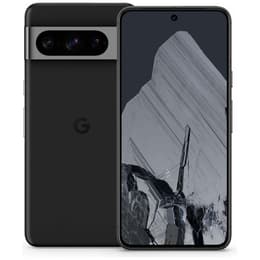
Google Pixel 8 Pro • Unlocked
Starting at

Refurbished price:$281.00

Versus $899.99 new

See options
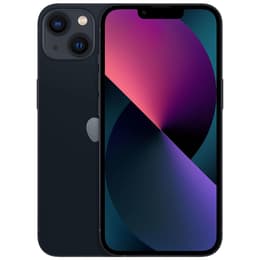
iPhone 13 • Unlocked
Starting at

Refurbished price:$218.00

Versus $629.00 new

See options

Ratings

The Google Pixel 8 Pro, released in October 2023, and the iPhone 13, launched in September 2021, represent distinct approaches to the modern smartphone experience. While both are flagship devices from their respective manufacturers, they cater to different user preferences through their operating systems and hardware philosophies. The Pixel 8 Pro emphasizes advanced computational photography and a long software support window, running on Android, while the iPhone 13 offers a streamlined iOS experience with robust performance and a focus on its integrated ecosystem.

Scores

Durability

The expected practical lifespan of a smartphone is influenced by its release timeline, software support, and repairability.

  • Software Longevity: The Google Pixel 8 Pro offers an extended software commitment, with Google promising seven years of OS upgrades, security updates, and feature drops, extending support until 2030. The iPhone 13, released in 2021, typically receives iOS updates for about five to six years from its launch, with security updates potentially continuing for a period beyond that.
  • Repairability: The iPhone 13 received an initial repairability score of 5.5/10 from iFixit, which improved to 6/10 after a software update addressed Face ID issues related to screen replacements. The Google Pixel 8 Pro has a moderate repairability score of 4.0/10, with challenges noted for battery replacement due to strong adhesive and the soldered charging port.
  • Age and Updates: As of early 2026, the iPhone 13 is approximately four and a half years old, meaning it has fewer years of guaranteed major OS updates remaining compared to the Pixel 8 Pro, which is a newer device.

Release Year

2023

2021

Last OS Compatibility

Yes

Yes

OS

Android

iOS

Foldable

No

No

Performance

Both devices deliver smooth performance for daily tasks, but their underlying hardware and optimization strategies differ.

  • Processing Power: The Google Pixel 8 Pro handles demanding applications and multitasking efficiently, providing a responsive experience for gaming and intensive tasks. The iPhone 13 also offers strong performance, smoothly running apps and games, and managing multiple tasks without significant slowdowns.
  • Battery Behavior: The Google Pixel 8 Pro features a larger battery capacity, which often translates to extended usage times for many users, with some reporting up to two days of use with moderate activity. The iPhone 13 provides reliable all-day battery life for most users, with improvements over its predecessors, though heavy usage may require more frequent charging.
  • Storage Options: The Pixel 8 Pro is available with storage configurations up to 1TB, offering ample space for extensive media and applications, while the iPhone 13 offers up to 512GB of internal storage.

Memory (GB)

12 GB

4 GB

Screen quality

The visual experience on both smartphones is characterized by vibrant displays, though with differences in technology and features.

  • Display Technology and Clarity: The Google Pixel 8 Pro features a 6.7-inch LTPO OLED display, offering sharp visuals and excellent color reproduction. The iPhone 13 comes with a 6.1-inch Super Retina XDR OLED display, known for its deep blacks and vibrant colors.
  • Brightness and Refresh Rate: The Pixel 8 Pro's display can reach a peak brightness of 2400 nits, providing excellent visibility even in bright outdoor conditions, and features a variable refresh rate from 1Hz to 120Hz for smooth scrolling and animations. The iPhone 13 has a peak brightness of 1200 nits for HDR content and a standard 60Hz refresh rate.
  • Viewing Experience: The larger screen of the Pixel 8 Pro offers a more expansive viewing area, which can be beneficial for media consumption and productivity. The iPhone 13's smaller display provides a more compact form factor, making it easier for one-handed use.

Resolution

1344 x 2992

1170 x 2532

Screen type

LTPO OLED

Super Retina XDR OLED

Audiovisual

Both devices offer capable camera systems, but they excel in different aspects of photography and videography.

  • Camera System: The Google Pixel 8 Pro features a versatile triple-camera setup, including a 50MP main sensor, a 48MP ultrawide lens with autofocus, and a 48MP telephoto lens with 5x optical zoom. The iPhone 13 has a dual 12MP camera system with a wide and an ultrawide lens, and relies on digital zoom.
  • Photography Performance: The Pixel 8 Pro is often praised for its computational photography, delivering detailed images with natural colors and strong low-light performance across all lenses. The iPhone 13 provides consistent and reliable image quality in various conditions, with good detail and color accuracy in well-lit environments, and improved low-light capabilities over previous iPhone models.
  • Video Recording: Both phones support 4K video recording at 60 frames per second. The iPhone 13 introduced Cinematic Mode, which allows for shallow depth of field effects in videos. The Pixel 8 Pro also offers strong video capabilities, with improvements in stabilization and detail.

Main camera

50 megapixels

12 megapixels

Front camera

10.5 megapixels

12 megapixels

Miscellaneous

Beyond core features, several practical elements differentiate these two smartphones.

  • Connectivity: Both devices support 5G connectivity for fast mobile data. The Google Pixel 8 Pro includes Wi-Fi 7 and Bluetooth 5.3, offering newer wireless standards. The iPhone 13 supports Wi-Fi 6 and Bluetooth 5.0.
  • Ports and Biometrics: The Pixel 8 Pro uses a USB-C 3.2 port for charging and data transfer, and features an under-display fingerprint sensor in addition to face unlock. The iPhone 13 utilizes Apple's Lightning port and relies solely on Face ID for biometric authentication.
  • Design and Durability: The Pixel 8 Pro features Gorilla Glass Victus 2 on both the front and back, with an aluminum frame and an IP68 rating for dust and water resistance. The iPhone 13 has a Ceramic Shield front cover, a glass back, and an aluminum frame, also with an IP68 rating. The Pixel 8 Pro is slightly larger and heavier than the iPhone 13.

Weight

7 oz

6 oz

Screen size (inches)

6.7

6.1

Network

5G

5G

SIM card

Physical SIM + eSIM

Physical SIM + eSIM

Carrier compatibility

Unlocked

Unlocked

Connector

USB-C

Lightning

Choosing between the Google Pixel 8 Pro and the iPhone 13 involves weighing priorities between operating systems, camera capabilities, and long-term support. Users on Reddit and other forums often praise the Pixel 8 Pro for its exceptional camera performance, particularly its computational photography features and zoom capabilities, as well as its extended software update commitment. Some Pixel users appreciate the clean Android interface and advanced AI features. However, some users have reported hardware issues with Pixel devices, such as screen problems or charging port malfunctions. The iPhone 13 is frequently lauded for its consistent performance, reliable battery life, and the seamless integration within the Apple ecosystem. Its video recording capabilities, especially Cinematic Mode, are also a common highlight. Criticisms of the iPhone 13 sometimes point to its 60Hz display refresh rate compared to newer phones and the lack of a telephoto lens on the standard model.

Users prioritizing cutting-edge camera technology, a longer software support window, and the flexibility of the Android operating system may find the Google Pixel 8 Pro well-suited to their needs. Conversely, individuals who value a highly integrated ecosystem, consistent performance, and a streamlined user experience with a focus on video features might lean towards the iPhone 13. Both devices offer a quality-assured refurbished option, providing an eco-friendly alternative for consumers.

See all articles

Our recent comparisons