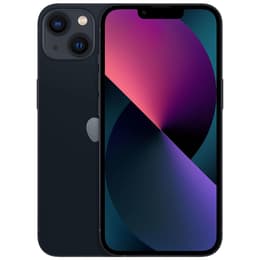
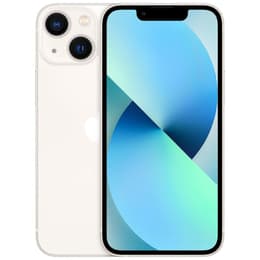
iPhone 13 • Unlocked vs iPhone 13 mini • Unlocked

iPhone 13 • Unlocked
Starting at

Refurbished price:$219.00

Versus $629.00 new

See options
iPhone 13 mini • Unlocked
Starting at

Refurbished price:$210.00

Versus $629.00 new

See options

Ratings

The iPhone 13 and iPhone 13 Mini, both released in September 2021, represent Apple's standard and compact flagship offerings from that year. While they share many core features and capabilities, their primary distinction lies in their physical size and the resulting impact on battery life and handling experience.

Both devices operate on the same iOS platform, ensuring a consistent software experience, but cater to different user preferences regarding portability versus screen real estate.

Scores

Durability

When considering the longevity of these devices, both the iPhone 13 and iPhone 13 Mini offer similar expectations for software support and physical resilience, though repairability presents some differences.

  • Software Longevity: Both the iPhone 13 and iPhone 13 Mini were released in September 2021 and shipped with iOS 15. They are compatible with the current public release of iOS, which is iOS 26, indicating a strong commitment to long-term software updates. Users can expect several more years of major iOS updates, ensuring access to new features and security enhancements.
  • Repairability: The iPhone 13 initially received a repairability score of 5 out of 10 from iFixit, which was later updated to 6 out of 10 after an iOS update addressed a Face ID issue related to screen replacements. The iPhone 13 Mini, however, has a slightly lower repairability score of 4 out of 10, primarily due to the more intricate disassembly required for screen replacement and the use of adhesive in certain areas. While both models feature modular components, the compact design of the Mini can make some repairs more challenging.
  • Expected Lifespan: Given Apple's typical support cycle and the robust build quality, both devices are designed for a practical lifespan of several years. Their Ceramic Shield front cover contributes to durability against drops. Choosing a quality-assured refurbished option for either model can further extend its useful life in an eco-friendly manner.

Release Year

2021

2021

Last OS Compatibility

Yes

Yes

OS

iOS

iOS

Foldable

No

No

Performance

Both the iPhone 13 and iPhone 13 Mini are equipped with the same internal components, leading to a consistent performance experience across both models, with battery behavior being the primary differentiator.

  • Processing Power: Both devices feature a current-generation processor with a 6-core CPU and a 4-core GPU. This hardware configuration allows for smooth handling of demanding applications, efficient multitasking, and responsive gaming experiences. Users will find both phones capable of running the latest apps and navigating the operating system without noticeable slowdowns.
  • Storage and Memory: Users have identical storage options for both models, including 128GB, 256GB, and 512GB. Both devices also come with 4GB of RAM, which contributes to efficient app management and overall system fluidity, allowing for multiple applications to run in the background without frequent reloading.
  • Battery Behavior: The iPhone 13 generally offers longer battery life compared to the iPhone 13 Mini due to its larger physical size accommodating a bigger battery. The iPhone 13 has a battery capacity of approximately 3227 mAh to 3240 mAh, while the iPhone 13 Mini features a 2406 mAh to 2428 mAh battery. In practical use, the iPhone 13 can provide up to 19 hours of video playback, whereas the iPhone 13 Mini offers up to 17 hours. This difference means the iPhone 13 can typically last longer on a single charge, especially for heavy users.

Memory

4 GB

4 GB

Screen quality

The display technology and visual quality are largely consistent between the iPhone 13 and iPhone 13 Mini, with the primary difference being the physical screen size and pixel density.

  • Display Technology: Both devices feature a Super Retina XDR OLED display, which provides deep blacks, vibrant colors, and excellent contrast. They also support HDR content and include True Tone technology for adaptive white balance, enhancing the viewing experience in various lighting conditions.
  • Resolution and Clarity: The iPhone 13 has a 6.1-inch display with a resolution of 2532 x 1170 pixels, resulting in a pixel density of approximately 460 pixels per inch (ppi). The iPhone 13 Mini, with its smaller 5.4-inch display, features a resolution of 2340 x 1080 pixels, yielding a slightly higher pixel density of about 476 ppi. This means the Mini's display is marginally sharper, though the difference is often imperceptible in everyday use.
  • Brightness and Smoothness: Both models offer a typical maximum brightness of 800 nits and a peak HDR brightness of 1200 nits, ensuring good visibility even in bright outdoor environments. Both displays operate at a standard 60Hz refresh rate, providing a smooth experience for general navigation and content consumption.

Resolution

1170 x 2532

1080 x 2340

Screen type

Super Retina XDR OLED

Super Retina XDR OLED

Audiovisual

The camera systems on the iPhone 13 and iPhone 13 Mini are identical, offering the same photographic and video capabilities across both models.

  • Dual Camera System: Both devices feature a dual 12-megapixel rear camera setup, comprising a wide-angle lens with an f/1.6 aperture and an ultra-wide-angle lens with an f/2.4 aperture and a 120-degree field of view. The main wide camera benefits from sensor-shift optical image stabilization, enhancing stability for both photos and videos.
  • Photography Performance: Both phones deliver strong performance in various lighting conditions. They excel in daylight photography, producing images with accurate colors and good detail. In low-light scenarios, both models perform well, capturing clear and bright photos. Features like Smart HDR 4 and Photographic Styles are available on both, allowing for personalized image processing.
  • Video Recording and Audio: Both the iPhone 13 and 13 Mini support 4K video recording at up to 60 frames per second and offer Cinematic mode for shallow depth-of-field video recording at 1080p at 30 fps. The microphone quality for calls and recording is consistent, and both devices provide stereo speaker output for a balanced media consumption experience.

Main camera

12 megapixels

12 megapixels

Front camera

12 megapixels

12 megapixels

Miscellaneous

Beyond core performance, several practical elements differentiate the user experience between the iPhone 13 and iPhone 13 Mini, primarily related to their physical form factor.

  • Dimensions and Handling: The iPhone 13 measures 146.7 x 71.5 x 7.65 mm and weighs 173-174 grams, offering a comfortable grip for most users. The iPhone 13 Mini is significantly more compact at 131.5 x 64.2 x 7.65 mm and weighs 140-141 grams, making it ideal for one-handed use and easier pocketability. This size difference is a key factor for users prioritizing portability.
  • Connectivity and Ports: Both devices offer modern connectivity options, including 5G cellular capabilities, Wi-Fi 6 (802.11ax), and Bluetooth 5.0. For physical connections, both models utilize the Lightning connector for charging and data transfer.
  • Sensors and Build: Both the iPhone 13 and 13 Mini incorporate Face ID for secure facial recognition. They also include a range of sensors such as a gyroscope, accelerometer, barometer, proximity sensor, and ambient light sensor, enabling various functionalities. Both feature an aluminum frame and a Ceramic Shield front cover, contributing to their overall durability.

Weight

6 oz

6 oz

Screen size (inches)

6.1

5.4

Network

5G

5G

SIM card

Physical SIM + eSIM

Physical SIM + eSIM

Carrier compatibility

Unlocked

Unlocked

Connector

Lightning

Lightning

User feedback for both the iPhone 13 and iPhone 13 Mini generally highlights their strong performance and camera capabilities. Common praise for both models centers on their powerful processor, which ensures smooth operation across applications and tasks. Users also appreciate the consistent and high-quality camera system, capable of capturing detailed photos and videos in various conditions. The vibrant OLED displays on both devices are frequently noted for their clarity and color accuracy.

However, criticisms often revolve around the battery life of the iPhone 13 Mini, with some users finding it insufficient for a full day of heavy use, especially when compared to the standard iPhone 13. Conversely, the iPhone 13's larger size can be a point of contention for those who prefer a more compact device. The 60Hz refresh rate on both models, while standard, is sometimes mentioned as a limitation compared to devices with higher refresh rates.

For users prioritizing a compact form factor and easy one-handed use, the iPhone 13 Mini is well-suited, offering flagship performance in a smaller package. However, those who value extended battery life and a larger screen for media consumption or productivity will likely find the standard iPhone 13 to be a more appropriate choice. Both devices offer a robust and reliable smartphone experience, and choosing between them largely depends on individual preferences for size and battery endurance. Opting for a quality-assured refurbished version of either model provides a sustainable choice without compromising on functionality.

See all articles

Our recent comparisons