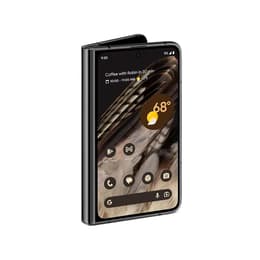
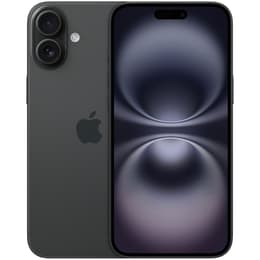

Google Pixel Fold • Unlocked vs iPhone 16 Plus • Unlocked

Google Pixel Fold • Unlocked
See options
iPhone 16 Plus • Unlocked
Starting at

Refurbished price:$599.00

Versus $829.00 new

See options

Ratings

The Google Pixel Fold, released in June 2023, marked Google's entry into the foldable smartphone market, offering a unique form factor that transforms from a compact device into a larger tablet-like screen. In contrast, the iPhone 16 Plus, launched in September 2024, represents Apple's latest iteration of its large-screen, traditional smartphone, focusing on refinements to its established design and ecosystem. These two devices cater to different user preferences, with the Pixel Fold emphasizing screen versatility and the iPhone 16 Plus prioritizing a consistent, expansive display experience within a conventional smartphone design.

Scores

Durability

The longevity of a smartphone is influenced by its release timeline, software support, and physical durability. These two devices offer different profiles in terms of expected lifespan and repairability.

  • Release Timeline: The Google Pixel Fold was released in June 2023, while the iPhone 16 Plus launched in September 2024. This difference means the iPhone 16 Plus benefits from a later starting point for software updates and hardware advancements.
  • Software Support: The Pixel Fold launched with Android 13 and is expected to receive up to five major Android upgrades, extending its software life for several years. The iPhone 16 Plus, running iOS 18, typically receives iOS updates for approximately 5-6 years from its release, potentially offering a slightly longer period of active software support.
  • Repairability and Durability: The Pixel Fold received a repairability score of 6.5 out of 10, indicating that while some self-repairs can be challenging, many components are replaceable with proper tools and guides. The iPhone 16 Plus features Ceramic Shield protection for its display, designed for enhanced toughness, and both devices carry an IP68 rating for water and dust resistance.

Release Year

2023

2024

Last OS Compatibility

Yes

Yes

Foldable

Yes

No

Performance

Performance is a key differentiator, with both devices offering robust capabilities tailored to their respective operating systems and user experiences.

  • Processing Power: The Google Pixel Fold is powered by a processor designed to handle multitasking across its dual screens and manage Google's advanced AI features. The iPhone 16 Plus incorporates Apple's A18 chip, which delivers significant improvements in CPU and GPU performance, ensuring smooth operation for demanding applications and graphics-intensive tasks.
  • Multitasking and Responsiveness: With 12 GB of RAM, the Pixel Fold is well-equipped for managing multiple applications simultaneously, especially when utilizing its larger inner display. The iPhone 16 Plus, with 8 GB of RAM, is also designed for efficient multitasking and a highly responsive user experience within the iOS ecosystem, particularly with the integration of Apple Intelligence features.
  • Storage Options: Both devices offer ample storage to accommodate apps, media, and files. The Pixel Fold is available with 256 GB or 512 GB of internal storage. The iPhone 16 Plus provides storage options of 128 GB, 256 GB, and 512 GB.

Memory

12 GB

8 GB

Screen quality

The display experience varies significantly between these two smartphones, reflecting their distinct form factors and design philosophies.

  • Display Technology and Size: The Google Pixel Fold features a 5.8-inch OLED cover display and unfolds to reveal a 7.6-inch OLED inner display, both offering a 120 Hz refresh rate for smooth visuals. The iPhone 16 Plus sports a single 6.7-inch Super Retina XDR OLED display with a 60Hz refresh rate, providing a consistent and expansive viewing area.
  • Resolution and Clarity: The Pixel Fold's cover display has a 1080p resolution at 408 ppi, while its inner display offers a 1080p resolution at 380 ppi. The iPhone 16 Plus provides a resolution of 2796 x 1290 pixels at 460 ppi, delivering sharp and detailed visuals across its screen.
  • Brightness and Features: Both devices offer vibrant colors and deep blacks characteristic of OLED technology. The iPhone 16 Plus boasts a typical maximum brightness of 1000 nits, with peak HDR brightness reaching 1600 nits and outdoor peak brightness up to 2000 nits, ensuring good visibility in various lighting conditions. The iPhone 16 Plus also includes the Dynamic Island for interactive alerts and activities.

Resolution

1840 x 2208

1290 x 2796

Screen type

Foldable OLED

Super Retina XDR OLED

Audiovisual

Both smartphones offer advanced camera systems, though their configurations and photographic strengths differ.

  • Rear Camera Systems: The Google Pixel Fold features a triple-lens rear camera setup, including a 48 MP wide lens with optical image stabilization, a 10.8 MP ultrawide lens, and a 10.8 MP telephoto lens capable of 5x optical zoom. The iPhone 16 Plus comes with a dual-camera system, comprising a 48 MP Fusion Main camera that can achieve a 2x telephoto effect through cropping, and a 12 MP ultrawide camera.
  • Photography Performance: The Pixel Fold is recognized for its strong camera performance, particularly its zoom capabilities and Google's computational photography, which delivers natural colors and effective low-light imaging. The iPhone 16 Plus benefits from Apple's Photonic Engine and Smart HDR 5, enhancing image quality across various scenarios, and introduces a new Camera Control button for intuitive photo and video capture.
  • Video Recording and Front Cameras: Both devices support 4K video recording at up to 60 frames per second. The Pixel Fold has a 9.5 MP camera on its cover screen and an 8 MP camera on its inner display. The iPhone 16 Plus features a 12 MP front camera with autofocus. The iPhone 16 Plus also supports Spatial Video recording, designed for viewing on compatible headsets.

Main camera

48 megapixels

48 megapixels

Front camera

8 megapixels

12 megapixels

Miscellaneous

Beyond core features, several practical elements contribute to the overall user experience and device utility.

  • Connectivity and Ports: The Google Pixel Fold supports Wi-Fi 6 for wireless internet connectivity. The iPhone 16 Plus offers more advanced connectivity with Wi-Fi 7 (802.11be), along with 5G and Bluetooth 5.3. The Pixel Fold uses a USB-C port. The iPhone 16 Plus also features a USB-C port for charging and data transfer.
  • Biometric Security and Additional Features: The Pixel Fold includes a fingerprint sensor for secure unlocking. The iPhone 16 Plus relies on Face ID for facial authentication. The iPhone 16 Plus also introduces an Action Button, customizable for quick access to various functions, and a dedicated Camera Control button.
  • Design and Build Materials: The Pixel Fold was noted for being the thinnest foldable smartphone at its launch. The iPhone 16 Plus maintains a durable design, with rumors suggesting a potential titanium frame for enhanced robustness. Both devices are rated IP68 for water and dust resistance.

Weight

7 oz

7030 oz

Screen size (inches)

7.6

6.7

Network

5G

5G

SIM card

Physical SIM + eSIM

eSIM

Carrier compatibility

Unlocked

Unlocked

Connector

USB-C

USB-C (USB 2)

The Google Pixel Fold and the iPhone 16 Plus cater to distinct user needs, each excelling in different areas. Users often praise the Pixel Fold for its innovative foldable design, offering the utility of a large screen in a portable form factor, and its strong camera performance, particularly its telephoto capabilities and Google's image processing. Some common criticisms for the Pixel Fold have included concerns about its initial durability, weight, and the optimization of some apps for its unique inner display.

The iPhone 16 Plus is frequently lauded for its powerful performance, consistent and vibrant display, and the seamless integration within the Apple ecosystem, including new AI features with Apple Intelligence. Users appreciate its refined camera system, especially the new Camera Control button and Spatial Video capabilities. While generally well-received, some users might note its 60Hz display refresh rate as a point of comparison against devices with higher refresh rates.

Users prioritizing a versatile, large screen experience for productivity and media consumption, coupled with advanced photographic tools, may find the Google Pixel Fold well-suited to their needs. Conversely, users who value a powerful, traditional smartphone with a large, high-quality display, a robust camera system, and deep ecosystem integration will likely lean towards the iPhone 16 Plus. Both devices represent excellent choices in their respective categories, and considering a quality-assured refurbished option for either model can be a sustainable choice for consumers.

See all articles

Our recent comparisons