
Compare models
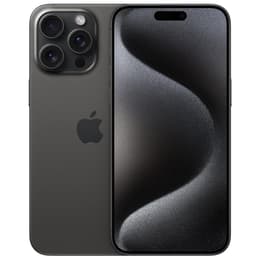
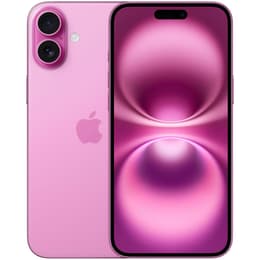
iPhone 15 Pro Max • Unlocked vs iPhone 16 Plus • Unlocked
- 1-year warranty
- Free standard shipping
- Free 30-day returns
Differences at a glance
The iPhone 15 Pro Max, released in September 2023, and the iPhone 16 Plus, launched in September 2024, represent different tiers within Apple's smartphone lineup across consecutive generations. While both devices offer large displays and operate on Apple's iOS, the 15 Pro Max emphasizes advanced features and premium construction, whereas the 16 Plus focuses on delivering a robust experience with a newer processor and updated connectivity for a broader audience. This comparison will explore their core differences to help users identify which model best suits their needs.
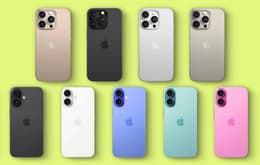
Available Models
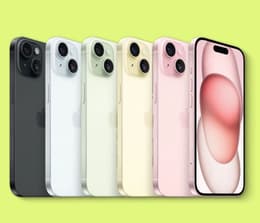
Color
Storage (GB)
Scores
Durability
When considering the longevity of these devices, both the iPhone 15 Pro Max and the iPhone 16 Plus offer substantial software support and durable designs.
- Release Timeline: The iPhone 15 Pro Max was introduced in September 2023, making it a year older than the iPhone 16 Plus, which debuted in September 2024. This difference means the 16 Plus will likely receive software updates for a longer period.
- Software Longevity: Both models are expected to receive iOS updates for approximately five to six years from their respective release dates. The iPhone 15 Pro Max launched with iOS 17 and is compatible with iOS 26, while the iPhone 16 Plus launched with iOS 18 and is also compatible with iOS 26.
- Repairability: The iPhone 15 Pro Max initially received a lower repairability score, but later iPhone 15 models saw an improved score due to features like a modular back glass and the Repair Assistant program. However, Pro models still require display removal for battery replacement, and software locks can complicate independent repairs. Information regarding the iPhone 16 Plus's specific repairability score is not yet widely available, but it is expected to follow similar design principles to recent iPhone models.
Release Year
2023
2024
Last OS Compatibility
Yes
Yes
Foldable
No
No
Performance
The performance capabilities of the iPhone 15 Pro Max and iPhone 16 Plus are driven by their respective internal components, influencing how smoothly they handle various tasks.
- Processing Power: The iPhone 15 Pro Max features a powerful processor designed for demanding applications and intensive graphics, providing a responsive experience for gaming and professional tasks. The iPhone 16 Plus, being a newer generation, incorporates an updated processor that offers enhanced efficiency and performance for everyday use and new AI features.
- Multitasking and Responsiveness: Both devices are equipped with ample memory to support smooth multitasking and quick app switching. The iPhone 15 Pro Max, with its advanced processor, handles complex workflows and high-fidelity games with ease. The iPhone 16 Plus also provides a fluid user experience, benefiting from its newer architecture for general responsiveness and future software demands.
- Storage Options: The iPhone 15 Pro Max offers a range of storage capacities, starting from 256GB and going up to 1TB, catering to users with extensive storage needs for media and applications. The iPhone 16 Plus is available with 128GB, 256GB, and 512GB storage options, providing sufficient space for most users.
Screen quality
Both the iPhone 15 Pro Max and iPhone 16 Plus feature large, vibrant displays, though with some key distinctions in their underlying technology.
- Display Technology and Size: Both phones are equipped with a 6.7-inch Super Retina XDR OLED display, offering deep blacks, high contrast, and vibrant colors. The OLED technology ensures excellent visual quality for media consumption and general use.
- Refresh Rate: A notable difference lies in the refresh rate. The iPhone 15 Pro Max features ProMotion technology, providing an adaptive refresh rate that can go up to 120Hz, resulting in smoother scrolling and more fluid animations. The iPhone 16 Plus, while offering a high-quality display, maintains a standard 60Hz refresh rate, which is suitable for most daily interactions.
- Brightness and Clarity: Both displays achieve a typical maximum brightness of 1000 nits and a peak outdoor brightness of 2000 nits, ensuring good visibility even in bright sunlight. The resolution of 2796x1290 pixels at 460 ppi on both devices delivers sharp text and clear images.
Resolution
1290 x 2796
1290 x 2796
Screen type
LTPO Super Retina XDR OLED
Super Retina XDR OLED
Audiovisual
The camera systems on the iPhone 15 Pro Max and iPhone 16 Plus are designed to capture high-quality images and videos, each with distinct capabilities.
- Main Camera System: Both devices feature a 48MP main camera that captures detailed photos, utilizing pixel-binning technology to produce high-resolution images. The iPhone 15 Pro Max's main camera has a f/1.78 aperture, while the iPhone 16 Plus features a f/1.6 aperture, which can contribute to better low-light performance.
- Zoom Capabilities: The iPhone 15 Pro Max stands out with its dedicated 12MP telephoto lens offering 5x optical zoom, allowing for clear close-ups from a distance. The iPhone 16 Plus, while lacking a dedicated telephoto lens, utilizes its 48MP main sensor to enable a 2x optical telephoto capability. Both include a 12MP ultra-wide camera for broader shots.
- Video and Special Features: Both phones support 4K video recording at up to 60 frames per second. The iPhone 15 Pro Max offers advanced video features like Spatial Video recording and ProRes video. The iPhone 16 Plus also supports Spatial Video recording, facilitated by its vertical camera layout.
Main camera
48 megapixels
48 megapixels
Front camera
12 megapixels
12 megapixels
Miscellaneous
Beyond their core features, several practical elements differentiate the iPhone 15 Pro Max and iPhone 16 Plus, impacting daily usability.
- Connectivity: The iPhone 15 Pro Max supports Wi-Fi 6E and Bluetooth 5.3, providing fast wireless connections. The newer iPhone 16 Plus steps up to Wi-Fi 7, offering potentially faster speeds and improved efficiency with compatible networks, while also featuring Bluetooth 5.3. Both support 5G cellular connectivity.
- Ports and Buttons: Both models have transitioned to a USB-C port. However, the iPhone 15 Pro Max offers faster data transfer speeds with USB 3.2 Gen 2 (up to 10Gb/s), beneficial for large file transfers. The iPhone 16 Plus uses USB 2.0 speeds (up to 480Mb/s). Both devices feature the customizable Action Button, replacing the traditional mute switch, allowing quick access to various functions.
- Build and Handling: The iPhone 15 Pro Max features a titanium frame, contributing to its premium feel and durability, weighing 221 grams. The iPhone 16 Plus utilizes an aluminum frame and is lighter at 199 grams, potentially offering a more comfortable hold for some users. Both are protected by Ceramic Shield on the front.
Weight
221 oz
7030 oz
Screen size (inches)
6.7
6.7
Network
5G
5G
SIM card
eSIM
eSIM
Carrier compatibility
Unlocked
Unlocked
Connector
USB-C (USB 3)
USB-C (USB 2)
What the community thinks
The iPhone 15 Pro Max and iPhone 16 Plus cater to slightly different user priorities, reflecting their respective positions in Apple's product hierarchy and generational advancements. Users often praise the iPhone 15 Pro Max for its exceptional camera system, particularly the 5x optical telephoto zoom, and its ProMotion display, which delivers a noticeably smoother visual experience. Its titanium build is also frequently highlighted for its premium feel and durability. Some users, however, have noted its weight as a factor in extended use.
The iPhone 16 Plus, being a newer model, benefits from an updated processor and the inclusion of Wi-Fi 7, offering improved future-proofing for connectivity. Users appreciate its larger battery capacity, which often translates to extended usage times, and the integration of features like the Action Button and Apple Intelligence. A common point of discussion for the Plus models is the standard 60Hz refresh rate, which some users accustomed to higher refresh rates might notice.
Users prioritizing advanced camera capabilities, especially optical zoom, and a fluid 120Hz display for a premium visual experience may find the iPhone 15 Pro Max well-suited to their needs. Conversely, users who value the latest processor, enhanced battery life, and cutting-edge wireless connectivity in a slightly lighter package, and for whom a 60Hz display is sufficient, might lean towards the iPhone 16 Plus. Both devices offer a robust iOS experience, and choosing between them often comes down to these specific feature preferences. For those considering an eco-friendly alternative, quality-assured refurbished options for both models provide a sustainable choice.