
iPhone 12 mini • Unlocked vs OnePlus 10 Pro • Unlocked

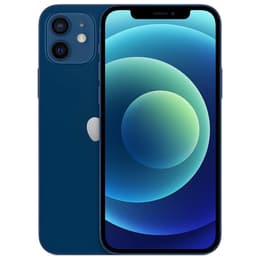
iPhone 12 mini • Unlocked
Starting at

Refurbished price:$149.00

Versus $459.00 new

See options
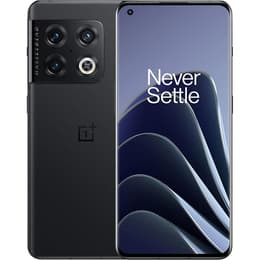
OnePlus 10 Pro • Unlocked
Starting at

Refurbished price:$370.00

Versus $999.00 new

See options

Ratings

The iPhone 12 Mini, released in November 2020, and the OnePlus 10 Pro, launched globally in March 2022, represent distinct philosophies in smartphone design. The iPhone 12 Mini offers a compact form factor with Apple's iOS ecosystem, while the OnePlus 10 Pro provides a larger display and a feature-rich Android experience. These devices cater to different user preferences, primarily differing in their physical size, operating system, and camera capabilities.

Scores

Durability

When considering the long-term usability of these devices, their release timelines and software support are key factors.

  • Release Timeline: The iPhone 12 Mini was released in November 2020, making it an older device compared to the OnePlus 10 Pro, which launched globally in March 2022. This age difference impacts the remaining duration of software updates and overall practical lifespan.
  • Software Longevity: Apple typically provides iOS updates for 5-6 years from a device's release, meaning the iPhone 12 Mini is expected to receive support for a few more years. The OnePlus 10 Pro, running Android, is generally expected to receive around four years of software updates from its release. Users prioritizing the longest possible software support might find the iPhone 12 Mini's remaining update window shorter due to its earlier launch.
  • Repairability: The iPhone 12 Mini has an iFixit repairability score of 6 out of 10, with modular components for battery and display replacements. However, its glass back is noted as fragile and not separately replaceable. The OnePlus 10 Pro also received a repairability score of 6 out of 10 from PBKreviews, indicating that while some components are accessible, adhesive use and plastic covers can complicate repairs. Another source gives it a 7.8 out of 10.

Release Year

2020

2022

Last OS Compatibility

Yes

Yes

OS

iOS

Android

Foldable

No

No

Performance

The performance of a smartphone is crucial for daily tasks, app usage, and multitasking, and both devices offer capable experiences within their respective ecosystems.

  • Everyday Task Handling: The iPhone 12 Mini, powered by its A14 Bionic chip, handles demanding applications and multitasking smoothly, providing a responsive user experience. Users report no lag when playing games or recording 4K video. The OnePlus 10 Pro, featuring a current-generation processor, also delivers slick performance with a rapid interface and smooth gaming.
  • Multitasking and Responsiveness: With 4GB of RAM, the iPhone 12 Mini manages typical app switching and background processes effectively for most users. The OnePlus 10 Pro offers 8GB or 12GB of RAM, which provides more headroom for extensive multitasking and keeping numerous applications open simultaneously without needing to reload.
  • Battery Behavior: The iPhone 12 Mini has a smaller battery capacity (2227 mAh), which often translates to needing more frequent charging for heavy users. Light to moderate users may find it lasts a full day. The OnePlus 10 Pro, with its larger 5000 mAh battery, generally offers good battery life, often lasting a full day or more with moderate usage. It also features rapid wired and wireless charging capabilities.

Memory (GB)

4 GB

12 GB

Screen quality

The visual experience is a primary interaction point, and the displays on these two phones cater to different preferences in size and technology.

  • Display Technology and Clarity: The iPhone 12 Mini features a 5.4-inch Super Retina XDR OLED display, offering deep blacks and vibrant colors with a resolution of 2340 x 1080 pixels and a high pixel density of 476 ppi. The OnePlus 10 Pro boasts a larger 6.7-inch QHD+ AMOLED display with a resolution of 3216x1440 pixels. Both utilize OLED technology for excellent contrast.
  • Refresh Rate and Smoothness: The iPhone 12 Mini has a standard refresh rate, providing a consistent visual experience. The OnePlus 10 Pro features a 120Hz LTPO display, which allows for a smoother scrolling experience and more fluid animations, and can adapt its refresh rate to save power.
  • Screen Size and Viewing Experience: The iPhone 12 Mini's compact 5.4-inch screen is designed for one-handed use and portability, making it suitable for users who prefer a smaller device. The OnePlus 10 Pro's expansive 6.7-inch display provides a more immersive viewing experience for media consumption and gaming.

Resolution

1080 x 2340

1440 x 3216

Screen type

Super Retina XDR OLED

LTPO2 Fluid AMOLED

Audiovisual

Both smartphones offer capable camera systems, but they approach photography with different hardware configurations and software enhancements.

  • Camera System Configuration: The iPhone 12 Mini is equipped with a dual 12-megapixel camera system on the rear, consisting of a wide and an ultrawide lens, and a 12-megapixel front camera. The OnePlus 10 Pro features a triple rear camera setup, including a 48-megapixel main sensor, a 50-megapixel ultrawide sensor with a 150-degree field of view, and an 8-megapixel telephoto lens offering 3.3x optical zoom. It also has a 32-megapixel front camera.
  • Photography Performance: The iPhone 12 Mini delivers excellent photos with vibrant colors and improved detail, especially in low-light conditions thanks to its Night mode, which is available on all cameras. The ultrawide camera is noted for its quality and lens correction. The OnePlus 10 Pro's main camera captures good detail and accurate colors in daylight, with decent low-light performance. Its ultrawide camera, while offering a very wide field of view, can sometimes show distortion or softer details. The telephoto lens provides clear shots at its native 3.3x optical zoom.
  • Video Recording: The iPhone 12 Mini supports 4K video recording at up to 60 frames per second, including Dolby Vision HDR recording. Videos are noted for being sharp, bright, and stable. The OnePlus 10 Pro can record video up to 8K at 24 frames per second and 4K at 120 frames per second, with good colors and stabilization in 4K.

Main camera

12 megapixels

48 megapixels

Front camera

12 megapixels

32 megapixels

Miscellaneous

Beyond core performance and display, several practical features contribute to the overall user experience and device utility.

  • Connectivity: Both the iPhone 12 Mini and the OnePlus 10 Pro support 5G networks, offering faster cellular data speeds where available. The iPhone 12 Mini also includes Wi-Fi 6 and Bluetooth 5.
  • Ports and Charging: The iPhone 12 Mini uses Apple's proprietary Lightning connector for charging and data transfer. It supports MagSafe for wireless charging. The OnePlus 10 Pro features a USB-C port and is known for its rapid charging capabilities, including 80W wired and 50W wireless charging.
  • Biometric Security: The iPhone 12 Mini relies on Face ID for secure facial recognition. The OnePlus 10 Pro incorporates an in-display optical fingerprint scanner.
  • Design and Handling: The iPhone 12 Mini is notably compact and lightweight, measuring 131.5 x 64.2 x 7.4mm and weighing 133g, making it easy for one-handed use and pocketability. It features a flat-edged design with an aluminum frame and a Ceramic Shield front cover for enhanced durability. The OnePlus 10 Pro is a larger device at 163 x 73.9 x 8.9mm and 200.5g, with a curved glass design and a frosted glass back.

Weight

7 oz

7 oz

Screen size (inches)

5.4

6.7

Network

5G

5G

SIM card

Physical SIM + eSIM

Physical SIM

Carrier compatibility

Unlocked

Unlocked

The iPhone 12 Mini and OnePlus 10 Pro cater to distinct user needs, each with its own set of strengths and considerations based on user feedback.

Users frequently praise the iPhone 12 Mini for its exceptionally compact size, making it comfortable for one-handed use and easy to carry. Its camera system is generally well-regarded for producing good photos and videos, especially with its Night mode. The smooth and consistent iOS experience is also a common positive. However, the most frequent criticism leveled against the iPhone 12 Mini is its battery life, which many heavy users find insufficient for a full day without recharging. Some users also find the small screen size less ideal for extensive media consumption.

The OnePlus 10 Pro receives commendation for its large, vibrant display, which offers a smooth 120Hz refresh rate, making it suitable for media and gaming. Its battery life is generally considered good, often lasting a full day, and its rapid charging capabilities are a significant highlight for many. Performance is also noted as slick and responsive. Conversely, some users have reported inconsistencies with the camera, particularly with the ultrawide lens and overall image processing compared to top-tier rivals. There have also been mentions of software glitches or a perceived slowdown in performance over time for some users.

Users prioritizing a highly portable device with a strong, consistent software experience and a capable camera for everyday use may find the iPhone 12 Mini well-suited to their needs, provided they are mindful of its battery life. Conversely, individuals who value a large, immersive display, extended battery life, and extremely fast charging, along with a powerful Android ecosystem, might lean towards the OnePlus 10 Pro. Both devices are available as quality-assured refurbished options, providing an eco-friendly alternative for consumers.
See all articles

Our recent comparisons