
Galaxy S10 • Unlocked vs iPhone 11 Pro Max • Unlocked

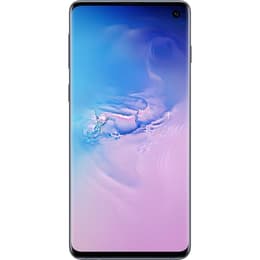
Galaxy S10 • Unlocked
Starting at

Refurbished price:$148.00

Versus $669.00 new

See options
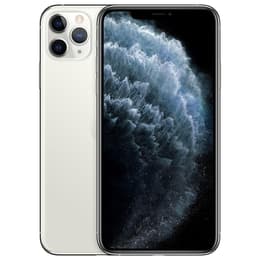
iPhone 11 Pro Max • Unlocked
Starting at

Refurbished price:$214.00

Versus $849.00 new

See options

Ratings

The Samsung Galaxy S10, released in March 2019, and the iPhone 11 Pro Max, launched in September 2019, represent flagship smartphones from their respective manufacturers from the same year. While both devices offer premium experiences, they differ in their operating systems, design philosophies, and specific feature sets. The Galaxy S10 runs on Android, offering a customizable experience, while the iPhone 11 Pro Max operates on iOS, known for its integrated ecosystem.

Scores

Durability

When considering the practical lifespan of these devices, several factors come into play, including software support and physical resilience.

  • Software Longevity: The Galaxy S10, originally launched with Android 9, received major Android updates up to Android 12, with security updates concluding around March 2023 for most models. The iPhone 11 Pro Max, starting with iOS 13, typically receives 5-6 years of major iOS updates, suggesting a longer period of official software support.
  • Physical Durability: Both devices feature glass fronts and backs with metal frames and offer IP68 water and dust resistance. The iPhone 11 Pro Max utilizes a stainless steel frame, while the Galaxy S10 uses aluminum.
  • Repairability: The Galaxy S10 received a low repairability score of 3 out of 10 from iFixit, largely due to extensive adhesive and a soldered charging port, making common repairs challenging. The iPhone 11 Pro Max scored a 6 out of 10 from iFixit, indicating that critical display and battery repairs are prioritized in its design, though liberal use of screws requires specific tools.

Release Year

2019

2019

Last OS Compatibility

No

Yes

OS

Android

iOS

Foldable

No

No

Performance

Both smartphones were top-tier performers at their release, capable of handling demanding applications and multitasking. Their performance characteristics, however, are influenced by their respective hardware and software optimizations.

  • Processing Power: The iPhone 11 Pro Max features a highly optimized processor designed for efficient performance across iOS applications, ensuring smooth operation for everyday tasks and graphically intensive games. The Galaxy S10, powered by a capable processor, also delivers a responsive experience for general use and gaming, with users reporting smooth app transitions and quick loading times.
  • Multitasking and Storage: The Galaxy S10 typically offers more RAM, which can be beneficial for keeping many applications open in the background without needing to reload them. It also provides expandable storage via a microSD card slot, a feature not present on the iPhone 11 Pro Max, which relies solely on its internal storage options.
  • Battery Performance: The iPhone 11 Pro Max is noted for its extended battery life, with many users reporting it can comfortably last through a full day, and often two, of moderate to heavy use. The Galaxy S10's battery life is generally considered sufficient for a full day of typical use, though heavy users might find themselves needing to recharge sooner.

Memory (GB)

8 GB

4 GB

Screen quality

The visual experience on both devices is a highlight, each offering vibrant and detailed displays with distinct characteristics.

  • Display Technology: The Galaxy S10 features a 6.1-inch Dynamic AMOLED display, known for its rich colors, deep blacks, and high contrast. The iPhone 11 Pro Max comes with a larger 6.5-inch Super Retina XDR OLED display, which also delivers excellent color accuracy, deep blacks, and high brightness levels.
  • Resolution and Clarity: The Galaxy S10 offers a resolution of 1440 x 3040 pixels, providing a very sharp image. The iPhone 11 Pro Max has a resolution of 1242 x 2688 pixels, resulting in a clear and crisp viewing experience. Both displays offer high pixel densities, ensuring text and images appear smooth.
  • Brightness and Refresh Rate: Both phones feature high peak brightness, making them suitable for outdoor viewing. Both devices have a standard 60Hz refresh rate, providing a smooth visual experience for most content.

Resolution

1440 x 3040

1242 x 2688

Screen type

Dynamic AMOLED

Super Retina XDR OLED

Audiovisual

Both the Galaxy S10 and iPhone 11 Pro Max were recognized for their advanced camera systems at the time of their release, offering versatile photography and videography capabilities.

  • Rear Camera System: The Galaxy S10 features a triple-camera setup with wide, telephoto, and ultrawide lenses, providing flexibility for various shooting scenarios. The iPhone 11 Pro Max also boasts a triple-camera system, including wide, ultrawide, and telephoto lenses, known for its consistent image quality across all sensors.
  • Photography Performance: The Galaxy S10 delivers strong performance in good lighting conditions, capturing detailed and vibrant photos. Its ultrawide lens is a notable feature for expansive shots. The iPhone 11 Pro Max excels in low-light photography with its dedicated Night mode and offers excellent detail and dynamic range in everyday shots.
  • Video Recording: Both devices are capable of recording 4K video at 60 frames per second. The iPhone 11 Pro Max is particularly praised for its video recording quality, offering extended dynamic range and cinematic stabilization. The Galaxy S10 also provides good video performance with clear audio.

Main camera

12 megapixels

12 megapixels

Front camera

10 megapixels

12 megapixels

Miscellaneous

Beyond the core features, several practical elements contribute to the overall user experience of these smartphones.

  • Connectivity: Both devices support 4G LTE and Wi-Fi 6 for fast wireless connectivity. They also include Bluetooth 5.0 for connecting to accessories. The Galaxy S10 also offered a 5G variant, though the iPhone 11 Pro Max does not support 5G.
  • Ports and Sensors: The Galaxy S10 retains a 3.5mm headphone jack and features a USB-C port for charging and data transfer. It also incorporates an ultrasonic in-display fingerprint sensor for biometric authentication. The iPhone 11 Pro Max uses Apple's proprietary Lightning port and relies on Face ID for secure facial recognition.
  • Design and Handling: The Galaxy S10 is generally lighter and has a slightly smaller form factor, which some users find more comfortable for one-handed use. The iPhone 11 Pro Max is a larger and heavier device, offering a more expansive screen for media consumption but potentially requiring two-handed operation for some users.

Weight

6 oz

8 oz

Screen size (inches)

6.1

6.5

Network

LTE

LTE

SIM card

Physical SIM

Physical SIM + eSIM

Carrier compatibility

Unlocked

Unlocked

The Samsung Galaxy S10 and iPhone 11 Pro Max, both released in 2019, continue to offer capable smartphone experiences, though their age means they have reached or are nearing the end of official software support. Users often praise the Galaxy S10 for its vibrant Dynamic AMOLED display, the inclusion of a headphone jack, and expandable storage, which provides flexibility for media enthusiasts. Some users, however, have noted that its battery life, while adequate, may not match the endurance of its Apple counterpart, and its repairability score is lower.

The iPhone 11 Pro Max is frequently lauded for its exceptional battery life, robust performance, and high-quality camera system, particularly its video capabilities and Night mode. Criticisms sometimes point to its larger size and weight, which can impact one-handed usability, and the absence of a headphone jack or expandable storage.

Users prioritizing a highly customizable Android experience with a headphone jack and expandable storage may find the Galaxy S10 a suitable choice. Those who value extended battery life, a highly optimized software ecosystem, and strong camera performance, especially for video, might lean towards the iPhone 11 Pro Max. Both devices can be excellent quality-assured refurbished options, offering a sustainable choice for consumers.


See all articles

Our recent comparisons