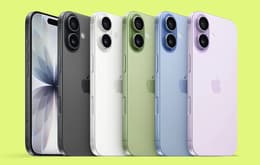
Compare models
Galaxy S22+ 5G • Unlocked vs iPhone 17 • Unlocked
- 1-year warranty
- Free standard shipping
- Free 30-day returns
Differences at a glance
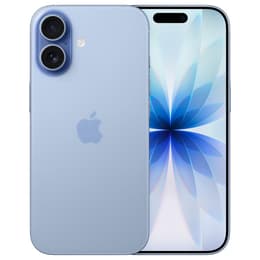
The Samsung Galaxy S22+ 5G (2022) and the Apple iPhone 17 (2025) represent different generations and ecosystems in the smartphone market. While the Galaxy S22+ runs on the Android operating system with Samsung's custom interface, the iPhone 17 operates on Apple's iOS platform. These two devices differ significantly in their release years, hardware capabilities, and software foundations, providing distinct options for everyday users.
Available Models
Color
Storage (GB)
Scores
Durability
When examining longevity and build endurance, these two smartphones span different phases of their support lifecycles, with the newer Apple model offering extended software relevance.
- Release Timeline: The Galaxy S22+ arrived in early 2022, whereas the iPhone 17 launched in late 2025, resulting in a three-year age gap that directly impacts remaining software support windows.
- Software Longevity: The iPhone 17 benefits from Apple's long-term operating system updates, while the Galaxy S22+ approaches the latter half of its promised major Android upgrade path.
- Expected Lifespan: Users looking for a quality-assured refurbished option from sustainable channels will find that both models offer durable construction, though the newer release provides a longer window for future software patches.
Release Year
2022
2025
Last OS Compatibility
Yes
Yes
OS
Android
iOS
Foldable
No
No
Performance
Day-to-day operation, multitasking, and battery behavior vary between the two devices due to hardware differences and generation-specific optimizations.
- Storage and Multitasking: Both models are equipped with sufficient memory for standard app switching, though base storage configurations differ, with the newer Apple device offering larger baseline capacity options.
- Processor Responsiveness: Both devices handle daily tasks, web browsing, and demanding applications smoothly, though the newer processor architecture in the iPhone 17 delivers faster app loading and improved thermal management during heavy use.
- Battery Behavior: The Galaxy S22+ features a slightly smaller power cell that typically requires a daily recharge under heavy usage, whereas the iPhone 17 benefits from improved energy efficiency that extends usage times between charges.
Screen quality
Viewing media, reading text, and interacting with content involve distinct display panels tailored to each manufacturer's design standards.
- Display Technology: Both devices utilize vibrant OLED panels with deep blacks and rich contrast, ensuring clear visibility for photos, videos, and daily applications.
- Refresh Rates and Fluidity: Both models support high refresh rates up to 120Hz, resulting in smooth scrolling through web pages and fluid animation transitions across the user interface.
- Outdoor Brightness: The iPhone 17 achieves higher peak outdoor brightness levels compared to the older Galaxy S22+, making on-screen content easier to read under direct sunlight.
Resolution
1080 x 2340
2622x1206
Screen type
Dynamic AMOLED 2X
Super Retina XDR
Audiovisual
Capturing photos, recording video, and handling media playback rely on distinct camera arrays and built-in speaker systems.
- Camera System Capabilities: The Galaxy S22+ includes a dedicated telephoto lens for optical zoom, while the iPhone 17 relies on a dual-sensor rear system with high-resolution main and ultra-wide lenses.
- Low-Light and Video: Both devices handle everyday photography and video recording reliably, with modern image processing yielding sharp details and balanced colors in various lighting conditions.
- Media and Audio: Stereo speakers on both smartphones provide adequate volume and clarity for casual video watching and hands-free calls without external speakers.
Main camera
50 megapixels
48 megapixels
Front camera
10 megapixels
18 megapixels
Miscellaneous
Practical daily usability is shaped by physical dimensions, connectivity standards, and hardware port selections.
- Connectivity and Ports: The Galaxy S22+ uses a USB-C port and supports 5G networks, while the iPhone 17 adopts a USB-C port alongside updated wireless standards like Wi-Fi 7 and Bluetooth 6.0.
- Biometrics and Security: Samsung offers an ultrasonic in-display fingerprint sensor alongside facial recognition, whereas Apple relies exclusively on facial recognition security.
- Physical Handling: The Galaxy S22+ features a 6.6-inch screen, making it slightly larger and heavier than the 6.3-inch iPhone 17, which offers a more compact footprint for single-handed use.
Weight
7 oz
185 oz
Screen size (inches)
6.6
6.3
Network
5G
5G
SIM card
Physical SIM + eSIM
eSIM
Carrier compatibility
Unlocked
Unlocked
Connector
USB-C
USB-C
What the community thinks
Users evaluating these two smartphones often point out that the Galaxy S22+ delivers a reliable Android experience with a convenient dedicated zoom lens, though some note that battery life can drain quickly under heavy workloads. Conversely, common praise for the iPhone 17 centers around its bright display, efficient energy management, and long-term software support, though users accustomed to Android note that transitioning to iOS requires adapting to a different interface structure.
Users prioritizing an Android operating system, expandable software customization, and a dedicated zoom lens may prefer the Galaxy S22+, while users prioritizing extended software longevity, higher peak display brightness, and Apple's ecosystem will lean toward the iPhone 17. Choosing a quality-assured refurbished device allows consumers to access either of these capable models as an eco-friendly, sustainable choice that reduces electronic waste.