
Compare models

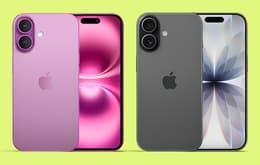
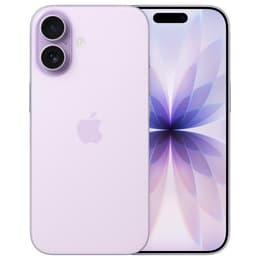
iPhone 17 • Unlocked vs iPhone 17 Pro Max • Unlocked

  • 1-year warranty
  • Free standard shipping
  • Free 30-day returns
iPhone 17 • Unlocked
Starting at

Refurbished price:$1,026.70

Versus $1,029.00 new

See options
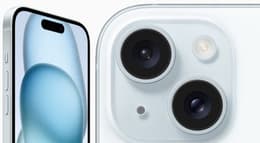
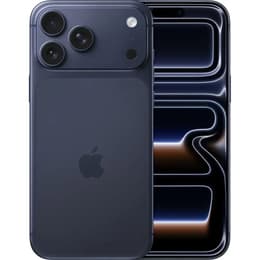
iPhone 17 Pro Max • Unlocked
Starting at

Refurbished price:$1,209.00

Versus $1,399.00 new

See options

Differences at a glance

The iPhone 17 (2025) and iPhone 17 Pro Max (2025) are contemporary flagship smartphones from Apple's ecosystem, both running on iOS. While they share core architectural foundations and modern connectivity features, they cater to distinct device sizes and workflow demands.

The primary differentiators lie in physical dimensions, screen workspace, battery capacity, and advanced camera flexibility, separating a streamlined daily driver from an expansive power-user device.

Available Models

Color

Storage (GB)

Scores

Durability

Both models share the same release timeline and run on current software architecture, though their physical endurance and internal capacities differ for long-term ownership.

    Software longevity and updates: Both devices receive identical multi-year operating system support cycles from Apple, ensuring parallel software feature longevity.
    Repairability and build integrity: Both models incorporate high-durability glass and metal construction with IP68 water and dust resistance ratings, maintaining standard repair pathways through certified service channels.
    Expected practical lifespan: Users can anticipate many years of reliable daily operation from either model, though the larger battery capacity on the Pro Max model experiences slightly lower daily charge cycle degradation over extended multi-year ownership.

Release Year

2025

2025

Last OS Compatibility

Yes

Yes

OS

iOS

iOS

Foldable

No

No

Performance

The iPhone 17 and iPhone 17 Pro Max handle demanding apps, multitasking, and system navigation fluidly, though their internal configurations accommodate different workloads.

    Multitasking and system responsiveness: Both devices handle heavy applications, graphics-intensive gaming, and background processes smoothly, though the Pro Max configuration includes additional memory headroom for sustained heavy multitasking workflows.
    Storage capacities: The standard model accommodates everyday file and media storage needs, whereas the Pro Max offers broader capacity tiers extending up to extensive storage volumes for large local media libraries.
    Battery behavior in daily use: The standard model comfortably supports a full day of mixed usage, while the larger physical footprint of the Pro Max houses an expanded battery capacity that delivers extended endurance for heavy all-day media consumption and travel.

Screen quality

Both models feature OLED display technology with high outdoor brightness levels and smooth adaptive refresh rates, while differing primarily in physical canvas size.

    Display size and workspace: The standard model offers a compact 6.3-inch viewing area suitable for single-handed operation, whereas the Pro Max provides a sprawling 6.9-inch canvas favored for media editing and split-screen viewing.
    Clarity and visual performance: Both screens deliver deep contrast ratios, accurate color profiles, and high pixel density for crisp text rendering and vibrant HDR video playback.
    Outdoor visibility: High peak brightness capabilities on both devices ensure clear readability under direct sunlight, supported by adaptive refresh technology that scales down during static viewing to conserve energy.

Resolution

2622x1206

2868x1320

Screen type

Super Retina XDR

Super Retina XDR

Audiovisual

Both smartphones feature advanced high-resolution main camera systems capable of capturing crisp everyday photos and detailed video recordings.

    Rear camera versatility: The standard model utilizes a dual-camera configuration optimized for standard and wide-angle framing, while the Pro Max integrates a triple-lens system with an extended optical zoom range for distant subjects.
    Video and audio performance: Both devices record stable, high-definition video with spatial audio capture and reliable background noise reduction during voice calls.
    Media consumption and speakers: Stereo speaker output on both models delivers clear audio for podcasts and video playback, though the larger acoustic chamber of the Pro Max provides slightly fuller sound depth.

Main camera

48 megapixels

48 megapixels

Front camera

18 megapixels

18 megapixels

Miscellaneous

Practical daily usability elements reflect distinct physical form factors and hardware layout choices across both devices.

    Handling and dimensions: The standard model measures lighter and more compact for effortless pocketability, while the Pro Max features a wider, heavier chassis that prioritizes maximum screen estate over one-handed comfort.
    Connectivity and ports: Both models support current-generation wireless standards, 5G cellular networks, and universal USB-C wired connectivity for charging and peripheral accessories.
    Security and sensors: Fast facial recognition sensors and integrated spatial positioning hardware operate identically across both variants.

Weight

185 oz

185 oz

Screen size (inches)

6.3

6.9

Network

5G

5G

SIM card

eSIM

eSIM

Carrier compatibility

Unlocked

Unlocked

Connector

USB-C

USB-C

What the community thinks

Choosing between these two smartphones depends heavily on physical preferences and media workflows. Users prioritizing a compact, lightweight device for single-handed daily use will find the standard iPhone 17 well-suited to their needs. Conversely, users prioritizing maximum screen workspace, expanded storage capabilities, and extended battery endurance will lean toward the iPhone 17 Pro Max.

For those looking to make an eco-friendly choice, exploring a quality-assured refurbished option through platforms like Back Market offers a sustainable way to acquire either device with reliable performance guarantees.

Our recent comparisons