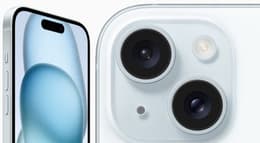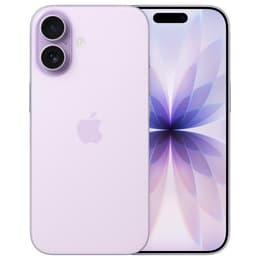
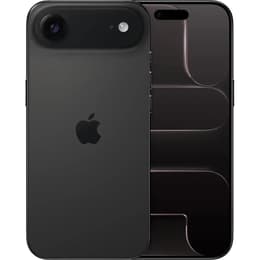

Compare models
iPhone 17 • Unlocked vs iPhone Air • Unlocked
- 1-year warranty
- Free standard shipping
- Free 30-day returns
Differences at a glance
The iPhone 17 (2025) and iPhone Air (2025) are contemporary smartphones from Apple's nineteenth device generation that take divergent approaches to form factor and daily utility. While the standard iPhone 17 focuses on balanced, everyday versatility with a dual-camera system, the iPhone Air prioritizes an ultra-slim profile and lightweight build. Both devices run on iOS and share modern software foundations, yet their distinct physical designs cater to different user preferences.
Available Models
Color
Storage (GB)
Scores
Durability
Both devices launched concurrently in late 2025, offering extended software support lifecycles typical of current mobile hardware. Users can expect multi-year operating system upgrades and security updates for both models.
- Software Longevity: Both devices receive long-term operating system updates, ensuring identical software support windows from their release date.
- Build Durability: The iPhone 17 uses a traditional sturdy chassis, while the iPhone Air incorporates a reinforced titanium frame designed for structural rigidity at minimal thickness.
- Practical Lifespan: Both models maintain high internal component endurance, though hardware repairability options and drop resistance profiles vary slightly based on their physical dimensions.
Release Year
2025
2025
Last OS Compatibility
Yes
Yes
OS
iOS
iOS
Foldable
No
No
Performance
The iPhone 17 and iPhone Air handle demanding mobile applications, rapid multitasking, and intensive gaming smoothly thanks to responsive current-generation processors. Storage configurations start at generous capacities on both models to accommodate large media libraries and apps.
- App Responsiveness: Both devices load heavy applications instantly and maintain stable frame rates during prolonged gaming sessions.
- Multitasking Handling: Plentiful memory allocation allows background apps to remain active without sudden reloading or stuttering during intensive workflows.
- Battery Behavior: The standard iPhone 17 accommodates a larger internal power cell for extended daily endurance, whereas the slimmer iPhone Air relies on power-efficient engineering to balance battery longevity with its reduced physical volume.
Screen quality
Display engineering on both models delivers crisp visuals, deep black levels, and high outdoor visibility using advanced organic light-emitting diode technology. High refresh rates ensure smooth scrolling and responsive touch interaction across both screens.
- Display Technology: Both models feature bright OLED panels with wide color support and high contrast ratios for clear media viewing.
- Outdoor Visibility: High peak brightness levels allow comfortable readability under direct sunlight, supplemented by anti-glare glass properties.
- Viewing Smoothness: Adaptive refresh rates scale dynamically up to high frequencies for fluid motion during navigation and gaming, dropping down during static tasks to conserve energy.
Resolution
2622x1206
2736x1260
Screen type
Super Retina XDR
Super Retina XDR
Audiovisual
Camera capabilities differ significantly between the two models, reflecting their distinct design priorities. The standard iPhone 17 features a versatile dual-lens array, whereas the iPhone Air adopts a streamlined single-lens approach.
- Lens Configuration: The iPhone 17 includes both main and ultra-wide lenses for framing flexibility, while the iPhone Air utilizes a single high-resolution main camera system.
- Low-Light and Video: Both units capture detailed everyday photos and stable high-definition video, utilizing advanced computational processing to manage challenging lighting environments.
- Audio Output: Built-in microphone arrays deliver clear voice pickup for calls, and stereo speaker configurations provide balanced audio for media consumption.
Main camera
48 megapixels
48 megapixels
Front camera
18 megapixels
18 megapixels
Miscellaneous
Practical everyday features such as connectivity standards, biometric security, and physical handling characteristics shape how each device feels in daily use.
- Connectivity and Ports: Both models support fast 5G networks, modern Wi-Fi standards, and universal USB-C connectivity for data transfer and replenishment.
- Biometrics and Sensors: Secure facial recognition technology and motion sensors are integrated standard into both devices for security and navigation.
- Handling and Weight: The iPhone 17 offers a standard handheld footprint, while the iPhone Air stands out with its exceptionally thin and light profile that reduces pocket bulk.
Weight
185 oz
185 oz
Screen size (inches)
6.3
6.5
Network
5G
5G
SIM card
eSIM
eSIM
Carrier compatibility
Unlocked
Unlocked
Connector
USB-C
USB-C
What the community thinks
User feedback highlights the iPhone 17 for its reliable battery endurance and flexible dual-camera setup, though some users note its more traditional thickness. Conversely, the iPhone Air receives praise for its remarkably lightweight, slim feel in the hand, though users occasionally point out the trade-off of having a single rear camera and a smaller battery capacity. Choosing between these devices depends heavily on physical preferences and daily usage habits.
Users prioritizing a featherlight, ultra-slim design will find the iPhone Air well-suited to their needs, while users prioritizing extended battery longevity and versatile multi-lens photography may prefer the standard iPhone 17. For buyers exploring sustainable options, choosing a quality-assured refurbished option provides an eco-friendly alternative to brand-new devices without compromising on performance. Ultimately, evaluating personal handling preferences and camera needs will guide you toward the right model.