Compare models

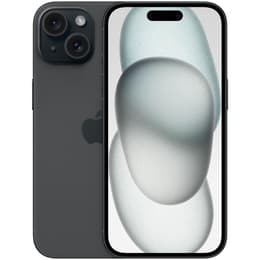
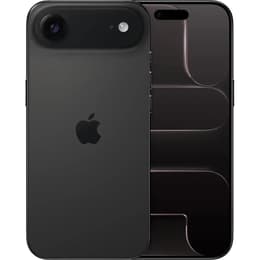
iPhone 15 • Unlocked vs iPhone Air • Unlocked

  • 1-year warranty
  • Free standard shipping
  • Free 30-day returns
iPhone 15 • Unlocked
Starting at

Refurbished price:$394.00

Versus $729.00 new

See options
iPhone Air • Unlocked
Starting at

Refurbished price:$776.00

Versus $999.00 new

See options

Differences at a glance

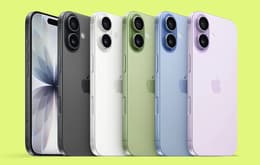
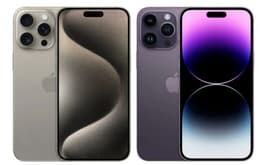
The iPhone 15 (2023) and the iPhone Air (2025) represent two distinct approaches to smartphone design and engineering within Apple's mobile lineup. While the iPhone 15 serves as a well-rounded standard device with a familiar, comfortable form factor, the iPhone Air introduces a radically thin profile and a larger screen built for portability. Choosing between them involves balancing physical dimensions, display fluidity, and everyday hardware capabilities.

Available Models

Color

Storage (GB)

Scores

Durability

When considering long-term durability and software support, both devices benefit from Apple's extensive ecosystem updates, though their release schedules place them at different points in their lifespans.

  • Software Longevity: The iPhone Air launches two years after the iPhone 15, granting it an extended software support window and longer access to upcoming operating system versions.
  • Build Materials: The iPhone 15 features an aluminum frame with color-infused glass, while the iPhone Air utilizes a titanium frame and advanced glass coatings designed for enhanced scratch resistance.
  • Repairability: Both models maintain standard water and dust resistance ratings alongside modular internal components, though choosing a quality-assured refurbished option provides a sustainable choice that extends device lifespans responsibly.

Release Year

2023

2025

Last OS Compatibility

Yes

Yes

OS

iOS

iOS

Foldable

No

No

Performance

Daily responsiveness and multitasking capabilities vary significantly due to hardware generations, impacting how each phone handles demanding tasks and system speed.

  • System Responsiveness: The iPhone Air handles intensive apps, heavy multitasking, and complex computational features with greater efficiency thanks to its advanced, current-generation processor and higher random access memory capacity.
  • Storage Configuration: The iPhone 15 starts with lower base storage options suitable for standard users, whereas the iPhone Air begins at higher capacities tailored for media-heavy workflows.
  • Battery Behavior: The ultra-thin profile of the iPhone Air houses a smaller physical battery capacity compared to the standard iPhone 15, meaning heavy users may find the iPhone 15 holds charge more consistently through long days away from a power source.

Screen quality

Display characteristics differ markedly in physical dimensions, brightness output, and motion smoothness during daily viewing.

  • Display Technology: Both models utilize vibrant OLED panels with sharp resolutions, but the iPhone Air incorporates an adaptive high refresh rate for smoother scrolling and animations.
  • Brightness and Outdoors: The iPhone Air achieves a higher peak outdoor brightness level, improving legibility under direct sunlight compared to the standard panel on the iPhone 15.
  • Screen Size: The iPhone 15 offers a compact 6.1-inch screen ideal for single-handed use, while the iPhone Air steps up to a larger 6.5-inch viewing area for immersive media consumption.

Resolution

1179 x 2556

2736x1260

Screen type

Super Retina XDR OLED

Super Retina XDR

Audiovisual

Photography and audio capabilities reflect different design priorities, balancing multi-lens versatility against ultra-slim construction constraints.

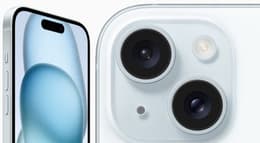
  • Camera Systems: The iPhone 15 utilizes a dual-lens rear array for flexible framing, whereas the iPhone Air streamlines photography into a single high-resolution main sensor housed within a raised camera plateau.
  • Video and Low Light: Both devices capture clear low-light imagery and stable 4K video, though the newer processing pipelines on the iPhone Air offer advanced audio mixing tools and wind reduction features.
  • Media Output: The iPhone 15 features standard stereo speakers for balanced audio playback, while the iPhone Air relies on a simplified single speaker setup due to its narrow depth.

Main camera

48 megapixels

48 megapixels

Front camera

12 megapixels

18 megapixels

Miscellaneous

Physical dimensions and connectivity standards define the distinct handling and ecosystem integration of each smartphone.

  • Handling and Weight: The iPhone Air is noticeably thinner and lighter than the iPhone 15, making it exceptionally comfortable to carry in a pocket despite its larger screen footprint.
  • Connectivity Standards: The iPhone Air adopts advanced wireless networking components providing faster local connectivity and cellular efficiency than the hardware found in the iPhone 15.
  • Ports and Biometrics: Both models rely on secure facial recognition and universal USB-C connectivity for charging and data transfer.

Weight

171 oz

185 oz

Screen size (inches)

6.1

6.5

Network

5G

5G

SIM card

eSIM

eSIM

Carrier compatibility

Unlocked

Unlocked

Connector

USB-C (USB 2)

USB-C

What the community thinks

User feedback highlights distinct preferences for each device based on real-world usage patterns. Owners of the iPhone 15 frequently praise its reliable battery longevity, comfortable one-handed dimensions, and dependable dual-camera versatility. Common discussions around the device note its standard refresh rate display as a baseline feature. Conversely, users drawn to the iPhone Air frequently highlight its remarkably lightweight feel, bright fluid screen, and advanced processing headroom, though some note that its single-speaker output and slimmer battery footprint require occasional compromises during media-heavy days.

Users prioritizing a compact form factor, reliable daily battery endurance, and traditional multi-lens photography will find the iPhone 15 well-suited to their needs. Meanwhile, users prioritizing an ultra-slim design, a larger high-refresh-rate screen, and maximum processing longevity may lean toward the iPhone Air. Exploring a quality-assured refurbished option for either model provides an eco-friendly alternative that aligns advanced technology with sustainable purchasing choices.
Our recent comparisons