Compare models
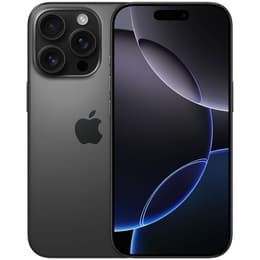
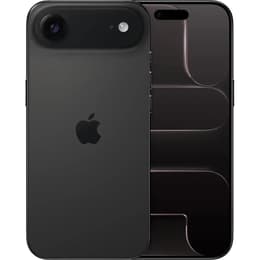
iPhone 16 Pro • Unlocked vs iPhone Air • Unlocked
- 1-year warranty
- Free standard shipping
- Free 30-day returns
Differences at a glance
The iPhone 16 Pro (2024) and the iPhone Air (2025) represent two distinct approaches to Apple's smartphone engineering philosophy. While both run on iOS and share high-end software capabilities, they cater to very different preferences: the iPhone 16 Pro emphasizes a versatile multi-lens camera system and traditional compact ergonomics, whereas the iPhone Air focuses on an ultra-slim, lightweight titanium build with an expansive display.
Available Models
Color
Storage (GB)
Scores
Durability
Both devices benefit from long-term software support, though their release timelines and hardware resilience differ slightly for daily users.
- Software longevity: The iPhone Air launches one year later than the iPhone 16 Pro, granting it an extra year of expected system update support from Apple.
- Build durability: Both models utilize durable titanium frames and advanced front glass protection, though the iPhone Air introduces a thinner profile that shifts internal component distribution.
- Practical lifespan: Both smartphones maintain high repairability standards and long-term battery health management, ensuring reliable multi-year performance for everyday users.
Release Year
2024
2025
Last OS Compatibility
Yes
Yes
Foldable
No
No
Performance
System responsiveness across both models handles demanding applications, multitasking, and daily workflows with smooth execution.
- Multitasking capacity: The iPhone Air features expanded memory resources to assist with intensive background tasks, while the iPhone 16 Pro relies on a highly optimized architecture to keep apps running fluidly.
- Storage configurations: Both devices offer generous capacity tiers starting at higher baselines, accommodating large media libraries and offline documents without slowdowns.
- Power management: Users report that the iPhone 16 Pro handles full-day usage reliably with its traditional battery capacity, whereas the ultra-thin chassis of the iPhone Air results in a smaller battery volume that may require more frequent charging for heavy users.
Screen quality
Display characteristics across both models deliver sharp visuals, high contrast, and smooth motion handling.
- Display size and panel: The iPhone Air features a larger 6.5-inch OLED screen, whereas the iPhone 16 Pro provides a more compact 6.3-inch display suited for one-handed operation.
- Outdoor visibility: Both models achieve high peak brightness levels for clear outdoor readability under direct sunlight, paired with adaptive refresh rates scaling up to 120 Hz for fluid scrolling.
- Visual clarity: High pixel densities on both screens ensure crisp text rendering and vibrant color reproduction for media consumption and web browsing.
Resolution
1206 x 2622
2736x1260
Screen type
LTPO Super Retina XDR OLED
Super Retina XDR
Audiovisual
Imaging capabilities highlight a major functional divergence between the multi-lens versatility of the pro model and the streamlined approach of the ultra-thin model.
- Rear camera configuration: The iPhone 16 Pro is equipped with a versatile triple-lens array including telephoto zoom capabilities, while the iPhone Air utilizes a single high-resolution 48 MP main camera system.
- Video and audio: Both devices support high-resolution video recording and spatial audio capture, though the iPhone 16 Pro includes studio-grade microphone arrays compared to the mono speaker and simpler audio layout found on the iPhone Air.
- Everyday photography: Users seeking flexible framing options for portraits and distant subjects will find the multi-lens setup advantageous, whereas casual photographers will appreciate the straightforward point-and-shoot simplicity of the single-lens layout.
Main camera
48 megapixels
48 megapixels
Front camera
12 megapixels
18 megapixels
Miscellaneous
Physical dimensions and connectivity standards define the daily handling experience and portability of each device.
- Design profile: The iPhone Air stands out as Apple's thinnest device at 5.6 mm thick and weighing 165 grams, while the iPhone 16 Pro features a thicker 8.25 mm profile weighing 199 grams.
- Connectivity standards: Both models support rapid 5G networks, modern Wi-Fi protocols, and secure facial recognition authentication.
- Port architecture: Both devices utilize universal USB-C ports for charging and data synchronization, aligning with contemporary accessory standards.
Weight
185 oz
185 oz
Screen size (inches)
6.3
6.5
Network
5G
5G
SIM card
eSIM
eSIM
Carrier compatibility
Unlocked
Unlocked
Connector
USB-C (USB 3)
USB-C
What the community thinks
Choosing between these two smartphones depends heavily on individual physical preferences and feature priorities. Users who favor a traditional, compact form factor with advanced multi-lens photography tools and robust audio hardware will find the iPhone 16 Pro well-suited to their needs. Conversely, users prioritizing an exceptionally lightweight, ultra-slim profile and a larger viewing area will lean toward the iPhone Air. For buyers exploring sustainable technology choices, a quality-assured refurbished option provides an eco-friendly alternative that reduces electronic waste while delivering reliable, tested performance. Ultimately, weighing the importance of physical thinness against camera versatility will guide your final decision without any single model standing out as universally superior.