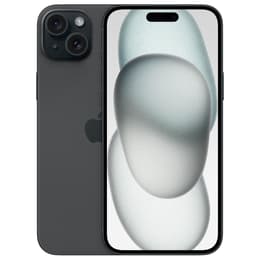

iPhone 15 • Locked AT&T vs iPhone 15 Plus • Unlocked

iPhone 15 • Locked AT&T
Starting at

Refurbished price:$349.43

Versus $729.00 new

See options
iPhone 15 Plus • Unlocked
Starting at

Refurbished price:$389.99

Versus $829.00 new

See options

Ratings

The iPhone 15 and iPhone 15 Plus, both released in September 2023, represent Apple's standard-tier smartphone offerings. While sharing many core features and an updated design, their primary distinctions lie in physical size, display dimensions, and battery capacity. Both devices run on the latest iOS, providing a consistent software experience across the lineup.

Scores

Durability

Both the iPhone 15 and iPhone 15 Plus offer comparable long-term usability and software support, ensuring a consistent experience over several years.

  • Release Timeline: Both models were introduced in September 2023, meaning they will receive iOS updates for a similar duration, typically 5-6 years from their launch.
  • Software Longevity: Users can expect these devices to support the latest iOS versions and applications for an extended period, maintaining functionality and access to new features.
  • Physical Durability: Both phones feature a Ceramic Shield front cover and a color-infused glass back, housed within an aluminum frame, offering robust protection against everyday wear. They also share an IP68 rating for water and dust resistance, capable of withstanding submersion up to 6 meters for 30 minutes.

Release Year

2023

2023

Last OS Compatibility

Yes

Yes

OS

iOS

iOS

Foldable

No

No

Performance

The performance of the iPhone 15 and iPhone 15 Plus is nearly identical, driven by the same internal components, with battery life being the main practical difference.

  • Processing Power: Both devices are equipped with the A16 Bionic chip, which includes a 6-core CPU, a 5-core GPU, and a 16-core Neural Engine. This hardware ensures smooth operation for demanding applications, multitasking, and graphics-intensive games.
  • System Responsiveness: Users will experience fluid navigation and quick app loading times on both models, thanks to the efficient processor and 6GB of RAM.
  • Battery Behavior: The iPhone 15 Plus offers significantly longer battery life, providing up to 26 hours of video playback compared to the iPhone 15's 20 hours. This difference is noticeable for heavy users, with the Plus model often lasting more than a full day on a single charge.

Memory (GB)

6 GB

6 GB

Screen quality

The display quality on both the iPhone 15 and iPhone 15 Plus is high, with the primary distinction being the physical size of the screen.

  • Display Technology: Both models feature a Super Retina XDR OLED display, delivering deep blacks, vibrant colors, and excellent contrast. They also incorporate Dynamic Island, HDR support, True Tone, and Wide Color (P3).
  • Resolution and Clarity: The iPhone 15 has a 6.1-inch display with a resolution of 2556x1179 pixels, while the iPhone 15 Plus features a larger 6.7-inch display with 2796x1290 pixels. Both maintain a pixel density of approximately 460 pixels per inch, ensuring sharp text and images.
  • Brightness and Smoothness: Both displays offer a typical maximum brightness of 1000 nits, peaking at 1600 nits for HDR content and up to 2000 nits for outdoor visibility. However, both models retain a 60Hz refresh rate, which means scrolling and animations may not appear as fluid as on devices with higher refresh rates.

Resolution

1179 x 2556

1290 x 2796

Screen type

Super Retina XDR OLED

Super Retina XDR OLED

Audiovisual

The camera systems on the iPhone 15 and iPhone 15 Plus are identical, offering advanced photographic capabilities for various scenarios.

  • Main Camera System: Both devices feature a dual-camera setup on the rear, including a 48-megapixel main sensor with an f/1.6 aperture and sensor-shift optical image stabilization. This main camera can capture super-high-resolution photos and offers a 2x telephoto option, effectively providing three optical zoom levels.
  • Ultra-Wide and Front Camera: Alongside the main sensor, both phones include a 12-megapixel ultra-wide camera with a 120-degree field of view. The front-facing TrueDepth camera is also 12-megapixel with autofocus, supporting features like Dynamic Island and Face ID.
  • Photography and Video Features: Both models support advanced features such as Photonic Engine, Deep Fusion, Smart HDR 5, and next-generation portraits with Focus and Depth Control. For video, they can record in 4K at up to 60 frames per second, including Cinematic mode and Action mode.

Main camera

48 megapixels

48 megapixels

Front camera

12 megapixels

12 megapixels

Miscellaneous

Beyond core performance, several practical elements differentiate the user experience between the iPhone 15 and iPhone 15 Plus, primarily related to their physical form.

  • Connectivity and Ports: Both models support 5G cellular networks, Wi-Fi 6, and Bluetooth 5.3. A significant change for both is the adoption of a USB-C port for charging and data transfer, replacing the previous Lightning connector. However, this USB-C port operates at USB 2.0 speeds.
  • Biometrics and Sensors: Both devices rely on Face ID for secure authentication and include a barometer, high dynamic range gyro, high-g accelerometer, proximity sensor, and dual ambient light sensors.
  • Physical Characteristics: The iPhone 15 measures 147.6 x 71.6 x 7.8 mm and weighs 171 grams, making it a more compact and lighter option. The iPhone 15 Plus is larger and heavier at 160.9 x 77.8 x 7.8 mm and 201 grams, offering a more expansive screen at the cost of increased size and weight.

Weight

171 oz

201 oz

Screen size (inches)

6.1

6.7

Network

5G

5G

SIM card

eSIM

eSIM

Carrier compatibility

AT&T

Unlocked

Connector

USB-C (USB 2)

USB-C (USB 2)

The iPhone 15 and iPhone 15 Plus offer a very similar experience in terms of performance, camera capabilities, and overall software, making the choice largely dependent on personal preferences for size and battery life. Users frequently praise the camera quality, especially for portraits and low-light conditions, and appreciate the updated design with the Dynamic Island and USB-C port.

For those who prioritize a more compact device that is easier to handle with one hand and carry in smaller pockets, the standard iPhone 15 is well-suited. Its dimensions and weight make it a comfortable everyday companion. However, some users have noted that its battery life, while generally sufficient for a day, might require more frequent charging with heavy use.

Conversely, users who value a larger display for media consumption, gaming, or productivity, and for whom extended battery life is a top priority, will find the iPhone 15 Plus to be a compelling choice. Its larger physical size accommodates a significantly bigger battery, often allowing it to last well over a day on a single charge.

Ultimately, the decision between these two models comes down to whether a more portable form factor or a larger screen and longer battery life aligns better with individual usage patterns. Both devices offer a robust and modern smartphone experience, and considering a quality-assured refurbished option can be an eco-friendly alternative for either model.
See all articles

Our recent comparisons