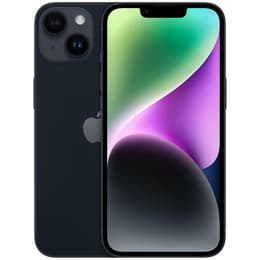
Galaxy S23 FE • Unlocked vs iPhone 14 • Locked T-Mobile

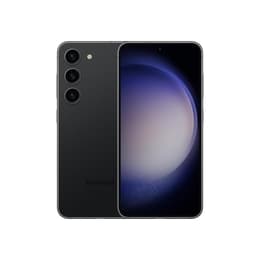
Galaxy S23 FE • Unlocked
Starting at

Refurbished price:$210.00

Versus $799.00 new

See options
iPhone 14 • Locked T-Mobile
Starting at

Refurbished price:$269.00

Versus $599.00 new

See options

Ratings

The Samsung Galaxy S23 FE, released in late 2023, and the Apple iPhone 14, launched in late 2022, represent two distinct approaches to smartphone design and functionality. While both devices offer robust performance and capable camera systems, they differ significantly in their operating systems, display characteristics, and overall user experience. The Galaxy S23 FE runs on Android, offering a customizable interface, while the iPhone 14 operates on iOS, known for its streamlined ecosystem.

Scores

Durability

When considering the long-term usability of a smartphone, factors like software support and repairability are key.

  • Software Longevity: The Samsung Galaxy S23 FE launched with Android 13 and is promised four years of major operating system updates and five years of security patches, extending its software support into late 2028. The iPhone 14, released with iOS 16, typically receives 5-6 years of major iOS updates from Apple, suggesting a similar or slightly longer period of software relevance. [1, 3, 4, 5]
  • Repairability: The iPhone 14 initially received a favorable repairability assessment due to its internal redesign allowing easier access to components, but this score was later downgraded due to software limitations and parts pairing requirements for non-authorized repairs. The Galaxy S23 FE features a glass front and back with an aluminum frame, and while specific repairability scores are not as widely publicized, its construction is generally considered serviceable. [4, 17, 21, 26, 32, 37, 38, 42]
  • Physical Durability: Both devices feature an IP68 rating for dust and water resistance, indicating protection against immersion in water up to 1.5 meters for 30 minutes. The iPhone 14 utilizes a Ceramic Shield front cover, designed for enhanced drop protection, while the Galaxy S23 FE uses Gorilla Glass 5 on both its front and back. [2, 4, 9, 18, 20, 27, 34, 44]

Release Year

2023

2022

Last OS Compatibility

Yes

Yes

OS

Android

iOS

Foldable

No

No

Performance

The performance of a smartphone is crucial for daily tasks, from browsing to demanding applications.

  • Everyday Responsiveness: The Samsung Galaxy S23 FE is equipped with a processor that handles demanding applications and multitasking smoothly, providing a fluid user experience for most activities. The iPhone 14 features a powerful and efficient processor that ensures applications launch quickly and run without hesitation, even with graphically intensive games. [5, 9, 27, 35]
  • Multitasking and Storage: The Galaxy S23 FE typically comes with 8GB of RAM and offers storage options of 128GB or 256GB, providing ample space for apps and media, and supporting efficient multitasking. The iPhone 14 offers 128GB, 256GB, or 512GB storage configurations, and its optimized software ensures smooth transitions between applications. [2, 5, 11, 12, 16, 20, 34, 44]
  • Battery Behavior: The Galaxy S23 FE houses a 4,500 mAh battery, generally providing a full day of use for many users, with support for 25W wired fast charging and 15W wireless charging. The iPhone 14, with its 3,279 mAh battery, is also designed to last a full day under typical usage conditions, supported by its power-efficient hardware and software. [4, 7, 9, 19, 23, 28, 34, 35, 36]

Memory (GB)

8 GB

6 GB

Screen quality

The display is a primary interface for any smartphone, influencing everything from media consumption to daily interactions.

  • Display Technology and Size: The Samsung Galaxy S23 FE features a 6.4-inch Dynamic AMOLED 2X display, offering vibrant colors and deep blacks. The iPhone 14 comes with a 6.1-inch Super Retina XDR OLED display, also known for its excellent contrast and color accuracy. [2, 3, 4, 5, 6, 11, 14, 16, 18, 20, 27, 34, 44]
  • Resolution and Clarity: Both devices provide sharp visuals. The Galaxy S23 FE has a Full HD+ resolution of 1080 x 2340 pixels, while the iPhone 14 offers a resolution of 2532 x 1170 pixels, resulting in a pixel density of approximately 460 pixels per inch for clear text and images. [2, 3, 4, 6, 11, 12, 14, 18, 19, 27, 34]
  • Brightness and Smoothness: The Galaxy S23 FE boasts a 120Hz adaptive refresh rate for smoother scrolling and animations, with a peak brightness of up to 1450-1500 nits for good outdoor visibility. The iPhone 14 has a standard 60Hz refresh rate but offers a high typical brightness of 800 nits and a peak HDR brightness of 1200 nits, ensuring content remains visible in various lighting conditions. [2, 3, 4, 5, 11, 14, 18, 27, 34, 44]

Resolution

1080 x 2340

1170 x 2532

Screen type

Dynamic AMOLED 2X

Super Retina XDR OLED

Audiovisual

For many users, the camera system is a deciding factor, capturing everyday moments and special occasions.

  • Rear Camera System: The Samsung Galaxy S23 FE features a versatile triple-camera setup, including a 50MP main sensor with optical image stabilization (OIS), a 12MP ultrawide lens, and an 8MP telephoto lens with 3x optical zoom and OIS. The iPhone 14 has a dual-camera system, comprising a 12MP main sensor with a larger sensor for improved light capture and OIS, alongside a 12MP ultrawide lens. [6, 7, 18, 20, 27, 34, 35, 44]
  • Photography Performance: The Galaxy S23 FE's camera system is capable of capturing detailed photos with good color reproduction, and its telephoto lens provides flexibility for zoomed shots. The iPhone 14 excels in consistent image quality across various conditions, with its Photonic Engine enhancing low-light performance for more detailed and vibrant photos. [27, 35]
  • Video Recording and Front Camera: Both devices offer high-quality video recording, with the Galaxy S23 FE supporting up to 8K resolution and the iPhone 14 capable of 4K video recording with features like Cinematic mode. For selfies, the Galaxy S23 FE has a 10MP front camera, while the iPhone 14 features a 12MP front camera with autofocus, improving clarity for video calls and self-portraits. [6, 7, 27, 34, 44]

Main camera

50 megapixels

12 megapixels

Front camera

10 megapixels

12 megapixels

Miscellaneous

Beyond core features, several practical elements contribute to the overall user experience and device utility.

  • Connectivity and Ports: Both the Galaxy S23 FE and iPhone 14 support 5G cellular connectivity and modern Wi-Fi standards (Wi-Fi 6 for iPhone 14, Wi-Fi 6E for S23 FE), ensuring fast data speeds. The Galaxy S23 FE uses a USB-C port for charging and data transfer, while the iPhone 14 utilizes Apple's proprietary Lightning port. [2, 11, 12, 19, 34]
  • Biometric Security: The Galaxy S23 FE incorporates an optical under-display fingerprint sensor for secure unlocking and authentication. The iPhone 14 relies on Face ID, Apple's facial recognition system, for biometric security. [5, 34]
  • Design and Handling: The Galaxy S23 FE measures 158 x 76.5 x 8.2 mm and weighs 209g, offering a substantial feel in hand. The iPhone 14 is slightly more compact and lighter at 146.7 x 71.5 x 7.8 mm and 172g, which may appeal to users preferring a smaller device. Both feature an aluminum frame and glass construction. [2, 4, 7, 11, 12, 17, 18, 25, 29, 33, 34, 42, 44]

Weight

6 oz

6 oz

Screen size (inches)

6.1

6.1

Network

5G

5G

SIM card

Physical SIM

eSIM

Carrier compatibility

Unlocked

T-Mobile

Connector

USB-C

Lightning

User sentiment for the Samsung Galaxy S23 FE often highlights its strong build quality, capable camera, and overall performance, making it a compelling option for those seeking flagship-like features without the highest-tier pricing. Some users have noted that its processor, while powerful, is a generation behind the latest, which can sometimes impact battery performance for very heavy users. [9, 23, 35]

The iPhone 14 is frequently praised for its consistent performance, reliable camera system, and the seamless integration within the Apple ecosystem. Common discussions point to its robust software support and enhanced durability features. However, some users express a desire for a higher refresh rate display and faster charging speeds, which are features found in some competing devices. [20, 27]

Users prioritizing a highly customizable Android experience with a larger, high-refresh-rate display and a versatile camera system, including a telephoto lens, may find the Samsung Galaxy S23 FE well-suited to their needs. Its slightly larger size and comprehensive feature set cater to those who appreciate a more expansive viewing experience and diverse photographic capabilities. Conversely, users who value a streamlined operating system, strong ecosystem integration, consistent performance, and a more compact form factor will likely lean towards the iPhone 14. Its focus on user-friendly design and robust security features makes it a strong choice for those embedded in the Apple ecosystem.

Both devices offer a quality-assured refurbished option, providing an eco-friendly alternative for consumers looking to make a sustainable choice while still enjoying advanced smartphone technology.


See all articles

Our recent comparisons