
Galaxy S9 • Unlocked vs iPhone 11 • Unlocked

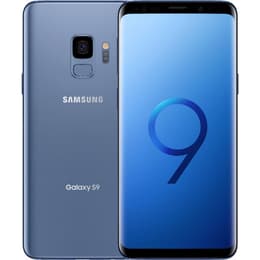
Galaxy S9 • Unlocked
Starting at

Refurbished price:$106.00

Versus $399.00 new

See options
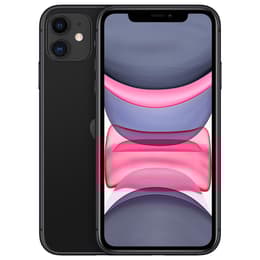
iPhone 11 • Unlocked
Starting at

Refurbished price:$152.00

Versus $499.00 new

See options

Ratings

The Samsung Galaxy S9, released in March 2018, and the Apple iPhone 11, launched in September 2019, represent different approaches to smartphone design and functionality from their respective manufacturers. While the Galaxy S9 operates on the Android platform, the iPhone 11 runs on Apple's iOS, offering distinct user experiences. Key differentiators between these two devices include their operating systems, camera capabilities, and display technologies.

Scores

Durability

When considering the long-term usability of these devices, their release timelines and software support are crucial factors.

  • Software Longevity: The Samsung Galaxy S9, released in March 2018, received its last major Android update with Android 10 and its final security patch in March 2022, marking its end-of-life for official software support. In contrast, the iPhone 11, launched in September 2019, is expected to receive major iOS updates, including iOS 26, until at least Fall 2026, with security updates potentially continuing for a year or two beyond that.
  • Physical Durability: Both devices feature glass front and back panels with aluminum frames and carry an IP68 rating for dust and water resistance, indicating a similar level of protection against environmental elements. The iPhone 11 incorporates custom scratch-resistant glass, while the Galaxy S9 uses Gorilla Glass 5.
  • Practical Lifespan: Users prioritizing the latest software features and security updates will find the iPhone 11 offers a significantly longer practical lifespan due to its extended support window. The Galaxy S9, while still functional, will not receive new official software enhancements or security patches.

Release Year

2018

2019

Last OS Compatibility

No

Yes

OS

Android

iOS

Foldable

No

No

Performance

The performance of a smartphone impacts everything from app responsiveness to multitasking efficiency and gaming experiences.

  • Processing Power: The iPhone 11, equipped with a newer-generation processor, delivers a responsive and smooth user experience, handling demanding applications and multitasking with ease. The Galaxy S9, while capable for daily tasks, features an older processor that may show limitations with more intensive applications or future software updates.
  • Multitasking and Storage: Both devices typically come with 4GB of RAM, allowing for competent multitasking. Storage options for both generally start at 64GB, with higher capacities available. The Galaxy S9 offers expandable storage via a microSD card, a feature not present on the iPhone 11.
  • Battery Behavior: The iPhone 11 generally provides good battery life, often lasting a full day for many users, and was noted for its endurance at the time of its release. The Galaxy S9, with its 3000mAh battery, often requires daily charging for moderate users, and heavy users may find themselves seeking a power source before the day ends.

Memory (GB)

4 GB

4 GB

Screen quality

The display is a primary interface for smartphone interaction, and both devices offer distinct visual experiences.

  • Display Technology and Resolution: The Samsung Galaxy S9 features a 5.8-inch Super AMOLED display with a high resolution of 1440 x 2960 pixels, providing deep blacks, vibrant colors, and excellent contrast. The iPhone 11 sports a larger 6.1-inch Liquid Retina IPS LCD display with a resolution of 828 x 1792 pixels.
  • Clarity and Viewing Experience: The higher pixel density of the Galaxy S9 results in a sharper image, particularly noticeable when viewing detailed content. While the iPhone 11's LCD offers good color accuracy and brightness, it does not match the contrast levels or true blacks of an OLED panel.
  • Brightness and Refresh Rate: Both phones offer sufficient brightness for outdoor use, though the Galaxy S9's OLED can achieve higher peak brightness in certain conditions. Both devices feature a standard 60Hz refresh rate, providing a smooth but not exceptionally fluid scrolling experience.

Resolution

1440 x 2960

828 x 1792

Screen type

Super AMOLED

Liquid Retina IPS LCD

Audiovisual

Camera capabilities are a significant factor for many users, and these two phones offer different photographic strengths.

  • Rear Camera System: The Galaxy S9 features a single 12-megapixel main camera with a unique variable aperture (f/1.5-f/2.4), allowing it to adapt to different lighting conditions. The iPhone 11 boasts a dual 12-megapixel camera system, including a wide lens and an ultrawide lens, offering more versatility in framing shots.
  • Low-Light Performance: The iPhone 11 significantly improves low-light photography with its dedicated Night Mode, which automatically brightens and enhances details in dark environments. The Galaxy S9's variable aperture helps in low light, but it lacks a comparable dedicated night mode, often resulting in more noise and less detail in very dim conditions.
  • Video and Front Camera: The iPhone 11 generally offers superior video recording quality, with better stabilization and dynamic range. Both phones feature capable front-facing cameras, with the iPhone 11 having a 12-megapixel sensor and the Galaxy S9 an 8-megapixel sensor.

Main camera

12 megapixels

12 megapixels

Front camera

8 megapixels

12 megapixels

Miscellaneous

Beyond core features, several practical elements contribute to the overall user experience.

  • Connectivity and Ports: Both devices support 4G LTE, Wi-Fi, and Bluetooth for wireless connectivity. The Galaxy S9 includes a 3.5mm headphone jack and uses a USB-C port for charging and data transfer. The iPhone 11, however, relies on a Lightning port and omits the traditional headphone jack, requiring adapters for wired audio.
  • Biometric Security: The Galaxy S9 offers multiple biometric options, including a rear-mounted fingerprint sensor, an iris scanner, and facial recognition. The iPhone 11 exclusively uses Face ID for secure authentication, which is a reliable facial recognition system.
  • Design and Handling: The Galaxy S9 is slightly more compact and lighter (147.7 x 68.7 x 8.5 mm, 163g) compared to the iPhone 11 (150.9 x 75.7 x 8.3 mm, 194g), which is larger and heavier. The S9's curved display edges contribute to a narrower feel in hand, while the iPhone 11 has a flatter display.

Weight

6 oz

7 oz

Width

5.81 in

2,98 in

Height

2.7 in

5,94 in

Depth

0.33 in

0,32 in

Screen size (inches)

5.8

6.1

Network

LTE

LTE

SIM card

Physical SIM

Physical SIM + eSIM

Carrier compatibility

Unlocked

Unlocked

Connector

USB-C + Jack 3.5mm

Lightning

The Samsung Galaxy S9 and iPhone 11 cater to different user preferences, largely shaped by their operating systems and release years. Users of the Galaxy S9 often praised its vibrant AMOLED display and the flexibility of the Android ecosystem, including expandable storage. However, common criticisms frequently centered on its battery life and the eventual cessation of software updates.

The iPhone 11, on the other hand, received acclaim for its robust performance, reliable camera system with Night Mode, and generally consistent battery life. Some users noted the lower-resolution LCD screen compared to other flagships of its time, and the limitations of iOS for certain file management tasks.

Users prioritizing a longer software support lifespan, a more advanced camera system with strong low-light capabilities, and a consistently smooth performance for demanding applications will find the iPhone 11 well-suited to their needs. Conversely, individuals who value a high-resolution OLED display, the flexibility of the Android operating system, and expandable storage might lean towards the Galaxy S9, understanding its software support has concluded. For those seeking an eco-friendly and quality-assured alternative, considering a refurbished version of either device can be a sustainable choice.


See all articles

Our recent comparisons