iPhone 11 • Unlocked vs iPhone X • Unlocked

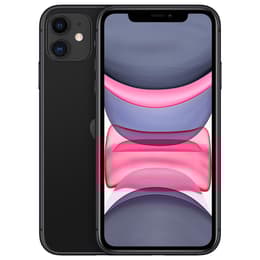
iPhone 11 • Unlocked
Starting at

Refurbished price:$155.00

Versus $499.00 new

See options
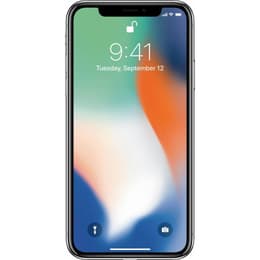
iPhone X • Unlocked
iPhone X • Unlocked
Starting at

Refurbished price:$152.00

Versus $449.00 new

See options

Ratings

The iPhone 11, released in September 2019, and the iPhone X, launched in November 2017, represent different generations of Apple's smartphone evolution. While both devices offer a premium experience, the iPhone 11 introduces a more advanced processor, an updated camera system with an ultrawide lens, and improved durability. The iPhone X, on the other hand, was notable for its pioneering all-screen design and OLED display technology at its release.

Scores

Durability

When considering the longevity of these devices, several factors come into play, primarily their release timelines and software support.

  • Software Support: The iPhone 11, being two years newer, benefits from a longer expected period of iOS updates. The iPhone X's official iOS support likely concluded with iOS 16.7.15, released in March 2026. In contrast, the iPhone 11 is compatible with iOS 18, released in September 2024, and is expected to support iOS 26 in September 2025, offering extended software longevity.
  • Durability Features: Both models feature glass on the front and back. The iPhone 11 carries an IP68 rating, indicating it can withstand submersion in water up to 2 meters for 30 minutes. The iPhone X has an IP67 rating, meaning it is resistant to submersion up to 1 meter for the same duration.
  • Build Materials: The iPhone X incorporates a stainless steel frame, contributing to a solid feel, while the iPhone 11 utilizes an aluminum frame.

Release Year

2019

2017

Last OS Compatibility

Yes

No

OS

iOS

iOS

Foldable

No

No

Performance

Performance is a key differentiator between these two devices, largely due to the advancements in their internal processing units.

  • Processing Power: The iPhone 11 is equipped with a newer and more capable processor, which translates to faster app loading times, smoother transitions between applications, and more efficient handling of demanding tasks like advanced gaming or video editing. The iPhone X, with its earlier generation processor, still performs well for everyday use but may show signs of slower responsiveness with more intensive applications or multitasking.
  • Multitasking Capability: The iPhone 11 features 4GB of RAM, providing more headroom for keeping multiple applications open and switching between them without needing to reload. The iPhone X has 3GB of RAM, which is sufficient for general use but may lead to more frequent app reloads when juggling many tasks.
  • Battery Behavior: Users generally report that the iPhone 11 offers improved battery life compared to the iPhone X, often lasting longer through a typical day of mixed usage. This is partly due to a larger battery capacity and more power-efficient components in the newer model.

Memory

4 GB

3 GB

Screen quality

The display experience on the iPhone 11 and iPhone X offers distinct characteristics, catering to different preferences in visual fidelity and size.

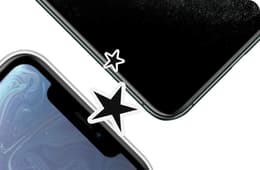
  • Display Technology and Clarity: The iPhone X features a 5.8-inch Super Retina OLED display, known for its deep blacks, vibrant colors, and a higher pixel density of 458 pixels per inch (ppi), resulting in a very sharp image. The iPhone 11, on the other hand, has a larger 6.1-inch Liquid Retina IPS LCD display with a resolution of 326 ppi. While the LCD offers accurate colors, it does not achieve the same contrast levels or true blacks as the OLED panel.
  • Brightness and Viewing Experience: Both devices offer a typical maximum brightness of 625 nits, providing adequate visibility in various lighting conditions. The iPhone X's OLED display also supports HDR content, enhancing the viewing experience for compatible media.
  • Interactive Features: The iPhone X includes 3D Touch, which provides pressure-sensitive interactions, while the iPhone 11 utilizes Haptic Touch, a long-press gesture with haptic feedback.

Resolution

828 x 1792

1125 x 2436

Screen type

Liquid Retina IPS LCD

Super Retina OLED

Audiovisual

The camera systems on the iPhone 11 and iPhone X offer different strengths, reflecting advancements in mobile photography over their respective release years.

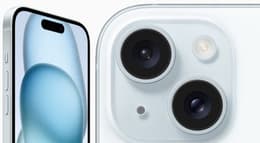
  • Rear Camera System: The iPhone 11 features a dual 12MP camera setup with a wide lens and an ultrawide lens, allowing for broader landscape shots and group photos. It introduced Night Mode, significantly improving low-light photography, and Deep Fusion for enhanced detail in medium-light conditions. The iPhone X also has a dual 12MP camera system, but it pairs a wide lens with a telephoto lens, enabling 2x optical zoom for closer shots without loss of quality. Both models offer Portrait Mode for artistic depth effects.
  • Front Camera Capabilities: The iPhone 11 is equipped with a 12MP front-facing camera, capable of recording 4K video and offering a wider field of view for selfies. The iPhone X has a 7MP front camera, suitable for video calls and standard selfies.
  • Video Recording: Both devices are capable of recording 4K video at up to 60 frames per second, providing high-quality video capture. They also offer cinematic video stabilization for smoother footage.

Main camera

12 megapixels

12 megapixels

Front camera

12 megapixels

7 megapixels

Miscellaneous

Beyond core performance and display, several other features contribute to the overall user experience and practical utility of these smartphones.

  • Connectivity Standards: The iPhone 11 supports Wi-Fi 6, offering faster wireless internet speeds and improved performance in congested network environments compared to the iPhone X's Wi-Fi 5 (802.11ac). Both devices include Bluetooth 5.0 for efficient wireless accessory connections. The iPhone 11 also integrates the U1 chip for Ultra Wideband technology, enabling enhanced spatial awareness features.
  • Biometric Security: Both the iPhone 11 and iPhone X rely on Face ID for secure facial recognition, enabling convenient unlocking and authentication for purchases and apps.
  • Physical Design and Handling: The iPhone X is slightly more compact and lighter, measuring 143.6 x 70.9 x 7.7 mm and weighing 174 grams, which may appeal to users preferring a smaller device. The iPhone 11 is larger at 150.9 x 75.7 x 8.3 mm and weighs 194 grams.

Weight

7 oz

6 oz

Width

2,98 in

2.79 in

Height

5,94 in

5.65 in

Depth

0,32 in

0.3 in

Screen size (inches)

6.1

5.8

Network

LTE

LTE

SIM card

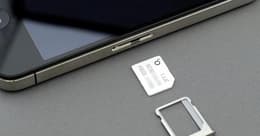
Physical SIM + eSIM

Physical SIM

Carrier compatibility

Unlocked

Unlocked

Connector

Lightning

Lightning

The iPhone 11 and iPhone X cater to slightly different user needs, largely due to their generational differences in technology and design philosophy. Users frequently praise the iPhone 11 for its significantly improved camera system, particularly the addition of the ultrawide lens and Night Mode, which makes it a strong contender for photography enthusiasts. Its enhanced processing power and better battery life are also commonly cited advantages, contributing to a smoother and more enduring daily experience. Some users, however, note that the LCD display on the iPhone 11, while good, doesn't offer the same visual depth and contrast as an OLED panel.

The iPhone X, despite being an older model, is often lauded for its pioneering OLED display, which delivers deep blacks and vibrant colors in a more compact form factor. Its stainless steel frame also gives it a premium feel. Criticisms often revolve around its shorter battery life compared to newer models and its older processor, which can lead to slower performance with modern, demanding applications. The lack of an ultrawide camera and Night Mode are also points of comparison for those prioritizing photography features.

Users prioritizing advanced camera capabilities, longer battery life, and a more future-proof performance for demanding applications may find the iPhone 11 better suited to their needs. Conversely, individuals who value a more compact device with a high-contrast OLED display and are content with solid, but not cutting-edge, performance for everyday tasks might lean towards the iPhone X. Both models remain viable options, especially when considering a quality-assured refurbished option, offering a sustainable choice for consumers.

See all articles

Our recent comparisons