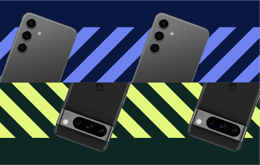


Google Pixel 7 Pro • Unlocked vs Google Pixel 9 • Unlocked

Google Pixel 7 Pro • Unlocked
Starting at

Refurbished price:$221.00

Versus $899.99 new

See options
Google Pixel 9 • Unlocked
Starting at

Refurbished price:$370.00

Versus $589.14 new

See options

Ratings

The Google Pixel 7 Pro, released in October 2022, and the Google Pixel 9, launched in August 2024, represent different generations of Google's flagship smartphone line. While both devices offer a pure Android experience and emphasize computational photography, the Pixel 9 introduces a refreshed design, an updated processor, and extended software support. Both operate on the Android platform, providing a consistent user interface and access to Google's ecosystem of services.

Scores

Durability

When considering the long-term usability of a smartphone, software support and physical durability are key factors. The Pixel 7 Pro and Pixel 9 offer different commitments in this regard.

  • Software Longevity: The Pixel 7 Pro, launched with Android 13, is guaranteed to receive operating system updates until October 2025 and security updates until October 2027, totaling three years of OS updates and five years of security support. In contrast, the Pixel 9, launching with Android 15, benefits from Google's extended commitment, promising seven years of both OS and security updates from its release date. This means the Pixel 9 will receive software support significantly longer than its predecessor, extending its practical lifespan for users who prioritize up-to-date features and security. [26, 33, 36, 40, 42]
  • Physical Durability: Both devices feature robust construction. The Pixel 7 Pro incorporates Gorilla Glass Victus for screen protection and an IP68 rating for dust and water resistance. The Pixel 9 is noted to be twice as durable as its predecessor and also features Corning Gorilla Glass Victus 2, along with an IP68 rating, suggesting enhanced resilience against everyday wear and tear. [6, 17, 31, 37, 39]
  • Repairability: While specific repairability scores can vary, both Pixel devices are designed with components that can be serviced. The availability of parts and repair guides typically remains good for several years post-launch, making refurbished options a viable and sustainable choice for extending the life of these devices.

Release Year

2022

2024

Last OS Compatibility

Yes

Yes

OS

Android

Android

Foldable

No

No

Performance

The performance of a smartphone is largely determined by its internal processing capabilities and how efficiently it manages tasks and power. The Pixel 7 Pro and Pixel 9 showcase advancements across generations.

  • Processing Power: The Pixel 7 Pro is powered by the Google Tensor G2 processor, which handles everyday applications, multitasking, and moderate gaming smoothly. The Pixel 9 features the newer Google Tensor G4 processor. This updated chip offers improved efficiency and enhanced capabilities for artificial intelligence tasks, leading to faster processing for on-device machine learning features. While the Tensor G4 provides a noticeable step up in overall responsiveness and AI-driven functions, it may not offer a significant leap in raw performance for graphically intensive gaming compared to some other high-end chipsets. [5, 6, 11, 13, 20, 21, 27, 29, 31, 32, 36, 37, 39]
  • Multitasking and Storage: Both the Pixel 7 Pro and the standard Pixel 9 come with 12GB of RAM, enabling efficient multitasking and smooth transitions between applications. Storage options for both devices typically start at 128GB, with higher capacities available, though neither model offers expandable storage via a microSD card. [6, 11, 13, 21, 31, 32, 38, 39]
  • Battery Performance: The Pixel 7 Pro houses a 5000 mAh battery, generally providing around a day and a half of typical use, or approximately 9-14 hours of screen-on time depending on usage patterns. The Pixel 9 features a slightly smaller 4700 mAh battery. Despite the capacity difference, the newer Tensor G4 processor in the Pixel 9 is expected to offer better power efficiency, potentially leading to comparable or improved real-world battery endurance. The Pixel 7 Pro's charging speed is noted to be slower than some competitors, taking over three hours for a full charge with its 30W wired charging. [5, 6, 11, 18, 19, 23, 25, 27, 31, 32, 34, 38, 39]

Memory (GB)

8 GB

12 GB

Screen quality

The display is a primary interface for smartphone interaction, and both Pixel models offer high-quality viewing experiences with distinct characteristics.

  • Display Technology and Clarity: The Pixel 7 Pro features a 6.7-inch LTPO AMOLED display with a QHD+ resolution (1440 x 3120 pixels), resulting in a sharp 512 pixels per inch (ppi). This provides excellent detail for text and images. The Pixel 9 comes with a slightly smaller 6.3-inch OLED display, offering a 1080p resolution. While the Pixel 7 Pro has a higher pixel density, both displays deliver vibrant colors and deep blacks characteristic of OLED technology. [6, 8, 11, 12, 16, 22, 27, 29, 31, 32, 35, 37, 38, 39]
  • Brightness and Refresh Rate: Both devices feature a 120Hz adaptive refresh rate, ensuring smooth scrolling and fluid animations. The Pixel 7 Pro can reach a peak brightness of up to 1500 nits, providing good visibility in various lighting conditions. The Pixel 9, however, introduces Google's 'Actua' display, which boasts a significantly higher peak brightness of up to 2700 nits, offering superior outdoor visibility and enhanced HDR content viewing. [8, 11, 12, 16, 22, 27, 31, 35, 36, 38, 39]
  • Design and Viewing Experience: The Pixel 7 Pro features a curved display, which some users appreciate for its immersive feel, though it can sometimes lead to accidental touches or reflections. The Pixel 9 adopts a flat display with thinner, more uniform bezels and a more blocky design, which can be preferred for durability and ease of use. [12, 17, 29]

Resolution

1440 x 3120

1080 x 2424

Screen type

LTPO AMOLED

OLED

Audiovisual

Google Pixel phones are renowned for their camera capabilities, and both the Pixel 7 Pro and Pixel 9 continue this tradition with advanced imaging systems.

  • Rear Camera Systems: The Pixel 7 Pro features a versatile triple-camera setup: a 50MP main wide lens, a 12MP ultrawide lens with autofocus and macro capabilities, and a 48MP telephoto lens offering 5x optical zoom and up to 30x Super Res Zoom. This combination provides flexibility for various photographic scenarios, from expansive landscapes to distant subjects. The standard Pixel 9 features a dual-camera system, including a 50MP main wide camera and a significantly upgraded 48MP ultrawide camera with autofocus, offering a wider field of view. Notably, the base Pixel 9 does not include a dedicated telephoto lens, a feature reserved for the Pixel 9 Pro models. [1, 2, 6, 7, 9, 11, 13, 15, 17, 27, 31, 37, 39]
  • Photography Performance: Both devices excel in computational photography, delivering detailed images with accurate color reproduction and impressive dynamic range. The Pixel 7 Pro is praised for its low-light performance and astrophotography mode. The Pixel 9, with its newer Tensor G4 chip, is expected to further enhance image processing, particularly with AI-driven features, leading to improvements in areas like detail retention and noise reduction across various lighting conditions. [7, 9, 10, 27]
  • Video and Audio: The Pixel 7 Pro supports video recording up to 4K at 60 frames per second (fps) with features like Cinematic Blur. While the Pixel 9's video capabilities are expected to be strong, the Pixel 9 Pro models are rumored to introduce 8K video recording at 30fps, which may not be available on the standard Pixel 9. Both phones offer quality microphone performance for calls and recording, and stereo speakers for media consumption. [7, 15, 31, 37, 39]

Main camera

50 megapixels

50 megapixels

Front camera

10.8 megapixels

10.5 megapixels

Miscellaneous

Beyond core performance, several practical features contribute to the overall user experience of these smartphones.

  • Connectivity and Ports: Both the Pixel 7 Pro and Pixel 9 support 5G connectivity, ensuring fast mobile data speeds. They also feature modern Wi-Fi standards (Wi-Fi 6 for Pixel 7 Pro, likely Wi-Fi 6E or 7 for Pixel 9) and Bluetooth for wireless accessories. Both devices utilize a USB-C port for charging and data transfer, and neither includes a traditional 3.5mm headphone jack. The Pixel 9 is expected to feature a new Exynos Modem 5400, which could offer improved cellular reception and introduce satellite-based text service, a new feature for the Pixel line. It also supports the newer Qi2 wireless charging standard, allowing for faster 15W wireless charging. [1, 6, 20, 31, 32, 37]
  • Biometric Security and Sensors: Both models incorporate an in-display fingerprint scanner for secure unlocking and support face recognition. They include a standard suite of sensors such as accelerometers, gyroscopes, and proximity sensors. [6, 31, 37, 38]
  • Design and Ergonomics: The Pixel 7 Pro measures 162.9 x 76.6 x 8.9 mm and weighs 212 grams, featuring a design with curved edges and a full-width camera bar. The Pixel 9 is expected to have a more compact form factor with a flat-edged design and a distinct pill-shaped camera module, which could appeal to users preferring a smaller, more modern aesthetic. The build materials for both include glass fronts and backs with aluminum frames, contributing to a premium feel. [1, 17, 22, 28, 29, 30, 32, 37, 39, 43]

Weight

7 oz

7 oz

Screen size (inches)

6.7

6.3

Network

5G

5G

SIM card

Physical SIM + eSIM

Physical SIM + eSIM

Carrier compatibility

Unlocked

Unlocked

The Google Pixel 7 Pro and Pixel 9 cater to users with varying priorities, reflecting advancements in smartphone technology over two generations. Users often praise the Pixel 7 Pro for its exceptional camera system, particularly its versatile zoom capabilities and strong low-light performance, which was considered class-leading at its release. Its vibrant QHD+ curved display and solid overall performance also receive positive feedback. Some common criticisms for the Pixel 7 Pro include its battery life, which, while adequate for many, doesn't always stand out against competitors, and its slower charging speeds. The curved display, while aesthetically pleasing to some, can also be a point of contention due to reflections and accidental touches.

For the Pixel 9, early sentiments and anticipated features highlight its extended software support, promising seven years of updates, which is a significant advantage for longevity. The brighter 'Actua' display and the updated Tensor G4 processor, with its enhanced AI capabilities, are also expected to be strong points. The redesigned, more compact form factor with flat edges and a new camera module is likely to be well-received by those seeking a fresh look and improved handling. However, the standard Pixel 9's omission of a dedicated telephoto lens, a feature present on the Pixel 7 Pro, might be a point of consideration for photography enthusiasts who frequently use optical zoom.

Users prioritizing a comprehensive camera system with optical telephoto zoom and a high-resolution curved display may find the Pixel 7 Pro well-suited to their needs. It remains a capable device, especially for those who appreciate its established photography prowess. Conversely, users who value the absolute latest software support, a brighter flat display, enhanced AI features, and a more compact, updated design will likely lean towards the Pixel 9. Its improved durability and newer connectivity options also make it a compelling choice for those seeking a device with a longer future-proof lifespan. Both models, available as quality-assured refurbished options, offer an eco-friendly alternative for consumers looking to make informed and sustainable purchasing decisions.


See all articles

Our recent comparisons