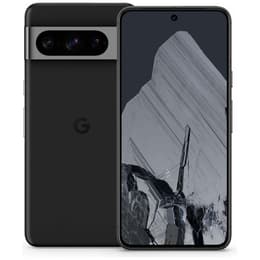
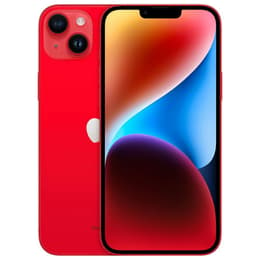
Google Pixel 8 Pro • Unlocked vs iPhone 14 Plus • Unlocked

Google Pixel 8 Pro • Unlocked
Starting at

Refurbished price:$281.00

Versus $899.99 new

See options
iPhone 14 Plus • Unlocked
Starting at

Refurbished price:$289.00

Versus $729.00 new

See options

Ratings

The Google Pixel 8 Pro, released in October 2023, and the iPhone 14 Plus, launched in October 2022, represent distinct approaches to the large-screen smartphone experience. While both devices offer expansive displays and robust performance, they diverge significantly in their operating systems, camera philosophies, and long-term software support. The Pixel 8 Pro emphasizes advanced computational photography and AI-driven features within the Android ecosystem, whereas the iPhone 14 Plus focuses on a streamlined user experience and strong ecosystem integration with iOS.

Scores

Durability

When considering the longevity of these devices, several factors come into play, including their release timelines, software support, and physical durability.

  • Release Timeline and Age: The Google Pixel 8 Pro is a more recent device, released in October 2023, making it approximately a year newer than the iPhone 14 Plus, which launched in October 2022. This difference in release date inherently provides the Pixel 8 Pro with a longer potential lifespan from a software update perspective.
  • OS Support Duration: Google has committed to an extensive seven years of operating system and security updates for the Pixel 8 Pro, a notable offering in the Android market. The iPhone 14 Plus, typical of Apple devices, can expect around five to six years of iOS updates from its release date. This means the Pixel 8 Pro is designed to receive software support for a considerably longer period.
  • Physical Durability: Both devices offer strong protection against everyday wear and tear. The Pixel 8 Pro features Corning Gorilla Glass Victus 2 on its display, while the iPhone 14 Plus utilizes Apple's Ceramic Shield for its front cover. Both also carry an IP68 rating for water and dust resistance, indicating they can withstand submersion in water up to 6 meters for 30 minutes.

Release Year

2023

2022

Last OS Compatibility

Yes

Yes

OS

Android

iOS

Foldable

No

No

Performance

The performance of a smartphone is crucial for daily tasks, from navigating applications to demanding multimedia editing and gaming. Both the Pixel 8 Pro and iPhone 14 Plus deliver capable experiences, though with different underlying architectures.

  • Processor Capabilities: The Google Pixel 8 Pro is powered by a processor optimized for artificial intelligence and machine learning tasks, which enhances features like computational photography and voice recognition. This allows for smooth handling of demanding applications and efficient multitasking. The iPhone 14 Plus features a processor known for its consistent and robust performance across a wide range of applications and games, providing a fluid user experience.
  • Multitasking and Responsiveness: The Pixel 8 Pro comes with 12GB of RAM, contributing to its ability to manage numerous applications simultaneously and maintain responsiveness during heavy usage. The iPhone 14 Plus is equipped with 6GB of RAM, which, combined with its optimized operating system, ensures efficient multitasking and smooth transitions between apps.
  • Storage Options: Both devices offer various internal storage configurations to suit different user needs. The Pixel 8 Pro is available with 128GB, 256GB, 512GB, and a 1TB option, providing ample space for files and applications. The iPhone 14 Plus offers 128GB, 256GB, and 512GB storage options.

Memory (GB)

12 GB

6 GB

Screen quality

The display is a primary interface for any smartphone, and both the Pixel 8 Pro and iPhone 14 Plus offer large, vibrant screens, though with distinct characteristics.

  • Display Technology and Resolution: Both phones feature large 6.7-inch OLED displays, known for deep blacks and high contrast. The Pixel 8 Pro has a resolution of 1344 x 2992 pixels, resulting in a pixel density of approximately 489 pixels per inch (ppi). The iPhone 14 Plus offers a resolution of 1284 x 2778 pixels, with a pixel density of about 458 ppi.
  • Brightness and Outdoor Visibility: The Pixel 8 Pro's display can reach a peak brightness of up to 2400 nits, making it highly visible even in bright outdoor conditions. The iPhone 14 Plus has a peak brightness of 1200 nits for HDR content and 800 nits typical maximum brightness, providing good visibility in most environments.
  • Refresh Rate and Smoothness: The Pixel 8 Pro features an LTPO OLED display with an adaptive refresh rate that can dynamically adjust from 1Hz to 120Hz. This allows for smoother scrolling and more fluid animations while also conserving battery life. The iPhone 14 Plus has a standard 60Hz refresh rate, which provides a consistent visual experience for everyday use.

Resolution

1344 x 2992

1284 x 2778

Screen type

LTPO OLED

Super Retina XDR OLED

Audiovisual

Both devices offer advanced camera systems designed to capture high-quality photos and videos, but they approach imaging with different hardware and software strengths.

  • Camera System Configuration: The Google Pixel 8 Pro features a versatile triple-camera setup on the rear, including a 50MP main sensor, a 48MP ultrawide lens with autofocus, and a 48MP telephoto lens capable of 5x optical zoom. Its front camera is 10.5MP with autofocus. The iPhone 14 Plus has a dual-camera system with a 12MP main sensor and a 12MP ultrawide lens. Its front camera is 12MP with autofocus.
  • Photography Performance and Features: The Pixel 8 Pro excels in computational photography, offering features like Magic Editor, Best Take, and Audio Magic Eraser, which leverage AI for advanced photo and video editing. It also provides Pro controls for its main camera, allowing for 50MP resolution capture, RAW format, and manual adjustments for ISO, shutter speed, and focus. The iPhone 14 Plus utilizes its Photonic Engine for improved low-light performance and offers features like Portrait mode with various lighting effects.
  • Video Capabilities: Both phones are capable of recording high-quality video. The Pixel 8 Pro offers improved video capabilities, including advanced stabilization and AI enhancements. The iPhone 14 Plus includes Cinematic mode for depth-of-field effects and Action mode for enhanced video stabilization, particularly useful for capturing movement.

Main camera

50 megapixels

12 megapixels

Front camera

10.5 megapixels

12 megapixels

Miscellaneous

Beyond the core features, several other elements contribute to the overall user experience and practical utility of these smartphones.

  • Connectivity and Ports: The Google Pixel 8 Pro supports the latest Wi-Fi 7 standard, along with 5G and Bluetooth 5.3, and features a USB-C 3.2 port for charging and data transfer. The iPhone 14 Plus supports Wi-Fi 6, 5G, and Bluetooth 5.3, and uses Apple's proprietary Lightning port.
  • Biometric Security: The Pixel 8 Pro incorporates an under-display optical fingerprint sensor for secure unlocking, in addition to Face Unlock. The iPhone 14 Plus relies solely on Face ID for biometric authentication.
  • Design and Handling: The Pixel 8 Pro measures 162.6 x 76.5 x 8.8 mm and weighs 213g, featuring an aluminum frame and a glass back. The iPhone 14 Plus is slightly more compact and lighter at 160.8 x 78.1 x 7.8 mm and 203g, also with an aluminum frame and glass back. Both devices offer stereo speakers for an enhanced audio experience.

Weight

7 oz

7 oz

Screen size (inches)

6.7

6.7

Network

5G

5G

SIM card

Physical SIM + eSIM

eSIM

Carrier compatibility

Unlocked

Unlocked

Connector

USB-C

Lightning

The Google Pixel 8 Pro and iPhone 14 Plus cater to users with differing priorities, each offering a compelling large-screen smartphone experience. Users frequently praise the Pixel 8 Pro for its exceptional camera capabilities, particularly its advanced AI-driven photo and video editing features, and its industry-leading seven years of software support. Some users have noted concerns regarding its battery life compared to some competitors and occasional performance throttling.

The iPhone 14 Plus is often lauded for its consistent performance, excellent battery life, and the seamless integration within the Apple ecosystem. Its camera system is appreciated for its reliability and features like Action mode for video. However, some users find the 60Hz display refresh rate to be a drawback compared to devices with higher refresh rates.

Users prioritizing cutting-edge camera technology, extensive AI features, and the longest possible software support in an Android device may find the Google Pixel 8 Pro well-suited to their needs. Conversely, users who value a highly integrated ecosystem, consistent performance, and robust battery life within the iOS environment may lean toward the iPhone 14 Plus. Both devices offer quality-assured refurbished options, providing an eco-friendly alternative for those seeking a sustainable choice.

See all articles

Our recent comparisons