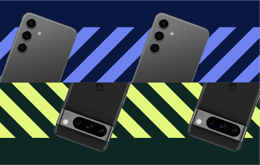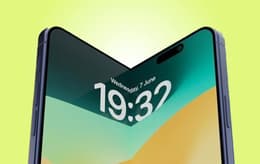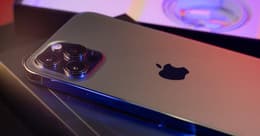

Google Pixel Fold • Unlocked vs iPhone 12 Pro • Unlocked

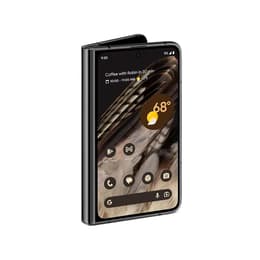
Google Pixel Fold • Unlocked
Starting at

Refurbished price:$591.00

Versus $1,799.00 new

See options
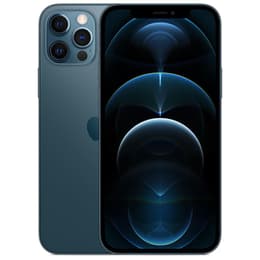
iPhone 12 Pro • Unlocked
Starting at

Refurbished price:$261.00

Versus $799.00 new

See options

Ratings

The Google Pixel Fold (2023) and the iPhone 12 Pro (2020) represent distinct approaches to smartphone design and functionality. While the Pixel Fold offers a unique foldable form factor that transforms from a traditional smartphone into a larger tablet-like display, the iPhone 12 Pro provides a more conventional, premium smartphone experience. These devices operate on different ecosystems, with the Pixel Fold running on Android and the iPhone 12 Pro on iOS, influencing their user interfaces and app availability. The primary differentiators lie in their display technology and overall design philosophy.

Scores

Durability

The practical lifespan of a smartphone is significantly influenced by its release timeline, software support, and physical durability. The Google Pixel Fold, released in June 2023, benefits from a more recent launch, offering a longer period of guaranteed software updates compared to the iPhone 12 Pro, which was released in October 2020.

  • Software Longevity: Google has committed to providing five years of OS and security updates for the Pixel Fold, extending its support until at least June 2028. The iPhone 12 Pro, having been released earlier, is expected to receive iOS updates until approximately 2027, with security updates potentially continuing beyond that. This means the Pixel Fold will likely receive major OS updates for a longer duration.
  • Physical Durability: The iPhone 12 Pro features a Ceramic Shield front cover and a stainless steel frame, contributing to its robust build and enhanced drop performance. The Pixel Fold, while featuring a durable hinge and glass construction, introduces the complexities of a foldable screen, which requires careful handling. Users report the Pixel Fold's inner screen requires more consideration for cleaning and handling to maintain its integrity.
  • Repairability: Both devices, as high-end smartphones, can be complex to repair. However, the foldable mechanism of the Pixel Fold may present unique challenges for repairs compared to the more traditional design of the iPhone 12 Pro.

Release Year

2023

2020

Last OS Compatibility

Yes

Yes

OS

Android

iOS

Foldable

Yes

No

Performance

Performance in daily use is a key factor for any smartphone, encompassing how smoothly applications run, how efficiently the device handles multitasking, and its battery behavior under various workloads. The Google Pixel Fold and iPhone 12 Pro offer distinct performance profiles shaped by their respective hardware and software optimizations.

  • Application Responsiveness: The Pixel Fold, powered by its custom-designed processor, handles demanding applications and multitasking with efficiency, providing a fluid experience across its dual displays. The iPhone 12 Pro, with its advanced chip from its release year, also delivers strong performance for everyday tasks, gaming, and creative applications, maintaining smooth operation even with multiple apps open.
  • Multitasking Capabilities: The Pixel Fold's large inner display is particularly well-suited for running multiple applications side-by-side, allowing for drag-and-drop functionality between windows, which enhances productivity. The iPhone 12 Pro, with its traditional smartphone form factor, offers a more conventional multitasking experience through its iOS interface.
  • Battery Behavior: The Pixel Fold is equipped with a larger battery capacity, designed to power its dual-screen setup. However, some users have noted that its battery life can be inconsistent, and the device may get warm during extended use or demanding tasks. The iPhone 12 Pro's battery can last through a full day of moderate use, though heavy usage, especially with 5G connectivity, may require more frequent charging.

Memory (GB)

12 GB

6 GB

Screen quality

The display is a primary interface for user interaction, and both the Google Pixel Fold and iPhone 12 Pro offer high-quality viewing experiences, albeit with fundamental differences in their design and technology.

  • Display Technology and Clarity: The Pixel Fold features two OLED displays: a 5.8-inch cover screen and a 7.6-inch foldable inner screen. Both offer vibrant colors and deep blacks, characteristic of OLED technology, with resolutions that provide sharp images. The iPhone 12 Pro boasts a 6.1-inch Super Retina XDR OLED display, also known for its excellent contrast and color accuracy.
  • Refresh Rate and Smoothness: Both displays on the Pixel Fold support a 120Hz refresh rate, contributing to smoother scrolling and more fluid animations. The iPhone 12 Pro's display operates at a standard 60Hz refresh rate, which provides a consistent visual experience but does not offer the same level of fluidity as higher refresh rate screens.
  • Brightness and Viewing Experience: The Pixel Fold's cover screen offers a peak brightness that makes it easier to use in sunny outdoor environments, while the inner screen also provides ample brightness for most indoor and outdoor conditions. The iPhone 12 Pro's display also offers high peak brightness, ensuring good visibility even in bright sunlight and supporting HDR content with excellent dynamic range. The Pixel Fold's wider aspect ratio on its cover screen is often praised for feeling more like a traditional smartphone when folded.

Resolution

1840 x 2208

1170 x 2532

Screen type

Foldable OLED

Super Retina XDR OLED

Audiovisual

Both the Google Pixel Fold and the iPhone 12 Pro are equipped with advanced camera systems designed to capture high-quality photos and videos, each with its own strengths and features.

  • Rear Camera System: The Pixel Fold features a triple-camera setup, including a 48-megapixel main sensor, a 10.8-megapixel ultrawide lens, and a 10.8-megapixel telephoto lens with 5x optical zoom. This system is noted for producing excellent photos, particularly for a foldable device. The iPhone 12 Pro also has a triple 12-megapixel camera system, comprising a wide, ultrawide, and telephoto lens with 2x optical zoom. It is recognized for its solid overall camera performance and strong low-light capabilities.
  • Photography Features: The Pixel Fold leverages Google's computational photography for image processing, contributing to its photo quality. The iPhone 12 Pro introduced features like Night Mode for all cameras and a LiDAR scanner, which assists with faster autofocus in low light and enhances augmented reality applications.
  • Video Recording and Audio: Both devices offer high-quality video recording. The iPhone 12 Pro was notable for its ability to record in 10-bit HDR Dolby Vision. While specific microphone and speaker quality details vary, both are designed to provide clear audio for calls and an immersive experience for media consumption.

Main camera

48 megapixels

12 megapixels

Front camera

8 megapixels

12 megapixels

Miscellaneous

Beyond core functionalities, several practical elements contribute to the overall user experience, including connectivity, physical design, and additional features.

  • Connectivity Standards: Both the Google Pixel Fold and the iPhone 12 Pro support 5G connectivity, enabling faster mobile data speeds. The Pixel Fold supports Wi-Fi 6E and Bluetooth 5.2, offering advanced wireless capabilities. The iPhone 12 Pro supports Wi-Fi 6 and Bluetooth 5.0.
  • Ports and Biometrics: The Pixel Fold utilizes a USB-C port for charging and data transfer, a widely adopted standard. It features a side-mounted fingerprint sensor and face unlock for security. The iPhone 12 Pro uses Apple's proprietary Lightning port and relies on Face ID for secure authentication.
  • Physical Design and Handling: The Pixel Fold, when folded, measures 158.7 x 79.5 x 12.1 mm and weighs 283g, making it a chunky and heavy device compared to traditional smartphones. When unfolded, it is notably thin at 5.8 mm. The iPhone 12 Pro is more compact and lighter, measuring 146.7 x 71.5 x 7.4 mm and weighing 189g, offering a more traditional in-hand feel. Its build includes a stainless steel frame and textured matte glass back.

Weight

7 oz

7 oz

Screen size (inches)

7.6

6.1

Network

5G

5G

SIM card

Physical SIM + eSIM

Physical SIM + eSIM

Carrier compatibility

Unlocked

Unlocked

Connector

USB-C

Lightning

The Google Pixel Fold and iPhone 12 Pro cater to different user preferences, each excelling in distinct areas. User feedback for the Pixel Fold often highlights the appeal of its large inner display for multitasking and media consumption, along with its capable camera system. However, common criticisms include its weight and thickness when folded, the visible crease on the inner screen, and sometimes inconsistent battery performance. Users appreciate its wider cover screen, which feels more like a standard phone.

For the iPhone 12 Pro, users frequently praise its robust build quality, consistent camera performance, and the reliability of the iOS ecosystem. Its compact size and Face ID are also often cited as positive attributes. Conversely, some users express a desire for a higher refresh rate display and note that its battery life, while generally good, can be a limitation for heavy users compared to newer models.

Users prioritizing a versatile device that can transform from a standard phone to a small tablet for enhanced productivity and media viewing may find the Google Pixel Fold more aligned with their needs. Its unique form factor and larger screen real estate are ideal for those who frequently multitask or consume content on a bigger display. Conversely, individuals who prefer a more traditional, compact, and consistently reliable smartphone experience with a strong emphasis on camera performance and a long-standing software ecosystem might lean towards the iPhone 12 Pro. Both devices offer quality-assured refurbished options, providing an eco-friendly alternative for those seeking to extend the life cycle of electronic products.

See all articles

Our recent comparisons