
Google Pixel Fold • Unlocked vs iPhone 12 Pro Max • Unlocked

Google Pixel Fold • Unlocked
Starting at

Refurbished price:$591.00

Versus $1,799.00 new

See options
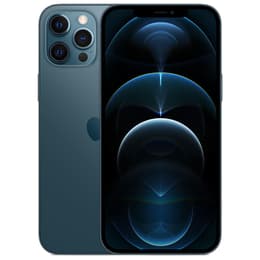
iPhone 12 Pro Max • Unlocked
Starting at

Refurbished price:$314.00

Versus $899.00 new

See options

Ratings

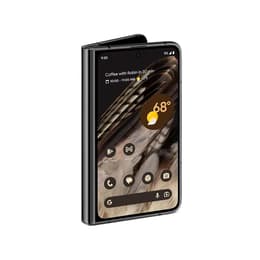
The Google Pixel Fold (released June 2023) and the iPhone 12 Pro Max (released November 2020) represent distinct approaches to smartphone design and functionality. The Pixel Fold introduces a versatile foldable form factor running on Android, while the iPhone 12 Pro Max offers a traditional, large-screen experience powered by iOS. These devices cater to different user preferences, primarily differing in their display technology and operating system ecosystems.

Scores

Durability

The expected practical lifespan and software support differ between these two devices due to their release timelines and manufacturer policies.

  • Release Timeline and OS Support: The Google Pixel Fold, released in 2023, is expected to receive software updates for at least five years from its launch, extending its usability into the future. The iPhone 12 Pro Max, launched in 2020, typically receives iOS updates for approximately five to six years from its release, meaning its software support cycle is nearing its end.
  • Durability Features: The iPhone 12 Pro Max features a Ceramic Shield front cover and an IP68 rating for water and dust resistance, allowing submersion up to 6 meters for 30 minutes. The Pixel Fold offers IPX8 water resistance and utilizes Gorilla Glass Victus on its cover display, with Google marketing its hinge as highly durable. However, early user reports for the Pixel Fold included some instances of screen breakage.
  • Repairability: The iPhone 12 Pro Max received a repairability score of six out of ten from iFixit, indicating a moderate ease of repair. Information on the Pixel Fold's repairability is less widely available, but the complex nature of foldable devices can sometimes present challenges for repairs.

Release Year

2023

2020

Last OS Compatibility

Yes

Yes

OS

Android

iOS

Foldable

Yes

No

Performance

Performance capabilities are a key differentiator, with both devices offering robust processing power for their respective generations.

  • Processing Power: The Google Pixel Fold is equipped with a current-generation processor, designed to handle demanding applications and multitasking smoothly. The iPhone 12 Pro Max features a powerful chip that, at its release, delivered excellent performance, making it snappy and fast for processing photos, videos, and gaming.
  • Multitasking and Responsiveness: The Pixel Fold's larger, foldable screen is well-suited for extensive multitasking, allowing users to run multiple applications simultaneously with its 12GB of RAM. The iPhone 12 Pro Max, with 6GB of RAM, provides a responsive experience for most applications and typical smartphone usage.
  • Storage Options: Both devices offer various internal storage configurations. The Pixel Fold is available with 256GB or 512GB of storage. The iPhone 12 Pro Max comes with options of 128GB, 256GB, or 512GB.

Memory (GB)

12 GB

6 GB

Screen quality

The display experience is a primary distinction, with the Pixel Fold offering a unique adaptable screen and the iPhone 12 Pro Max providing a high-quality traditional panel.

  • Display Technology and Size: The Google Pixel Fold features two OLED displays: a 5.8-inch cover display and a 7.6-inch inner foldable display. Both screens offer a 120Hz refresh rate for smooth visuals and an adaptive refresh rate to optimize battery life. The iPhone 12 Pro Max has a single 6.7-inch Super Retina XDR OLED display with a 60Hz refresh rate.
  • Resolution and Clarity: The Pixel Fold's cover display has a 1080 x 2092 resolution, and its inner display offers 2208 x 1840 resolution. The iPhone 12 Pro Max provides a resolution of 2778 x 1284 pixels at 458 pixels per inch, delivering sharp and clear images.
  • Brightness and Viewing Experience: Both devices offer vibrant visuals with high brightness levels. The Pixel Fold's cover display can reach 1550 nits peak brightness, and its inner display reaches 1450 nits. The iPhone 12 Pro Max has a typical brightness of 800 nits and can reach 1200 nits for HDR content, supporting HDR, True Tone, and a wide color gamut.

Resolution

1840 x 2208

1284 x 2778

Screen type

Foldable OLED

Super Retina XDR OLED

Audiovisual

Both smartphones offer advanced camera systems, though their approaches to photography and video capabilities differ.

  • Rear Camera Systems: The Google Pixel Fold features a triple rear camera setup, including a 48MP main sensor with optical image stabilization, a 10.8MP ultrawide lens, and a 10.8MP telephoto lens capable of 5x optical zoom. The iPhone 12 Pro Max also has a triple 12MP camera system, comprising a wide lens with sensor-shift optical image stabilization, an ultrawide lens, and a telephoto lens with 2.5x optical zoom.
  • Photography Performance: The Pixel Fold is praised for its computational photography, producing balanced and realistic images, particularly with its 5x optical zoom. The iPhone 12 Pro Max offers an improved low-light camera and longer optical zoom compared to its predecessors, enhanced by a LiDAR scanner for Night mode portraits.
  • Video and Front Cameras: Both devices support 4K video recording at various frame rates. The Pixel Fold can record 4K video at 30 or 60 frames per second. The iPhone 12 Pro Max records HDR video with Dolby Vision up to 60 frames per second and 4K video at 24, 25, 30, or 60 frames per second. For selfies, the Pixel Fold has a 9.5MP camera on the cover display and an 8MP camera on the inner display. The iPhone 12 Pro Max features a 12MP front-facing camera.

Main camera

48 megapixels

12 megapixels

Front camera

8 megapixels

12 megapixels

Miscellaneous

Beyond core features, several practical elements contribute to the overall user experience for both devices.

  • Connectivity: The Google Pixel Fold supports 5G, Wi-Fi 6E, and Bluetooth 5.2. The iPhone 12 Pro Max also offers 5G connectivity (both sub-6 GHz and mmWave), Wi-Fi 6, and Bluetooth 5.0.
  • Ports and Biometrics: The Pixel Fold uses a USB-C port for charging and data transfer and features a side-mounted fingerprint sensor for secure unlocking. The iPhone 12 Pro Max utilizes a Lightning port and relies on Face ID for biometric authentication.
  • Design and Handling: The Pixel Fold, when folded, measures 139.7 x 79.5 x 12.1 mm and weighs 283 grams, offering a compact yet substantial feel. When unfolded, it provides a larger screen area. The iPhone 12 Pro Max measures 160.8 x 78.1 x 7.4 mm and weighs 228 grams, presenting a large, traditional smartphone form factor. The iPhone 12 Pro Max also includes MagSafe for magnetic accessories and wireless charging.

Weight

7 oz

7 oz

Screen size (inches)

7.6

6.7

Network

5G

5G

SIM card

Physical SIM + eSIM

Physical SIM + eSIM

Carrier compatibility

Unlocked

Unlocked

Connector

USB-C

Lightning

The Google Pixel Fold and iPhone 12 Pro Max cater to distinct user preferences, primarily defined by their form factor and operating system. User sentiment for the Pixel Fold often praises its innovative foldable design and the versatility of its large inner display for multitasking, along with its strong camera performance, a hallmark of Pixel devices. However, some users have expressed concerns regarding its durability and weight.

The iPhone 12 Pro Max is frequently lauded for its robust performance, extended battery life, and high-quality camera system, which was considered advanced at its release. Its traditional slab design is familiar and offers a premium feel, though its size can be substantial for some users.

Users prioritizing a cutting-edge, adaptable display for productivity and media consumption, coupled with the Android ecosystem, may find the Google Pixel Fold well-suited to their needs. Its unique form factor allows for a tablet-like experience in a pocketable device. Conversely, users who value a consistently reliable, high-performance smartphone with a long-standing software ecosystem and a focus on a large, traditional display might lean towards the iPhone 12 Pro Max. This device offers a proven user experience and strong integration within the Apple ecosystem.

For those considering either device, exploring quality-assured refurbished options can provide a sustainable choice, extending the life cycle of these advanced smartphones.

See all articles

Our recent comparisons