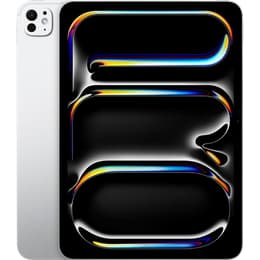
iPad Air 7 (2025, M3 series) vs iPad Pro (2024, M4 series)

iPad Air 7 (2025, M3 series)
Starting at

Refurbished price:$419.95

Versus $849.00 new

See options
iPad Pro (2024, M4 series)
Starting at

Refurbished price:$749.95

Versus $1,199.00 new

See options

Ratings

The iPad Air (M3) and iPad Pro (M4) represent distinct tiers within Apple's tablet lineup, released in March 2025 and May 2024, respectively. While both devices operate on iPadOS and offer a premium tablet experience, the iPad Pro (M4) is designed for users demanding peak performance and advanced display technology, whereas the iPad Air (M3) provides a powerful experience for a broader range of everyday tasks. The primary differentiators lie in their processing power and screen capabilities.

Scores

Durability

When considering the practical lifespan of these tablets, several factors come into play, including their release timelines and expected software support.

  • Release Timeline: The iPad Pro (M4) was released in May 2024, while the iPad Air (M3) followed in March 2025. This means the iPad Air (M3) benefits from a slightly newer launch, potentially extending its software support by approximately one year compared to the iPad Pro (M4).
  • Software Longevity: Both devices are expected to receive iPadOS updates for many years, typically around 5-6 years from their release dates. The iPad Air (M3), being newer, will likely receive official software updates for a longer duration.
  • Repairability: Both models feature robust designs. While specific repairability scores can vary, iPads generally offer a similar level of repair complexity. The premium components in the Pro model might lead to higher repair costs for certain parts.
  • Practical Lifespan: Both tablets are built for multi-year usage, capable of handling demanding applications and daily tasks for an extended period. Users can expect a long functional life from either device, with the Air potentially offering a slightly longer period of cutting-edge software support due to its later release.

Release Year

2025

2024

Last OS Compatibility

Yes

Yes

OS

iPadOS

iPadOS

Maximum Operating System supported

iPadOS 18

iPadOS 18

Performance

The performance of these two tablets is a key area of distinction, driven by their respective processors and memory configurations.

  • Processor Capabilities: The iPad Air (M3) is equipped with the M3 chip, offering robust performance for a wide array of applications, including demanding games and creative tasks. The iPad Pro (M4), however, features the M4 chip, which provides a significant leap in processing power, making it exceptionally well-suited for the most intensive professional workflows, such as 4K video editing, complex 3D rendering, and advanced multitasking.
  • Overall System Responsiveness: Both devices deliver a fluid and responsive user experience. However, the iPad Pro (M4) exhibits enhanced speed and efficiency, particularly when handling multiple demanding applications simultaneously or processing large data sets.
  • RAM Implications: The iPad Air (M3) comes with 8GB of unified memory across all storage configurations. The iPad Pro (M4) offers 8GB of RAM for its lower storage tiers (256GB and 512GB) and 16GB of RAM for its 1TB and 2TB configurations. This higher RAM capacity in the top-tier Pro models allows for more intensive multitasking and smoother operation with memory-hungry applications.
  • Storage Options: Both tablets offer various storage capacities, ranging from 128GB up to 1TB for the iPad Air (M3) and from 256GB up to 2TB for the iPad Pro (M4), providing ample space for applications, media, and projects.

Memory (GB)

8 GB

8 GB

Processor

Apple M3

Apple M4

Screen quality

The display technology and features represent a significant difference between the iPad Air (M3) and the iPad Pro (M4), impacting the visual experience.

  • Display Technology: The iPad Air (M3) features a Liquid Retina display, which is an LED-backlit Multi-Touch display with IPS technology. The iPad Pro (M4) introduces the Ultra Retina XDR display, utilizing tandem OLED technology. This advanced OLED panel offers superior contrast and deeper blacks compared to the Liquid Retina display.
  • Resolution and Clarity: Both tablets offer high-resolution displays with sharp image quality. The iPad Air (M3) 11-inch model has a 2360x1640-pixel resolution at 264 ppi, while the 13-inch model has a 2732x2048-pixel resolution at 264 ppi. The iPad Pro (M4) 11-inch model features a 2420x1668-pixel resolution at 264 ppi.
  • Brightness Levels: The iPad Air (M3) provides up to 500 nits of brightness for the 11-inch model and 600 nits for the 13-inch model. The iPad Pro (M4) offers significantly higher brightness, reaching 1000 nits for full-screen SDR content and up to 1600 nits peak brightness for HDR content, making it better suited for bright environments and HDR media consumption.
  • Refresh Rate and Smoothness: The iPad Air (M3) has a standard 60Hz refresh rate. In contrast, the iPad Pro (M4) features ProMotion technology, offering an adaptive refresh rate that can go up to 120Hz. This results in noticeably smoother scrolling, more fluid animations, and enhanced responsiveness, particularly beneficial for creative work and gaming.

Resolution

2360 x 1640

2420 x 1668

True Tone

Yes

Yes

Pro-Motion

No

Yes

Screen type

Liquid Retina display

Ultra Retina XDR display

Pixel density

264ppp

264ppp

Brightness

500 nits brightness

1000 nits brightness max

Sound quality

Speakers

Stereo speakers (landscape)

Four speaker audio

Audiovisual

The camera systems on both tablets are capable, but the iPad Pro (M4) offers more advanced features tailored for professional use cases.

  • Rear Camera System: The iPad Air (M3) features a 12MP Wide rear camera capable of 4K video recording. The iPad Pro (M4) also has a 12MP Wide rear camera, but it includes an Adaptive True Tone flash and an upgraded LiDAR scanner, which enhances augmented reality applications and improves low-light autofocus. The iPad Pro (M4) notably removed the ultra-wide lens found in previous Pro models.
  • Front Camera: Both devices feature a 12MP front-facing camera with Center Stage, which keeps subjects in the frame during video calls. The iPad Pro (M4)'s front camera is positioned on the landscape edge, optimizing it for video conferencing when the tablet is used with a keyboard.
  • Video Recording Quality: Both tablets support 4K video recording at various frame rates. The iPad Pro (M4) offers more advanced video features, including ProRes video recording capabilities, which are beneficial for professional video workflows.
  • Audio Quality: The iPad Pro (M4) typically includes a more advanced microphone array for studio-quality audio recording and enhanced speaker output for media consumption, providing a richer audio experience compared to the iPad Air (M3).

Miscellaneous

Beyond core performance and display, several practical elements differentiate these two tablets in terms of connectivity, design, and user interaction.

  • Connectivity Options: Both the iPad Air (M3) and iPad Pro (M4) support Wi-Fi 6E for fast wireless networking and Bluetooth 5.3 for accessory pairing. Cellular models of both devices support 5G connectivity.
  • Port Types: Both tablets feature a USB-C port. The iPad Air (M3)'s USB-C port supports USB 3.1 Gen 2, offering fast data transfer speeds. The iPad Pro (M4) elevates this with a Thunderbolt / USB 4 port, providing significantly faster data transfer rates (up to 40Gb/s) and support for external displays up to 6K resolution, which is crucial for professional setups.
  • Authentication: The iPad Air (M3) uses Touch ID integrated into the top button for secure authentication. The iPad Pro (M4) utilizes Face ID for facial recognition, offering a different biometric security method.
  • Weight and Dimensions: The iPad Pro (M4) is notably thinner and lighter than previous Pro models, with the 13-inch version being Apple's thinnest device. The iPad Air (M3) also maintains a slim profile, designed for portability. For example, the 11-inch iPad Air (M3) Wi-Fi model weighs around 460 grams, while the 11-inch iPad Pro (M4) Wi-Fi model weighs around 444 grams.
  • Build Materials: Both devices feature premium aluminum enclosures. The iPad Pro (M4) uses 100% recycled aluminum and offers a nano-texture display glass option on higher storage models to reduce glare.

Weight

1 oz

21 oz

Width

7.02 in

6.9 in

Height

9.74 in

9.8 in

Depth

0.24 in

0.2 in

Screen size (inches)

11

11

Network

Wi-Fi + 5G

Wi-Fi + 5G

Carrier compatibility

Unlocked

Unlocked

Wi-Fi technology

Wi-Fi 6 802.11ax

Wi-Fi 6E 802.11ax

Bluetooth Version

Bluetooth 5.3

Bluetooth 5.3

Face ID

No

Yes

Touch ID

Yes

No

Connector

USB Type-C

USB Type-C

User sentiment often highlights the iPad Pro (M4) as the ultimate tool for creative professionals and power users due to its cutting-edge display and unparalleled performance. Users frequently praise its Ultra Retina XDR display for its vibrant colors and deep blacks, making it ideal for visual tasks. The M4 chip receives acclaim for handling intensive applications and multitasking without hesitation. However, some users note that the full potential of the M4 chip might not always be fully utilized by current iPadOS software and available applications.

The iPad Air (M3), on the other hand, is widely regarded as a highly capable and versatile tablet that strikes an excellent balance for general productivity, media consumption, and light creative work. Users appreciate its strong performance for everyday tasks and its Liquid Retina display, which offers a clear and enjoyable viewing experience. Its more accessible price point often makes it a popular choice for students and users who need a powerful tablet without the absolute top-tier specifications of the Pro model. Some users might find the 60Hz refresh rate a minor drawback compared to the smoother experience of ProMotion displays.

Users prioritizing a display with exceptional contrast, higher brightness, and a smoother adaptive refresh rate, along with the most powerful processing capabilities for professional-grade applications, will find the iPad Pro (M4) well-suited to their needs. This includes graphic designers, video editors, and those who frequently engage in demanding computational tasks. Conversely, users who require a powerful and reliable tablet for general use, academic work, media consumption, and moderate creative endeavors will likely find the iPad Air (M3) to be an excellent fit. It offers a premium experience with robust performance for most users.

For those seeking a sustainable choice, both models are available as quality-assured refurbished options, providing an eco-friendly alternative to purchasing new devices.
See all articles

Our recent comparisons