iPad mini 6 (2021, A15 series) vs iPad Pro (2018, A12 series)

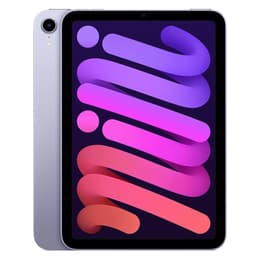
iPad mini 6 (2021, A15 series)
Starting at

Refurbished price:$277.00

Versus $499.00 new

See options
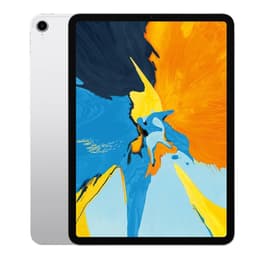
iPad Pro (2018, A12 series)
Starting at

Refurbished price:$269.00

Versus $949.00 new

See options

Ratings

The iPad Mini (2021) and the iPad Pro (2018) represent distinct approaches to tablet design, offering different experiences for users. The iPad Mini, released in 2021, focuses on portability and a compact form factor, while the iPad Pro from 2018 emphasizes a larger display and professional-grade features. Both devices run on iPadOS, providing access to a vast ecosystem of applications and services, but they cater to varying user needs through their core specifications and design philosophies.

Scores

Durability

When considering the longevity of these devices, several factors come into play, including their release dates and typical software support cycles.

  • Release Timeline: The iPad Mini (2021) was released three years after the iPad Pro (2018). This difference in release year directly impacts the expected duration of software updates and overall practical lifespan.
  • Software Longevity: The iPad Mini (2021) is expected to receive major iPadOS updates for a longer period, likely extending its software support by at least a year or two compared to the iPad Pro (2018). Users of the iPad Pro (2018) have reported that it is still performing well in 2025, though some have noted a desire to upgrade due to increased demands or battery degradation.
  • Repairability and Practical Lifespan: Both devices are designed with Apple's typical build quality. While specific repairability scores can vary, the practical lifespan often depends on individual usage and care. Users frequently hold onto iPads for many years, with some 2018 iPad Pro users still finding their devices functional and capable in 2026 for tasks like note-taking and web browsing.

Release Year

2021

2018

Last OS Compatibility

Yes

Yes

OS

iPadOS

iPadOS

Maximum Operating System supported

iPadOS 18

iPadOS 18

Performance

The performance of a tablet is crucial for handling applications, multitasking, and demanding tasks. Both the iPad Mini (2021) and the iPad Pro (2018) offer capable performance, though they are based on different generations of internal components.

  • Overall System Responsiveness: The iPad Mini (2021) features a newer generation processor, which provides smooth performance for everyday tasks, demanding applications, and multitasking. Users have noted its capability to run any app or game from the App Store and handle multitasking effectively. The iPad Pro (2018), despite its older processor, was considered exceptionally fast at its release, outperforming many laptops of its time, and continues to offer strong performance for many users in 2025.
  • Storage and Multitasking: The iPad Mini (2021) is available with 64GB or 256GB of storage and 4GB of RAM. The iPad Pro (2018) offered more varied storage options, including 64GB, 256GB, 512GB, and a 1TB model which uniquely came with 6GB of RAM, while other configurations had 4GB. The additional RAM in the higher-tier iPad Pro (2018) models could offer a slight advantage in handling a large number of open applications or very memory-intensive tasks.
  • Battery Behavior: Both models are designed to provide a full day of typical use. The iPad Mini (2021) has been reported to offer long battery life, with some users experiencing several days of moderate use between charges. The iPad Pro (2018) also demonstrated strong battery endurance at its release, lasting over 13 hours in some tests.

Memory (GB)

4 GB

4 GB

Processor

Apple A15 Bionic

Apple A12X Bionic

Screen quality

The display is a primary interaction point for tablets, and both devices offer high-quality viewing experiences with distinct characteristics.

  • Display Technology and Clarity: Both the iPad Mini (2021) and the iPad Pro (2018) feature Liquid Retina IPS LCD displays, known for their accurate color reproduction and wide viewing angles. The iPad Mini (2021) has an 8.3-inch display with a resolution of 2266 x 1488 pixels, resulting in a pixel density of 326 pixels per inch (ppi). The iPad Pro (2018) comes in 11-inch (2388 x 1668 pixels) and 12.9-inch (2732 x 2048 pixels) variants, both with 264 ppi. Both displays support True Tone and P3 wide color.
  • Brightness and Outdoor Use: The iPad Mini (2021) offers a peak brightness of 500 nits, which is generally sufficient for outdoor use. The iPad Pro (2018) models feature a higher peak brightness of 600 nits, providing a slight advantage in very bright environments.
  • Refresh Rate and Smoothness: A significant difference lies in the refresh rate. The iPad Mini (2021) has a standard 60Hz refresh rate. Some users have noted a "jelly scroll" effect, particularly when scrolling in portrait orientation, though opinions vary on its impact on daily use. The iPad Pro (2018) features ProMotion technology, offering an adaptive refresh rate up to 120Hz. This results in smoother scrolling and more responsive interactions, which many users find noticeable and beneficial.

Resolution

2266 x 1488

2388 x 1668

True Tone

Yes

Yes

Pro-Motion

No

Yes

Screen type

Liquid Retina display

Liquid Retina display

Pixel density

326ppp

264ppp

Brightness

500 nits brightness

600 nits brightness

Sound quality

Speakers

Stereo speakers (landscape)

Four speaker audio

Audiovisual

While tablets are not typically primary photography devices, their cameras are useful for video calls, document scanning, and casual photography.

  • Camera System Capabilities: The iPad Mini (2021) features a 12MP wide camera on the rear with an f/1.8 aperture and a 12MP ultra-wide front camera with an f/2.4 aperture and a 122-degree field of view. The iPad Pro (2018) also has a 12MP wide rear camera with an f/1.8 aperture, but its front camera is a 7MP TrueDepth camera.
  • Photography Performance: The iPad Mini (2021)'s rear camera is capable of taking decent pictures and recording 4K video up to 60fps. Its front camera is particularly noted for its inclusion of Center Stage, which keeps the user in frame during video calls. The iPad Pro (2018)'s rear camera also takes sharp photos, and its front TrueDepth camera enables Face ID and features like Portrait mode and Animoji. Some users have noted that the 2018 iPad Pro's rear camera lacked optical image stabilization found in some older models.
  • Microphone and Speaker Quality: Both devices offer good audio for media consumption and video calls. The iPad Mini (2021) has stereo speakers. The iPad Pro (2018) features a four-speaker audio system, providing a richer sound experience.

Miscellaneous

Beyond core performance and display, several practical features differentiate these two tablets, impacting their usability in various scenarios.

  • Connectivity Options: The iPad Mini (2021) supports Wi-Fi 6 and offers optional 5G connectivity for cellular models, providing faster and more reliable wireless internet access. The iPad Pro (2018) supports Wi-Fi 5 (802.11ac) and optional LTE connectivity.
  • Port Types: Both tablets utilize a USB-C port for charging and connecting accessories, offering versatility and compatibility with a wide range of peripherals.
  • Biometrics and Design: The iPad Mini (2021) integrates Touch ID into its top button for secure authentication. The iPad Pro (2018) features Face ID for biometric security, which also contributes to its edge-to-edge display design by removing the home button. The iPad Mini (2021) has a more compact design, making it easier to hold with one hand and carry. The iPad Pro (2018) has a larger form factor, with thinner bezels compared to previous generations, offering a more expansive screen.
  • Apple Pencil Support: Both devices support the second-generation Apple Pencil, which attaches magnetically and charges wirelessly.

Weight

16 oz

16 oz

Width

6.6 in

7 in

Height

9.4 in

9.7 in

Depth

0.2 in

0.2 in

Screen size (inches)

8.3

11

Network

Wi-Fi

Wi-Fi

Carrier compatibility

Without SIM Port

Without SIM Port

Wi-Fi technology

Wi-Fi 6 802.11ax

Wi-Fi 6 802.11a/b/g/n/ac

Bluetooth Version

Bluetooth 5.0

Bluetooth 5.0

Face ID

No

Yes

Touch ID

Yes

No

Connector

USB Type-C

USB Type-C

The iPad Mini (2021) and the iPad Pro (2018) cater to different user priorities, each excelling in specific areas. The iPad Mini (2021) is frequently praised for its highly portable form factor, making it an excellent companion for reading, note-taking on the go, and casual media consumption. Users appreciate its powerful performance for its size, handling demanding apps and games smoothly. However, some users have noted the 60Hz display and the "jelly scroll" effect as potential drawbacks, though this is not universally seen as a significant issue.

The iPad Pro (2018), despite being an older model, is still highly regarded for its powerful performance, large ProMotion display with a 120Hz refresh rate, and robust build quality. Many users continue to find it capable for professional tasks, creative work, and general productivity, even in 2026. Criticisms often revolve around its aging software support compared to newer models and potential battery degradation over time.

Users prioritizing a highly portable device for reading, quick notes, and general media consumption will find the iPad Mini (2021) well-suited to their needs. Its newer processor also ensures longer software support. Conversely, users who require a larger screen for creative work, extensive multitasking, or who value the smoother visual experience of a 120Hz display may lean towards the iPad Pro (2018). Both devices offer a quality-assured refurbished option, providing a sustainable choice for those seeking capable tablets. Ultimately, the decision hinges on whether a compact, modern experience or a larger, high-refresh-rate display with professional capabilities is more critical for your daily use.


See all articles

Our recent comparisons