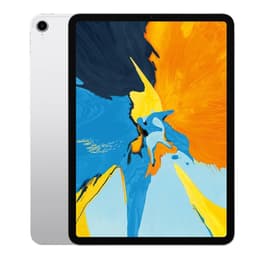
iPad 7 (2019, A10 series) vs iPad Pro (2018, A12 series)

iPad 7 (2019, A10 series)
Starting at

Refurbished price:$94.00

Versus $329.00 new

See options
iPad Pro (2018, A12 series)
Starting at

Refurbished price:$269.00

Versus $949.00 new

See options

Ratings

The iPad 2019 (7th Generation) and the iPad Pro 2018 represent different tiers within Apple's tablet lineup, released in September 2019 and October 2018, respectively. While both run on iPadOS and offer a versatile tablet experience, the iPad Pro 2018 was designed for more demanding tasks and features a significantly more powerful internal architecture and a more advanced display. The iPad 2019, on the other hand, aimed to provide a capable and accessible tablet experience for general use.

Scores

Durability

When considering the practical lifespan of these devices, several factors come into play, including software support, physical durability, and ease of repair.

  • Software Longevity: The iPad 2019, released in September 2019, is expected to receive iPadOS updates for approximately 5-6 years from its launch, likely supporting up to iPadOS 18. The iPad Pro 2018, released earlier in October 2018, also typically receives 5-6 years of major OS updates, meaning its software support timeline is similar to the iPad 2019, potentially ending around iPadOS 18 or 19.
  • Physical Durability: Both models feature an aluminum back and glass front. The iPad Pro 2018 introduced a more modern, all-screen design with thinner bezels, which can sometimes make the display more susceptible to damage if dropped. The iPad 2019 has a more traditional design with thicker bezels.
  • Repairability: The iPad 2019 received a low repairability score, primarily due to the extensive use of adhesive to secure internal components. However, its non-laminated display means that if the outer glass cracks, it can be replaced separately from the LCD, potentially reducing repair costs for screen damage. The iPad Pro 2018 also uses strong adhesives, making repairs challenging.

Release Year

2019

2018

Last OS Compatibility

Yes

Yes

OS

iPadOS

iPadOS

Maximum Operating System supported

iPadOS 18

iPadOS 18

Performance

The performance capabilities of these two iPads differ considerably, impacting their suitability for various tasks, from everyday browsing to intensive creative work.

  • Processing Power: The iPad 2019 is equipped with a processor that handles everyday tasks, web browsing, and most applications smoothly. It can manage multitasking and run many games without significant slowdowns. The iPad Pro 2018 features a significantly more powerful processor, designed for demanding professional applications, advanced gaming, and complex multitasking. This allows it to handle tasks like video editing, 3D rendering, and graphic design with greater efficiency and speed.
  • Multitasking and Responsiveness: The iPad 2019 comes with 3GB of RAM, which allows for reasonable multitasking, enabling users to switch between several apps or use Split View effectively. The iPad Pro 2018 typically includes 4GB of RAM, with some 1TB storage models featuring 6GB, providing more headroom for keeping numerous applications open simultaneously and handling more intensive workflows without reloading.
  • Battery Behavior: The iPad 2019 offers a battery life rated for up to 10 hours of web surfing or video playback over Wi-Fi, with real-world usage often yielding 6-7 hours of intensive use. The iPad Pro 2018 also aims for up to 10 hours of web surfing over Wi-Fi, but its more powerful components and higher refresh rate display can lead to varied real-world results, with some users reporting excellent longevity and others noting faster drain during heavy tasks.

Memory (GB)

3 GB

4 GB

Processor

Apple A10 Fusion

Apple A12X Bionic

Screen quality

The visual experience is a key differentiator between these two tablets, with the iPad Pro 2018 offering a more advanced display technology.

  • Display Technology and Clarity: The iPad 2019 features a 10.2-inch Retina IPS LCD display with a resolution of 2160 x 1620 pixels, providing clear and sharp visuals for general content consumption and productivity. The iPad Pro 2018 comes with an 11-inch or 12.9-inch Liquid Retina IPS LCD display, offering a higher resolution (2388 x 1668 for 11-inch, 2732 x 2048 for 12.9-inch) and advanced features like ProMotion technology, True Tone, and P3 wide color support.
  • Brightness and Refresh Rate: The iPad 2019's display offers a brightness of up to 500 nits, suitable for indoor and most outdoor conditions. Its refresh rate is a standard 60Hz. The iPad Pro 2018's Liquid Retina display boasts a higher peak brightness of 600 nits and incorporates ProMotion technology, which dynamically adjusts the refresh rate up to 120Hz. This results in smoother scrolling, more responsive touch input, and a more fluid visual experience, particularly noticeable in fast-paced content or when using the Apple Pencil.
  • Screen Size and Viewing Experience: The iPad 2019's 10.2-inch display provides a comfortable viewing area for media and everyday tasks. The iPad Pro 2018 offers larger screen options (11-inch or 12.9-inch) with an edge-to-edge design and thinner bezels, creating a more immersive viewing experience for movies, creative work, and multitasking.

Resolution

2160 x 1620

2388 x 1668

True Tone

No

Yes

Pro-Motion

No

Yes

Screen type

Retina display

Liquid Retina display

Pixel density

264ppp

264ppp

Brightness

500 nits brightness

600 nits brightness

Sound quality

Speakers

Stereo speakers

Four speaker audio

Audiovisual

The camera systems and audio capabilities reflect the different design philosophies of these two iPad models.

  • Camera System Capabilities: The iPad 2019 includes an 8-megapixel rear camera capable of 1080p video recording at 30fps, and a 1.2-megapixel front-facing camera for FaceTime calls and basic selfies. The iPad Pro 2018 features a more advanced 12-megapixel rear camera with a wider aperture and improved image processing, along with a 7-megapixel TrueDepth front camera that enables Face ID and supports Portrait mode and Animoji.
  • Photography and Video Quality: The iPad 2019's cameras are functional for document scanning, casual photos, and video calls, but may show noise in low-light conditions. The iPad Pro 2018's cameras offer better detail, color accuracy, and low-light performance, making them more suitable for capturing higher-quality photos and videos, and for augmented reality applications.
  • Audio Experience: The iPad 2019 features stereo speakers, providing decent audio output for media consumption. The iPad Pro 2018 significantly upgrades the audio experience with a four-speaker system that adjusts sound based on the device's orientation, delivering a richer and more immersive soundstage.

Miscellaneous

Beyond core performance and display, several practical features and design elements differentiate these two iPad models.

  • Connectivity Options: Both iPads support Wi-Fi (802.11ac with MIMO) and Bluetooth 4.2 (iPad 2019) or Bluetooth 5.0 (iPad Pro 2018). Cellular models of both devices offer LTE connectivity.
  • Port Types: The iPad 2019 retains the Lightning port for charging and accessories, and includes a 3.5mm headphone jack. The iPad Pro 2018 was the first iPad to adopt a USB-C port, offering greater versatility for connecting to external displays, cameras, and other peripherals, and can even charge other devices. However, it omits the 3.5mm headphone jack.
  • Biometric Security and Accessories: The iPad 2019 uses Touch ID for secure authentication. It supports the first-generation Apple Pencil and the Smart Keyboard. The iPad Pro 2018 features Face ID for biometric security, allowing for unlocking in any orientation. It supports the second-generation Apple Pencil, which attaches magnetically and charges wirelessly, and the Smart Keyboard Folio.
  • Design and Handling: The iPad 2019 has a more traditional tablet design with a 10.2-inch screen and weighs around 483g (Wi-Fi model). The iPad Pro 2018 features a more modern, thinner, and lighter design with an 11-inch or 12.9-inch edge-to-edge display, weighing around 468g for the 11-inch Wi-Fi model and 631g for the 12.9-inch Wi-Fi model.

Weight

17 oz

16 oz

Width

6.8 in

7 in

Height

9.8 in

9.7 in

Depth

0.2 in

0.2 in

Screen size (inches)

10.2

11

Network

Wi-Fi

Wi-Fi

Carrier compatibility

Without SIM Port

Without SIM Port

Wi-Fi technology

Wi-Fi 6 802.11a/b/g/n/ac

Wi-Fi 6 802.11a/b/g/n/ac

Bluetooth Version

Bluetooth 4.2

Bluetooth 5.0

Face ID

No

Yes

Touch ID

Yes

No

Connector

Lightning connector

USB Type-C

The iPad 2019 and iPad Pro 2018 cater to different user needs, with distinct advantages and considerations for each. User sentiment often praises the iPad 2019 for its solid performance for everyday tasks and its value as an entry-level device, particularly for students or those seeking a reliable tablet for media consumption and light productivity. Criticisms sometimes point to its dated design and less powerful processor compared to newer models.

The iPad Pro 2018 is frequently lauded for its exceptional performance, advanced Liquid Retina display with ProMotion, and the versatility offered by its USB-C port and second-generation Apple Pencil support. Users appreciate its capability for professional-grade tasks and immersive media experiences. Some common concerns include its battery life under heavy load and the initial adjustment to the USB-C ecosystem for users accustomed to Lightning.

Users prioritizing a capable and straightforward tablet for general use, web browsing, streaming, and basic productivity will find the iPad 2019 well-suited to their needs. Those who require a tablet for demanding creative work, advanced multitasking, high-performance gaming, or who benefit from a more immersive display and versatile connectivity will likely lean toward the iPad Pro 2018. Both models offer a quality-assured refurbished option, providing an eco-friendly alternative for consumers.


See all articles

Our recent comparisons