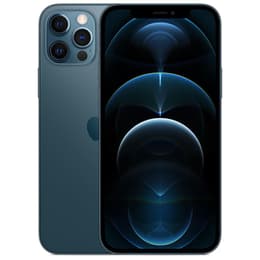
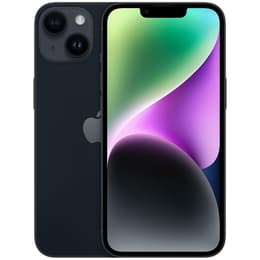

iPhone 12 Pro • Unlocked vs iPhone 14 • Locked Verizon

iPhone 12 Pro • Unlocked
Starting at

Refurbished price:$261.00

Versus $799.00 new

See options
iPhone 14 • Locked Verizon
Starting at

Refurbished price:$299.00

Versus $599.00 new

See options

Ratings

The iPhone 12 Pro (released October 2020) and the iPhone 14 (released September 2022) are both prominent smartphones from Apple, offering distinct experiences for users. While both devices operate on Apple's iOS platform, the iPhone 14, being a newer model, incorporates advancements in internal components, camera technology, and safety features. This comparison will explore the practical differences between these two models to help users make an informed decision based on their priorities.

Scores

Durability

When considering the longevity of a smartphone, factors like release date, software support, and physical durability play a significant role. The iPhone 12 Pro and iPhone 14 offer different timelines for expected software updates and have similar physical resilience features.

  • Release Timeline: The iPhone 12 Pro was released in October 2020, while the iPhone 14 followed almost two years later in September 2022. This difference in release year means the iPhone 14 will likely receive software updates for a longer period, extending its functional lifespan.
  • Software Longevity: Both devices run on iOS, receiving regular updates that introduce new features and security enhancements. Given its later release, the iPhone 14 is expected to receive approximately one to two additional years of major iOS updates compared to the iPhone 12 Pro, which typically receives 5-6 years of support from its launch.
  • Physical Durability: Both models feature a Ceramic Shield front cover, designed to offer enhanced drop performance. They also share an IP68 rating for water and dust resistance, meaning they can withstand submersion in up to 6 meters of water for up to 30 minutes.

Release Year

2020

2022

Last OS Compatibility

Yes

Yes

OS

iOS

iOS

Foldable

No

No

Performance

The performance of a smartphone impacts how smoothly applications run, how quickly tasks are completed, and the overall responsiveness of the user interface. Both the iPhone 12 Pro and iPhone 14 deliver capable performance, though the newer model offers incremental improvements.

  • Everyday Task Handling: The iPhone 14 features a more recent processor, which translates to slightly faster app loading times and a more fluid experience when navigating the operating system. The iPhone 12 Pro, powered by its own advanced chip, still handles daily applications and multitasking with efficiency.
  • Demanding Applications and Gaming: For users who frequently engage in graphically intensive games or demanding applications, the iPhone 14 provides a modest advantage in processing power, resulting in smoother frame rates and quicker rendering. The iPhone 12 Pro remains a strong performer for most users, capably running a wide range of software.
  • Storage Options: Both devices offer identical internal storage configurations, starting at 128GB and extending to 256GB and 512GB, providing ample space for apps, photos, and videos.

Memory (GB)

6 GB

6 GB

Screen quality

The display is a primary interface for smartphone interaction, and both the iPhone 12 Pro and iPhone 14 feature high-quality screens that deliver vibrant visuals, though with some subtle differences.

  • Display Technology and Clarity: Both models are equipped with a 6.1-inch Super Retina XDR OLED display, offering deep blacks, high contrast ratios, and vibrant colors. The resolution is also identical at 2532 x 1170 pixels, resulting in a sharp 460 pixels per inch for clear text and images.
  • Brightness Levels: Both the iPhone 12 Pro and iPhone 14 offer a typical maximum brightness of 800 nits and a peak HDR brightness of 1200 nits, ensuring good visibility in various lighting conditions, including bright outdoor environments.
  • Refresh Rate: Both devices feature a standard 60Hz refresh rate. This provides a consistent visual experience for general use, though it does not offer the smoother scrolling and animation effects found on devices with higher refresh rates.

Resolution

1170 x 2532

1170 x 2532

Screen type

Super Retina XDR OLED

Super Retina XDR OLED

Audiovisual

Camera capabilities are a significant consideration for many smartphone users, and both the iPhone 12 Pro and iPhone 14 offer advanced photographic and videographic tools, each with distinct strengths.

  • Rear Camera Systems: The iPhone 12 Pro features a triple 12MP camera system (Wide, Ultra Wide, and Telephoto lenses) along with a LiDAR scanner for improved depth sensing and autofocus in low light. The iPhone 14 has a dual 12MP camera system (Wide and Ultra Wide) but introduces a larger main sensor, a faster aperture, and the Photonic Engine for enhanced low-light performance across all cameras.
  • Photography Features: The iPhone 12 Pro's telephoto lens provides optical zoom capabilities, while its LiDAR scanner assists with Portrait mode and augmented reality applications. The iPhone 14 excels in low-light photography due to its larger sensor and Photonic Engine, and it includes features like Action Mode for stabilized video and an improved Cinematic Mode for video recording.
  • Video Recording: Both models support 4K video recording at various frame rates, including HDR video with Dolby Vision. The iPhone 14 introduces Action Mode, which provides advanced video stabilization for capturing smooth footage during movement.

Main camera

12 megapixels

12 megapixels

Front camera

12 megapixels

12 megapixels

Miscellaneous

Beyond core features, several practical elements contribute to the overall user experience, from connectivity to physical design and additional functionalities.

  • Connectivity Options: Both the iPhone 12 Pro and iPhone 14 support 5G cellular networks, Wi-Fi 6, and NFC for contactless payments. The iPhone 14 includes Bluetooth 5.3, a slight upgrade from the iPhone 12 Pro's Bluetooth 5.0, offering minor improvements in efficiency and range.
  • Ports and Biometrics: Both devices utilize the Lightning port for charging and data transfer. For security and convenience, both rely on Face ID for facial recognition. Neither model includes a traditional headphone jack.
  • Design and Handling: The iPhone 12 Pro features a stainless steel frame, giving it a slightly more premium feel and weight (189 grams). The iPhone 14 uses an aerospace-grade aluminum frame, making it slightly lighter (172 grams). Both share a similar flat-edged design and dimensions, ensuring a comparable in-hand feel.

Weight

7 oz

6 oz

Screen size (inches)

6.1

6.1

Network

5G

5G

SIM card

Physical SIM + eSIM

eSIM

Carrier compatibility

Unlocked

Verizon

Connector

Lightning

Lightning

Choosing between the iPhone 12 Pro and iPhone 14 involves weighing specific priorities. The iPhone 12 Pro, released in 2020, is praised by users for its robust build quality with a stainless steel frame and the versatility of its triple-camera system, including a dedicated telephoto lens and LiDAR scanner. Some users appreciate its professional-oriented camera features for specific photography needs.

The iPhone 14, launched in 2022, is often highlighted for its enhanced low-light camera performance, thanks to a larger main sensor and the Photonic Engine, making it a strong contender for everyday photography in varied conditions. Users also value its improved battery life and the introduction of advanced safety features like Crash Detection and Emergency SOS via Satellite. Its newer processor provides a slightly more future-proof experience in terms of software updates and overall responsiveness.

Users prioritizing a dedicated telephoto lens and LiDAR for advanced photography or augmented reality applications might lean towards the iPhone 12 Pro. Conversely, those who value superior low-light photography, longer software support, improved battery endurance, and modern safety features may find the iPhone 14 better suited to their needs. Both devices offer a premium smartphone experience, and considering a quality-assured refurbished option for either model can be a sustainable choice for consumers.

See all articles

Our recent comparisons