iPhone 12 • Unlocked vs iPhone 8 • Unlocked

iPhone 12 • Unlocked
Starting at

Refurbished price:$166.00

Versus $629.00 new

See options
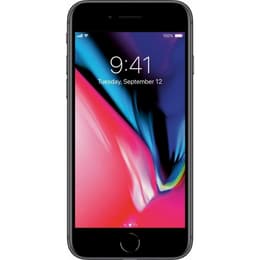
iPhone 8 • Unlocked
iPhone 8 • Unlocked
Starting at

Refurbished price:$85.00

Versus $189.00 new

See options

Ratings

The iPhone 12, released in October 2020, and the iPhone 8, launched in September 2017, represent different eras in Apple's smartphone evolution. While both devices operate on Apple's iOS platform, the iPhone 12 introduces a more modern design, enhanced display technology, and significant upgrades in camera capabilities and processing power compared to its predecessor.

Scores

Durability

The practical lifespan of a smartphone is heavily influenced by its release timeline and ongoing software support.

  • Release Timeline: The iPhone 8, released in September 2017, is an older model compared to the iPhone 12, which launched in October 2020. This three-year difference significantly impacts their remaining support cycles.
  • OS Support Duration: As of early 2026, the iPhone 8's major iOS updates concluded with iOS 16, though it may still receive security patches for a period. The iPhone 12, however, is compatible with iOS 26 and is expected to receive major software updates for several more years, offering a longer period of access to new features and security enhancements.
  • Expected Practical Lifespan: Users prioritizing the latest software features and long-term compatibility with new applications will find the iPhone 12 offers a considerably longer practical lifespan. The iPhone 8, while still functional for basic tasks, is nearing the end of its active software support cycle.

Release Year

2020

2017

Last OS Compatibility

Yes

No

OS

iOS

iOS

Foldable

No

No

Performance

Performance differences between these two models are notable, impacting everything from app responsiveness to demanding tasks.

  • Processor Capabilities: The iPhone 12 features a significantly more advanced processor, allowing it to handle demanding applications, complex games, and intensive multitasking with greater speed and efficiency. The iPhone 8's processor, while capable for everyday use, may show signs of slowdown with newer, more resource-intensive apps.
  • Storage Options: Both models were available with various storage capacities, typically ranging from 64GB to 256GB, providing options for different user needs.
  • Battery Behavior: The iPhone 12 generally offers better battery endurance for typical usage patterns, though its 5G connectivity can consume more power when actively used. The iPhone 8's smaller battery capacity means it may require more frequent charging, especially for heavy users.

Memory

4 GB

2 GB

Screen quality

The visual experience differs significantly due to advancements in display technology between the two generations.

  • Display Technology: The iPhone 12 features a Super Retina XDR OLED display, which provides deep blacks, vibrant colors, and excellent contrast. In contrast, the iPhone 8 uses a Retina HD LCD display, offering good color accuracy but lacking the contrast and true black levels of OLED.
  • Resolution and Clarity: The iPhone 12 has a higher resolution (2532 x 1170 pixels at 460 ppi) on its 6.1-inch screen, resulting in sharper images and text. The iPhone 8 has a 4.7-inch screen with a resolution of 1334 x 750 pixels at 326 ppi, which is clear but less dense.
  • Brightness Levels: The iPhone 12 offers higher peak brightness, especially for HDR content, making it more comfortable to view in bright outdoor conditions. Both displays include True Tone technology for automatic white balance adjustment based on ambient light.

Resolution

1170 x 2532

750 x 1334

Screen type

Super Retina XDR OLED

Retina IPS LCD

Audiovisual

Camera capabilities have seen substantial improvements, particularly in computational photography and hardware.

  • Camera System: The iPhone 12 features a dual 12MP camera system, including a Wide and an Ultra Wide lens, allowing for more versatile photography. The iPhone 8 has a single 12MP Wide camera.
  • Photography Performance: The iPhone 12 benefits from features like Night mode, Deep Fusion, and Smart HDR 3, which significantly enhance low-light performance and overall image quality. The iPhone 8 offers optical image stabilization and a capable single lens for everyday photos but lacks the advanced computational photography of the iPhone 12.
  • Video Recording: Both phones can record 4K video at up to 60 frames per second. However, the iPhone 12 adds HDR video recording with Dolby Vision, providing a wider dynamic range for video content.

Main camera

12 megapixels

12 megapixels

Front camera

12 megapixels

7 megapixels

Miscellaneous

Beyond core features, several practical elements differentiate these two iPhone models.

  • Connectivity Options: A key difference is the iPhone 12's support for 5G cellular networks, offering faster download and upload speeds in supported areas, alongside Wi-Fi 6. The iPhone 8 is limited to 4G LTE and Wi-Fi 5.
  • Security and Authentication: The iPhone 12 utilizes Face ID for secure facial recognition, enabling unlocking and secure payments. The iPhone 8 relies on Touch ID, an integrated fingerprint sensor in its home button.
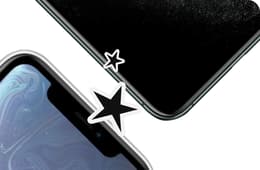
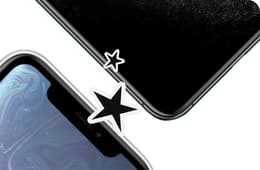
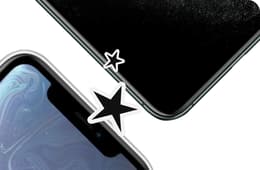
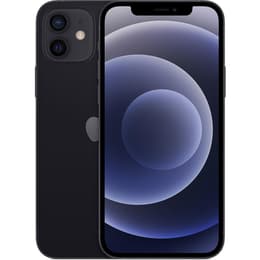
  • Design and Build: The iPhone 12 features a flat-edged design with a Ceramic Shield front cover for improved durability and a more modern aesthetic. The iPhone 8 retains the classic rounded edges and a glass back, supporting wireless charging.

Weight

7 oz

5 oz

Screen size (inches)

6.1

4.7

Network

5G

LTE

SIM card

Physical SIM + eSIM

Physical SIM

Carrier compatibility

Unlocked

Unlocked

Connector

Lightning

Lightning

User feedback often highlights the iPhone 12's modern design, vibrant OLED display, and improved camera system as significant advantages. Many appreciate the inclusion of 5G connectivity for future-proofing and faster data speeds. However, some users have noted that the battery life, while generally good, can be impacted by continuous 5G usage. The iPhone 8 is frequently praised for its compact size, the familiarity of the home button with Touch ID, and its solid performance for basic smartphone functions, especially considering its age. Criticisms often revolve around its aging design, smaller screen, and the conclusion of major software updates.

Users prioritizing a larger, more immersive display, advanced camera features like Night mode, and the latest cellular technology (5G) will find the iPhone 12 better suited to their needs. It also offers a longer runway for software updates and overall longevity. Conversely, users who prefer a more compact device, the tactile feedback of a physical home button, and primarily use their phone for essential tasks and communication might still find the iPhone 8 a practical choice, especially if they value its established design. For those considering either model, exploring a quality-assured refurbished option can be a sustainable choice, providing access to these devices while supporting environmental responsibility.
See all articles

Our recent comparisons