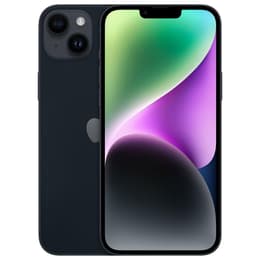


iPhone 14 Plus • Locked T-Mobile vs OnePlus 10 Pro • Unlocked

iPhone 14 Plus • Locked T-Mobile
Starting at

Refurbished price:$344.23

Versus $699.00 new

See options
OnePlus 10 Pro • Unlocked
Starting at

Refurbished price:$369.00

Versus $999.00 new

See options

Ratings

The iPhone 14 Plus, released in October 2022, and the OnePlus 10 Pro, which saw its global launch in March 2022, are both prominent smartphones from their respective manufacturers. While the iPhone 14 Plus operates on Apple's iOS ecosystem, the OnePlus 10 Pro runs on Android, offering distinct user experiences. Key differentiators between these two devices include their display refresh rates, camera system philosophies, and overall software approaches.

Scores

Durability

When considering the longevity of these devices, several factors come into play, including their release timelines, software support, and physical resilience.

  • Release Timeline: The OnePlus 10 Pro was released globally in March 2022, making it slightly older than the iPhone 14 Plus, which launched in October 2022. This difference in release date can influence the duration of future software support.
  • Software Longevity: Apple typically provides iOS updates for 5-6 years from a device's release, suggesting the iPhone 14 Plus will receive support for an extended period. The OnePlus 10 Pro, running Android, generally receives 3 major OS updates and 4 years of security updates.
  • Physical Durability: The iPhone 14 Plus features a Ceramic Shield front cover and an IP68 rating for water and dust resistance, designed to offer robust protection. The OnePlus 10 Pro incorporates Gorilla Glass Victus on the front and Gorilla Glass 5 on the back, and typically carries an IP68 rating, though this can vary by carrier.

Release Year

2022

2022

Last OS Compatibility

Yes

Yes

OS

iOS

Android

Foldable

No

No

Performance

Both smartphones are equipped with capable internal components designed to handle a range of tasks, though their approaches to performance and battery management differ.

  • Everyday Responsiveness: The iPhone 14 Plus is powered by a robust processor that ensures smooth operation for daily applications, efficient multitasking, and capable handling of graphically intensive games. The OnePlus 10 Pro features a high-end processor from its release year, providing slick performance for demanding apps and a responsive user experience.
  • Battery Endurance: The iPhone 14 Plus is recognized for its extended battery life, often lasting through a full day of heavy use and, for some users, even longer. The OnePlus 10 Pro, with its 5000mAh battery, also offers good battery life, with many users reporting it can last a full day or more with moderate usage.
  • Storage and Multitasking: Both devices offer various storage configurations, typically starting from 128GB. The iPhone 14 Plus comes with 6GB of RAM, which contributes to its smooth multitasking. The OnePlus 10 Pro is available with 8GB or 12GB of RAM, allowing for extensive app juggling and resource-intensive operations.

Memory (GB)

6 GB

12 GB

Screen quality

The visual experience on both devices is a key aspect, with each offering a large, vibrant display, but with distinct characteristics.

  • Display Technology and Clarity: The iPhone 14 Plus features a 6.7-inch Super Retina XDR OLED display, providing deep blacks, vibrant colors, and a resolution of 2778 by 1284 pixels at 458 pixels per inch. The OnePlus 10 Pro also has a 6.7-inch display, an LTPO2 Fluid AMOLED panel with a higher resolution of 3216 x 1440 pixels and 525 ppi, offering sharp visuals.
  • Brightness and Refresh Rate: The iPhone 14 Plus offers a typical brightness of 800 nits and a peak brightness of 1200 nits for HDR content, with a standard 60Hz refresh rate. The OnePlus 10 Pro boasts an adaptive 120Hz refresh rate, which can make scrolling and animations appear smoother, and a peak brightness of 1300 nits.
  • Viewing Experience: Users who prioritize a consistently smooth visual experience might notice the difference offered by the OnePlus 10 Pro's higher refresh rate. The iPhone 14 Plus, while at 60Hz, still provides a fluid experience for most users and benefits from Apple's color calibration.

Resolution

1284 x 2778

1440 x 3216

Screen type

Super Retina XDR OLED

LTPO2 Fluid AMOLED

Audiovisual

Both smartphones offer advanced camera systems, each with unique strengths and features for capturing photos and videos.

  • Rear Camera System: The iPhone 14 Plus features a dual-camera system with a 12MP main sensor (f/1.5 aperture) and a 12MP ultrawide sensor (f/2.4 aperture). It includes features like Photonic Engine for improved low-light performance and Action Mode for stabilized video. The OnePlus 10 Pro sports a triple-camera setup, including a 48MP main sensor (f/1.8), a 50MP ultrawide sensor, and an 8MP telephoto lens with 3.3x optical zoom. It benefits from Hasselblad color calibration and offers a 150-degree ultrawide mode.
  • Photography and Video Capabilities: The iPhone 14 Plus excels in everyday photography and offers strong low-light performance, with 4K video recording up to 60fps and Cinematic Mode. The OnePlus 10 Pro provides versatile shooting options, including 8K video recording at 24fps and 4K at 120fps, along with a Pro mode for manual controls and RAW+ capture.
  • Front Camera: The iPhone 14 Plus has a 12MP TrueDepth front camera with autofocus and a faster f/1.9 aperture, enhancing selfie quality and low-light performance. The OnePlus 10 Pro features a 32MP front camera, capable of recording 1080p videos.

Main camera

12 megapixels

48 megapixels

Front camera

12 megapixels

32 megapixels

Miscellaneous

Beyond core performance, several practical features and design elements differentiate these two devices.

  • Connectivity and Ports: Both phones support 5G connectivity, Wi-Fi 6, and Bluetooth. The iPhone 14 Plus uses a Lightning port for charging and data transfer. The OnePlus 10 Pro features a USB-C port, offering broad compatibility.
  • Biometric Security and Sensors: The iPhone 14 Plus relies on Face ID for secure facial recognition. The OnePlus 10 Pro incorporates an in-display fingerprint sensor for biometric authentication.
  • Design and Handling: The iPhone 14 Plus measures 160.8 x 78.1 x 7.80 mm and weighs 203 grams, offering a large screen in a relatively lightweight design. The OnePlus 10 Pro has dimensions of 163 x 73.9 x 8.55 mm and weighs 200.5 grams, presenting a slightly taller and thicker profile.

Weight

7 oz

7 oz

Width

3.07 in

4 in

Height

6.33 in

8 in

Depth

0.31 in

3 in

Screen size (inches)

6.7

6.7

Network

5G

5G

SIM card

eSIM

Physical SIM

Carrier compatibility

T-Mobile

Unlocked

Choosing between the iPhone 14 Plus and the OnePlus 10 Pro depends largely on individual priorities and preferred ecosystem. The iPhone 14 Plus is often praised by users for its exceptional battery life and the reliability of the iOS operating system, making it a strong contender for those who value consistent performance and extended usage without frequent charging. Its camera system, while not featuring a telephoto lens, is noted for its strong low-light capabilities and video stabilization features like Action Mode.

On the other hand, the OnePlus 10 Pro receives commendation for its vibrant 120Hz AMOLED display, offering a smoother visual experience, and its versatile camera system with a dedicated telephoto lens and Hasselblad tuning. Users often appreciate its fast charging capabilities and the customization options available within the Android ecosystem. Some user feedback on the OnePlus 10 Pro has occasionally mentioned software inconsistencies or performance degradation over time for some users, though many report a smooth experience.

Users prioritizing a large display with industry-leading battery life and a streamlined, long-supported software experience may find the iPhone 14 Plus well-suited to their needs. Conversely, individuals who value a high refresh rate display, a more versatile camera setup with optical zoom, and the flexibility of the Android operating system might lean towards the OnePlus 10 Pro. Both devices represent solid choices in their respective categories, and for those seeking a more sustainable option, considering a quality-assured refurbished version of either model can be an eco-friendly alternative.


See all articles

Our recent comparisons