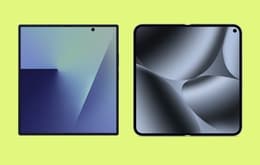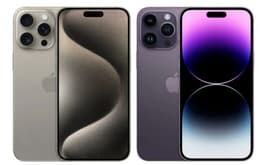
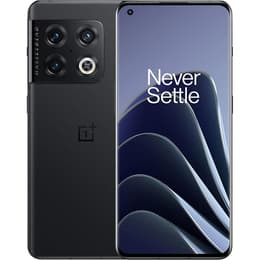

iPhone 14 • Locked T-Mobile vs OnePlus 10 Pro • Unlocked

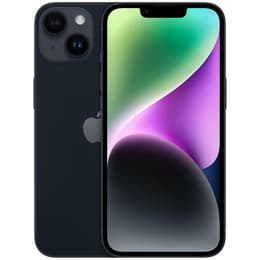
iPhone 14 • Locked T-Mobile
Starting at

Refurbished price:$269.00

Versus $599.00 new

See options
OnePlus 10 Pro • Unlocked
Starting at

Refurbished price:$370.00

Versus $999.00 new

See options

Ratings

The iPhone 14, released in September 2022, and the OnePlus 10 Pro, launched globally in April 2022, are both prominent smartphones that offer distinct user experiences. While the iPhone 14 operates on Apple's iOS ecosystem, the OnePlus 10 Pro runs on Android with OxygenOS. These devices cater to different preferences, primarily differing in their operating systems, display technologies, and camera philosophies.

Scores

Durability

The longevity of a smartphone is influenced by its initial build quality, ongoing software support, and ease of repair.

  • Release Timeline: The OnePlus 10 Pro was released globally in April 2022, making it slightly older than the iPhone 14, which launched in September 2022. This difference in release dates means the iPhone 14 may receive software updates for a slightly longer period.
  • Software Support: Apple typically provides iOS updates for 5-6 years from a device's release. The iPhone 14 launched with iOS 16 and is compatible with the latest iOS 26. OnePlus generally offers 3 major Android updates and 4 years of security updates for its Pro series. The OnePlus 10 Pro launched with Android 12 and OxygenOS 12.1.
  • Repairability: The iPhone 14 initially received a favorable repairability score due to its internal redesign, making the back panel more accessible. However, this score was later downgraded due to Apple's part-pairing requirements, which can complicate repairs with unauthorized components. The OnePlus 10 Pro has an average repairability score, with some components like the battery and screen being accessible, though adhesive use can make repairs more challenging.

Release Year

2022

2022

Last OS Compatibility

Yes

Yes

OS

iOS

Android

Foldable

No

No

Performance

Both devices offer robust performance for daily tasks, but their underlying architectures and software optimizations lead to different real-world experiences.

  • Processing Power: The iPhone 14 is equipped with a powerful processor that handles demanding applications and multitasking smoothly. The OnePlus 10 Pro features a high-end processor designed for strong performance across various applications and gaming.
  • Multitasking and Responsiveness: Users of the iPhone 14 generally experience fluid navigation and quick app loading. The OnePlus 10 Pro also provides a smooth user interface, though some users have noted that its software can sometimes limit the full potential of its processor in default modes.
  • Storage Options: The iPhone 14 is available with 128GB, 256GB, and 512GB of internal storage. The OnePlus 10 Pro offers similar storage configurations, including 128GB and 256GB, with some regions also having a 512GB option.

Memory (GB)

6 GB

12 GB

Screen quality

The visual experience on both smartphones is a key differentiator, with each offering distinct display technologies and characteristics.

  • Display Technology: The iPhone 14 features a 6.1-inch Super Retina XDR OLED display, known for its deep blacks, vibrant colors, and excellent contrast. The OnePlus 10 Pro boasts a larger 6.7-inch Fluid AMOLED display with LTPO 2.0 technology, which allows for dynamic refresh rate adjustments.
  • Resolution and Clarity: The iPhone 14 offers a resolution of 2532 x 1170 pixels at 460 pixels per inch (PPI), providing sharp and clear visuals. The OnePlus 10 Pro has a higher resolution of 1440 x 3216 pixels, resulting in a pixel density of 525 PPI, contributing to very sharp images and text.
  • Brightness and Refresh Rate: The iPhone 14's display reaches up to 800 nits typical brightness and 1200 nits peak brightness for HDR content, with a standard 60Hz refresh rate. The OnePlus 10 Pro's display can achieve up to 1300 nits peak brightness and features an adaptive refresh rate that scales from 1Hz to 120Hz, enhancing smoothness while conserving battery life.

Resolution

1170 x 2532

1440 x 3216

Screen type

Super Retina XDR OLED

LTPO2 Fluid AMOLED

Audiovisual

Both devices offer capable camera systems, but they approach photography with different strengths and features.

  • Rear Camera Systems: The iPhone 14 features a dual-camera system with a 12MP main sensor and a 12MP ultra-wide sensor, offering improved low-light performance through its Photonic Engine. The OnePlus 10 Pro comes with a triple-camera setup co-developed with Hasselblad, including a 48MP main, a 50MP ultrawide with a 150-degree field of view, and an 8MP telephoto lens with 3.3x optical zoom.
  • Photography Features: The iPhone 14 includes features like Cinematic mode for video and Action mode for stabilized video recording. The OnePlus 10 Pro emphasizes color accuracy with Hasselblad's Natural Color Solution, offers a second-generation Pro Mode for 12-bit RAW+ capture, and a unique Fisheye Mode for its ultrawide lens.
  • Video Recording: The iPhone 14 supports 4K video recording at various frame rates, including HDR with Dolby Vision. The OnePlus 10 Pro is capable of 8K video recording, along with 4K at higher frame rates, and includes features like Movie Mode for manual video controls.

Main camera

12 megapixels

48 megapixels

Front camera

12 megapixels

32 megapixels

Miscellaneous

Beyond core specifications, several practical elements contribute to the overall user experience and device handling.

  • Connectivity: Both smartphones support 5G networks, Wi-Fi 6, and Bluetooth. The iPhone 14 features Bluetooth 5.3, while the OnePlus 10 Pro uses Bluetooth 5.2. Both also include NFC for mobile payments.
  • Ports and Biometrics: The iPhone 14 utilizes a Lightning port for charging and data transfer and relies on Face ID for secure authentication. The OnePlus 10 Pro features a USB-C port and an in-display optical fingerprint sensor for unlocking.
  • Physical Design: The iPhone 14 has a Ceramic Shield front and a glass back with an aluminum frame, weighing 172 grams. The OnePlus 10 Pro has a glass front (Gorilla Glass Victus) and back, with an aluminum frame, weighing 200.5 grams. The iPhone 14 is rated IP68 for water and dust resistance, a feature that is present on the T-Mobile US version of the OnePlus 10 Pro but not consistently across all international variants.

Weight

6 oz

7 oz

Width

2.82 in

4 in

Height

5.78 in

8 in

Depth

0.31 in

3 in

Screen size (inches)

6.1

6.7

Network

5G

5G

SIM card

eSIM

Physical SIM

Carrier compatibility

T-Mobile

Unlocked

The iPhone 14 and OnePlus 10 Pro each present a compelling package, tailored to different user priorities. User sentiment often highlights the iPhone 14's consistent performance, reliable camera system, and the seamless integration of the iOS ecosystem. Some users, however, have noted concerns regarding battery degradation over time.

The OnePlus 10 Pro is frequently praised for its vibrant, high-refresh-rate display, exceptionally fast charging capabilities, and versatile camera system developed with Hasselblad. Conversely, some criticisms have been directed at its software experience, with occasional performance throttling, and a notable durability concern in early bend tests.

Users prioritizing a compact device with a long-term software commitment and a straightforward, intuitive operating system may find the iPhone 14 well-suited to their needs. Its robust ecosystem and consistent performance make it a reliable choice for everyday use. For those who value a larger, more customizable display, rapid charging speeds, and a feature-rich camera system with advanced manual controls, the OnePlus 10 Pro offers a compelling alternative. Its Android platform provides greater flexibility and customization options.

Ultimately, the choice between these two devices depends on individual preferences for operating system, camera features, and charging speed. Both models are available as quality-assured refurbished options, providing an eco-friendly alternative for consumers.

See all articles

Our recent comparisons