
iPhone SE (2020) • Unlocked vs iPhone XS • Unlocked

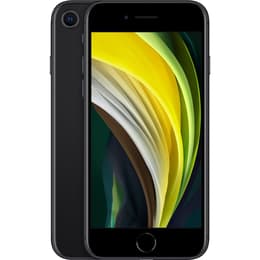
iPhone SE (2020) • Unlocked
Starting at

Refurbished price:$103.00

Versus $399.00 new

See options
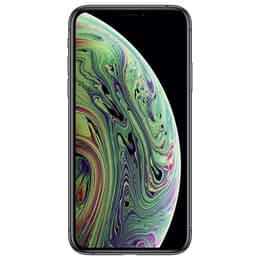
iPhone XS • Unlocked
Starting at

Refurbished price:$135.00

Versus $459.00 new

See options

Ratings

The iPhone SE (2020) and iPhone XS are two distinct smartphone offerings from Apple, released in April 2020 and September 2018, respectively. While both devices operate on Apple's iOS ecosystem, they cater to different user preferences through their design philosophies and internal specifications. The iPhone SE (2020) features a compact form factor with a traditional home button, whereas the iPhone XS offers a larger, more immersive display with facial recognition technology.

Scores

Durability

The practical lifespan of a smartphone is influenced by its release timeline, software support, and repairability.

  • Release Timeline: The iPhone SE (2020) was released in April 2020, making it approximately one and a half years newer than the iPhone XS, which debuted in September 2018. This difference in release date impacts their respective software support windows.
  • OS Support: The iPhone SE (2020) launched with iOS 13.4 and is currently receiving iOS 26.3.1 updates as of March 2026, with expectations for major OS upgrades to continue until at least 2027 and security updates beyond that. The iPhone XS, originally on iOS 12, received its final major OS update with iOS 18 in 2024 but continues to receive security updates until at least late 2026.
  • Repairability: The iPhone SE (2020) has a repairability score of 6 out of 10 from iFixit, noting that many components are modular and common repairs like display and battery replacement are relatively straightforward. Information on the iPhone XS's specific repairability score is less commonly cited, but both devices feature glass front and back panels, which can be prone to damage.

Release Year

2020

2018

Last OS Compatibility

Yes

Yes

OS

iOS

iOS

Foldable

No

No

Performance

Performance in daily use is a key differentiator, affecting how smoothly applications run and how efficiently tasks are handled.

  • Processor Capabilities: The iPhone SE (2020) is equipped with a newer generation processor, which allows it to launch applications more quickly and manage demanding tasks, such as mobile gaming or video editing, with greater ease. The iPhone XS, while still capable, features an earlier generation processor.
  • Multitasking Efficiency: The iPhone XS includes a higher amount of temporary memory, which can be beneficial for users who frequently switch between multiple applications, as it allows more apps to remain active in the background without needing to reload. The iPhone SE (2020) has a slightly lower amount of temporary memory.
  • Storage Options: Both devices offer various internal storage configurations. The iPhone SE (2020) is available with 64 GB, 128 GB, and 256 GB options. The iPhone XS provides options for 64 GB, 256 GB, and 512 GB, offering a higher maximum storage capacity.

Memory

3 GB

4 GB

Screen quality

The visual experience is significantly shaped by the display technology and its characteristics.

  • Display Technology and Size: The iPhone XS features a 5.8-inch Super Retina HD OLED display, which provides deep blacks, vibrant colors, and a high contrast ratio. In contrast, the iPhone SE (2020) has a 4.7-inch Retina HD LCD display, offering good color accuracy but with less contrast compared to OLED technology.
  • Resolution and Clarity: The iPhone XS offers a higher resolution of 2436 by 1125 pixels at 458 pixels per inch (ppi), resulting in sharper text and finer details. The iPhone SE (2020) has a resolution of 1334 by 750 pixels at 326 ppi.
  • Brightness: Both devices have a typical maximum brightness of 625 nits. However, the iPhone XS can reach a peak brightness of 1200 nits when displaying HDR content, enhancing the viewing experience for compatible media.

Resolution

750 x 1334

1125 x 2436

Screen type

Retina IPS LCD

Super Retina OLED

Audiovisual

Camera capabilities vary between the two models, impacting photo and video quality in different scenarios.

  • Rear Camera System: The iPhone XS features a dual 12-megapixel rear camera system, including a wide-angle lens with an f/1.8 aperture and a telephoto lens with an f/2.4 aperture, offering 2x optical zoom. The iPhone SE (2020) has a single 12-megapixel wide-angle rear camera with an f/1.8 aperture. Both include optical image stabilization.
  • Photography Features: The dual-camera setup on the iPhone XS allows for more versatile photography, including enhanced Portrait mode with Depth Control and Portrait Lighting effects. While the iPhone SE (2020) also supports Portrait mode, its single lens relies more on software processing. Both devices offer Smart HDR for photos.
  • Video Recording: Both the iPhone SE (2020) and iPhone XS are capable of recording 4K video at up to 60 frames per second. The iPhone XS also features stereo audio recording for video capture.

Main camera

12 megapixels

12 megapixels

Front camera

7 megapixels

7 megapixels

Miscellaneous

Beyond core features, several practical elements contribute to the overall user experience and device handling.

  • Biometric Authentication: The iPhone SE (2020) utilizes Touch ID, a fingerprint sensor integrated into the home button, for secure authentication. The iPhone XS employs Face ID, an advanced facial recognition system, for unlocking and secure payments.
  • Dimensions and Weight: The iPhone SE (2020) is more compact and lighter, measuring 138.4 x 67.3 x 7.3 mm and weighing 148 grams. The iPhone XS is slightly larger and heavier at 143.6 x 70.9 x 7.7 mm and 177 grams.
  • Water and Dust Resistance: The iPhone XS has an IP68 rating, allowing for submersion in up to 2 meters of water for 30 minutes. The iPhone SE (2020) has an IP67 rating, protecting against submersion in up to 1 meter of water for 30 minutes.

Weight

5 oz

6 oz

Screen size (inches)

4.7

5.8

Network

LTE

LTE

SIM card

Physical SIM + eSIM

Physical SIM + eSIM

Carrier compatibility

Unlocked

Unlocked

Connector

Lightning

Lightning

The iPhone SE (2020) and iPhone XS each present a compelling set of features, appealing to different user priorities. Users frequently praise the iPhone SE (2020) for its compact size and the familiarity of the home button with Touch ID. Its newer processor is often highlighted for providing a responsive experience, especially for a device in its category. However, some users note that its smaller screen and traditional design can feel less modern for media consumption compared to contemporary devices.

The iPhone XS is often lauded for its high-quality OLED display, which offers a more immersive visual experience with vibrant colors and deeper blacks. Its dual-camera system is also a frequent point of praise for its versatility in photography. Criticisms sometimes revolve around its older processor compared to newer models, and its major software update cycle has concluded, though security updates are still provided.

For users prioritizing a compact device with a modern processor and the convenience of Touch ID, the iPhone SE (2020) may be a suitable choice. It offers a strong performance foundation for everyday tasks and a longer expected period of major software updates. Conversely, those who value a larger, more advanced display for media and photography, along with the capabilities of a dual-camera system and Face ID, might find the iPhone XS more aligned with their needs. Both devices represent excellent choices as quality-assured refurbished options, providing an eco-friendly alternative for consumers.

See all articles

Our recent comparisons