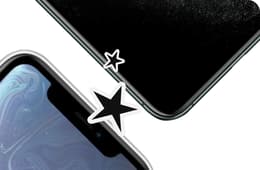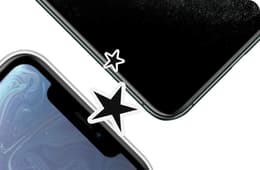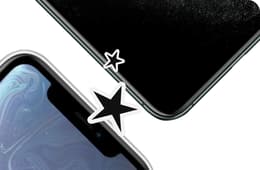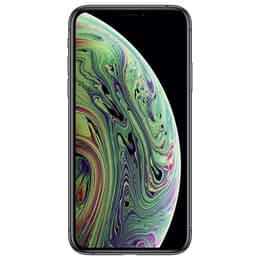
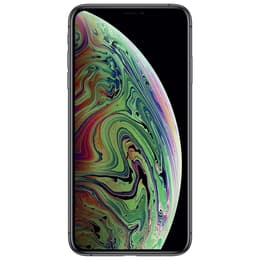

iPhone XS • Unlocked vs iPhone XS Max • Unlocked

iPhone XS • Unlocked
Starting at

Refurbished price:$135.00

Versus $459.00 new

See options
iPhone XS Max • Unlocked
Starting at

Refurbished price:$163.00

Versus $599.00 new

See options

Ratings

The iPhone Xs and iPhone Xs Max, both released in September 2018, represent Apple's flagship smartphone offerings from that year. While they share many core features and internal components, the primary distinction lies in their physical size and display dimensions. Both devices launched with iOS 12, providing a consistent software experience at their introduction.

Scores

Durability

When considering the practical lifespan of these devices, their release timeline and software support are key factors.

  • Release and Software Support: Both the iPhone Xs and iPhone Xs Max were released in September 2018. They received major iOS updates up to iOS 18, which was released in 2024. They are not compatible with iOS 26, which was released in 2025, marking the end of their major software update cycle. However, security updates are expected to continue through at least late 2026, extending their functional lifespan for essential tasks.
  • Physical Durability: Both models feature a glass front and back with a stainless steel frame. They carry an IP68 rating for water and dust resistance, allowing submersion up to 2 meters for 30 minutes. While Apple claimed improved glass durability, independent drop tests indicated that both devices are prone to cracking, particularly the glass back. Some tests suggested the larger iPhone Xs Max might be slightly more resilient in certain face-down drops, but overall, both benefit from protective cases.
  • Repairability: Repairability scores for these models are generally considered moderate. While components like the display and battery are replaceable, the glass back design means that replacing a cracked rear panel often requires extensive disassembly, impacting the ease and cost of repair.

Release Year

2018

2018

Last OS Compatibility

Yes

Yes

OS

iOS

iOS

Foldable

No

No

Performance

Both the iPhone Xs and iPhone Xs Max are equipped with the same internal processing unit, delivering comparable performance for daily tasks and demanding applications.

  • Processing Power: Both devices feature a powerful chip designed for efficient performance. This allows for smooth navigation, quick app loading, and capable handling of graphically intensive games and multitasking. Users can expect a responsive experience across various applications.
  • Storage and Multitasking: Both models were available with storage options of 64GB, 256GB, and 512GB, providing ample space for apps, photos, and videos depending on user needs. They both come with 4GB of RAM, which contributes to efficient multitasking and keeping multiple applications open in the background without significant slowdowns.
  • Battery Performance: The iPhone Xs has a 2658 mAh battery, while the iPhone Xs Max features a larger 3174 mAh battery. In real-world usage, the iPhone Xs Max generally offers longer battery life, with some tests showing it lasting approximately an hour longer than the standard Xs during continuous web browsing. Users who prioritize extended usage between charges may find the Max more suitable.

Memory

4 GB

4 GB

Screen quality

The visual experience on both devices is characterized by high-quality displays, though they differ in size.

  • Display Technology and Clarity: Both the iPhone Xs and iPhone Xs Max feature Super Retina HD OLED displays, offering deep blacks, vibrant colors, and excellent contrast. They both have a pixel density of 458 pixels per inch (ppi), ensuring sharp text and detailed images.
  • Size and Resolution: The iPhone Xs comes with a 5.8-inch display with a resolution of 2436 x 1125 pixels. The iPhone Xs Max, on the other hand, boasts a larger 6.5-inch display with a resolution of 2688 x 1242 pixels. This larger screen on the Max provides a more expansive viewing area for media consumption and productivity.
  • Brightness and Features: Both displays support HDR10 and Dolby Vision, enhancing the viewing experience for compatible content. They also feature True Tone technology, which adjusts the white balance of the display to match the ambient light, and a typical maximum brightness of 625 nits, providing good visibility in various lighting conditions.

Resolution

1125 x 2436

1242 x 2688

Screen type

Super Retina OLED

Super Retina OLED

Audiovisual

The camera systems on the iPhone Xs and iPhone Xs Max are identical, offering a consistent photography and videography experience across both models.

  • Rear Camera System: Both devices are equipped with a dual 12-megapixel rear camera system. This includes a wide-angle lens with an f/1.8 aperture and a telephoto lens with an f/2.4 aperture, both featuring optical image stabilization. This setup allows for 2x optical zoom and improved performance in various lighting conditions.
  • Photography Features: Key features include Smart HDR, which captures multiple frames to enhance detail in highlights and shadows, and an improved Portrait mode with advanced bokeh and Depth Control, allowing users to adjust the background blur after taking a photo. Users report that the larger sensor pixels contribute to better low-light performance compared to previous models.
  • Video and Front Camera: Both models support 4K video recording at up to 60 frames per second and feature stereo audio recording for videos. The front-facing camera is a 7-megapixel TrueDepth camera with an f/2.2 aperture, also supporting Portrait mode and Smart HDR for selfies.

Main camera

12 megapixels

12 megapixels

Front camera

7 megapixels

7 megapixels

Miscellaneous

Beyond core specifications, several practical elements differentiate the user experience of these two smartphones.

  • Connectivity and Ports: Both the iPhone Xs and iPhone Xs Max support Gigabit-class LTE for fast cellular data, 802.11ac Wi-Fi with 2x2 MIMO, and Bluetooth 5.0. They also feature NFC for contactless payments and dual SIM capability through a physical nano-SIM and an eSIM. Both devices utilize a Lightning connector for charging and data transfer.
  • Physical Dimensions and Handling: The iPhone Xs measures 143.6 x 70.9 x 7.7 mm and weighs 177 grams, making it more suitable for one-handed use. The iPhone Xs Max is larger at 157.5 x 77.4 x 7.7 mm and weighs 208 grams, offering a more expansive screen but requiring two hands for comfortable operation for many users.
  • Biometric Security and Build Materials: Both phones feature Face ID for secure facial recognition. The build materials consist of a surgical-grade stainless steel frame and glass on both the front and back. The stainless steel frame contributes to a solid feel and offers a degree of durability against minor scuffs.

Weight

6 oz

7 oz

Screen size (inches)

5.8

6.5

Network

LTE

LTE

SIM card

Physical SIM + eSIM

Physical SIM + eSIM

Carrier compatibility

Unlocked

Unlocked

Connector

Lightning

Lightning

The iPhone Xs and iPhone Xs Max, while sharing nearly identical internal hardware and camera capabilities, primarily diverge in their physical size and battery capacity. Users frequently praise both models for their vibrant OLED displays, responsive performance, and capable camera systems that produce detailed photos and videos. The inclusion of features like Smart HDR and adjustable depth of field in Portrait mode were well-received upon their release.

Common criticisms or concerns often revolve around the durability of the glass back, which, despite Apple's claims, proved susceptible to cracking in drop tests. Additionally, while the iPhone Xs Max offered improved battery life over the standard Xs, some users noted that overall battery performance, especially on the smaller model, could be a limiting factor for heavy use.

Users prioritizing a compact device that is comfortable for one-handed operation may prefer the iPhone Xs. Its 5.8-inch display offers a premium viewing experience in a more manageable form factor. Conversely, users who value a larger screen for media consumption, gaming, or productivity, and who benefit from extended battery life, will find the iPhone Xs Max with its 6.5-inch display and larger battery to be a more suitable choice. Both devices continue to offer a robust smartphone experience, and opting for a quality-assured refurbished option can be a sustainable choice for those seeking these features.

See all articles

Our recent comparisons