
iPhone 12 • Unlocked vs iPhone 15 Pro • Unlocked

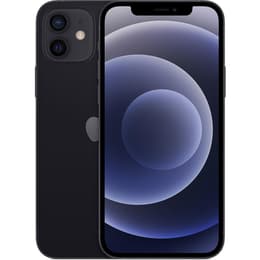
iPhone 12 • Unlocked
Starting at

Refurbished price:$171.00

Versus $629.00 new

See options
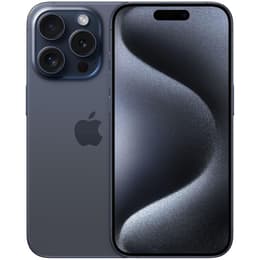
iPhone 15 Pro • Unlocked
Starting at

Refurbished price:$443.00

Versus $999.00 new

See options

Ratings

The iPhone 12, released in October 2020, and the iPhone 15 Pro, launched in September 2023, represent different generations within Apple's smartphone lineup. While both devices operate on Apple's iOS ecosystem, the iPhone 15 Pro introduces significant advancements in display technology, camera capabilities, and overall performance. These differences cater to varying user needs and priorities.

Scores

Durability

When considering the practical lifespan of these devices, several factors come into play, including their release timelines, software support, and repairability.

  • Release Timeline: The iPhone 12 was introduced in October 2020, making it an older model compared to the iPhone 15 Pro, which debuted in September 2023. This age difference directly impacts the remaining period of official software support.
  • OS Support Duration: The iPhone 12 launched with iOS 14 and is compatible with iOS 26, expected in 2025, offering a substantial period of software updates. The iPhone 15 Pro, starting with iOS 17, is also compatible with iOS 26 and is anticipated to receive major software updates for a longer duration, potentially until at least 2028, providing extended longevity for users prioritizing the latest features and security.
  • Repairability: The iPhone 12 received an iFixit repairability score of 6 out of 10, with some concerns noted regarding Apple's system configuration requirements for certain part replacements. The iPhone 15 Pro has a provisional repairability score of 7 out of 10, indicating some improvements in ease of repair, partly due to Apple's Repair Assistant software tool.

Release Year

2020

2023

Last OS Compatibility

Yes

Yes

OS

iOS

iOS

Foldable

No

No

Performance

The performance of a smartphone is crucial for daily tasks, from browsing to demanding applications. Both devices offer capable performance, but the newer model brings notable enhancements.

  • Storage Options: The iPhone 12 was available with 64GB, 128GB, or 256GB of internal storage. The iPhone 15 Pro offers more generous options, starting at 128GB and extending to 256GB, 512GB, and 1TB, providing greater flexibility for users with extensive data or media libraries.
  • Battery Behavior: The iPhone 12 features a 2815 mAh battery, generally providing sufficient power for a full day of moderate use. The iPhone 15 Pro, with its 3274 mAh battery and more efficient components, typically offers longer usage times, with users often reporting extended battery life even under heavy use.
  • Overall System Responsiveness: The iPhone 12 handles everyday applications and multitasking smoothly. The iPhone 15 Pro, equipped with a more advanced processor, delivers a noticeably faster and more fluid experience, particularly with graphically intensive games, professional applications, and complex multitasking scenarios.

Memory

4 GB

8 GB

Screen quality

The display is a primary interface for smartphone interaction, and both models feature high-quality screens, though with distinct differences.

  • Display Technology: Both the iPhone 12 and iPhone 15 Pro feature a 6.1-inch Super Retina XDR OLED display, offering deep blacks and vibrant colors. The iPhone 15 Pro further enhances this with ProMotion technology, allowing for adaptive refresh rates up to 120Hz.
  • Resolution and Clarity: The iPhone 12 has a resolution of 2532 x 1170 pixels at 460 ppi. The iPhone 15 Pro offers a slightly higher resolution of 2556 x 1179 pixels at 460 ppi, resulting in sharp and clear visuals on both devices.
  • Brightness Levels: The iPhone 12 provides a typical maximum brightness of 625 nits and a peak HDR brightness of 1200 nits. The iPhone 15 Pro significantly increases these figures, offering 1000 nits typical brightness, 1600 nits peak HDR, and up to 2000 nits peak brightness for outdoor viewing, improving visibility in bright conditions.

Resolution

1170 x 2532

1179 x 2556

Screen type

Super Retina XDR OLED

LTPO Super Retina XDR OLED

Audiovisual

Camera systems are a key differentiator, with the iPhone 15 Pro showcasing substantial advancements over its predecessor.

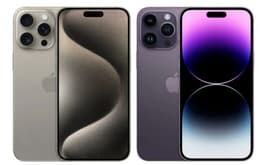
  • Camera System Capabilities: The iPhone 12 features a dual 12MP camera system with a wide (f/1.6) and ultra-wide (f/2.4) lens. The iPhone 15 Pro upgrades to a triple camera system, including a 48MP main sensor (f/1.78), a 12MP ultra-wide lens (f/2.2) with autofocus, and a 12MP telephoto lens (f/2.8) with 3x optical zoom.
  • Photography Performance: Both devices offer Night mode, Deep Fusion, and Smart HDR for improved image processing. The iPhone 15 Pro benefits from a larger main sensor, second-generation sensor-shift optical image stabilization, and the ability to capture 24MP or 48MP super-high-resolution photos, leading to more detailed and versatile images, especially in challenging lighting.
  • Video Recording Quality: The iPhone 12 supports HDR video recording with Dolby Vision up to 4K at 30 fps. The iPhone 15 Pro expands on this with ProRes video recording up to 4K at 60 fps (with external recording), Cinematic mode, Action mode, and spatial video recording, offering more advanced options for videographers.

Main camera

12 megapixels

48 megapixels

Front camera

12 megapixels

12 megapixels

Miscellaneous

Beyond core features, several practical elements contribute to the overall user experience and distinguish these two iPhone models.

  • Connectivity Options: Both devices support 5G cellular connectivity and Wi-Fi. The iPhone 12 uses Wi-Fi 6 and Bluetooth 5.0. The iPhone 15 Pro upgrades to Wi-Fi 6E and Bluetooth 5.3, offering faster wireless speeds and improved efficiency.
  • Port Types: The iPhone 12 utilizes Apple's proprietary Lightning port for charging and data transfer. The iPhone 15 Pro transitions to a USB-C port, which supports USB 3 speeds for faster data transfer and offers broader compatibility with other devices.
  • Useful Sensors and Features: Both models include Face ID for secure authentication. The iPhone 15 Pro introduces a customizable Action Button, replacing the traditional mute switch, and integrates a LiDAR Scanner for enhanced augmented reality experiences and improved low-light focusing. The iPhone 15 Pro also features a more durable titanium frame compared to the iPhone 12's aluminum frame.

Weight

7 oz

187 oz

Screen size (inches)

6.1

6.1

Network

5G

5G

SIM card

Physical SIM + eSIM

eSIM

Carrier compatibility

Unlocked

Unlocked

Connector

Lightning

USB-C (USB 3)

The iPhone 12 and iPhone 15 Pro cater to different user expectations, reflecting the technological advancements over several years. Users often praise the iPhone 12 for its introduction of an OLED display, 5G connectivity, and MagSafe, marking a significant upgrade from previous generations. However, some users have noted concerns regarding its repairability due to Apple's part authentication processes.

The iPhone 15 Pro, on the other hand, receives acclaim for its robust titanium design, the versatile USB-C port, the customizable Action Button, and its powerful camera system, which includes a 48MP main sensor and advanced video capabilities. Its ProMotion display and enhanced processing power are also frequently highlighted as major benefits.

Users prioritizing a more modern device with the latest camera technology, superior display fluidity, and faster performance for demanding tasks will find the iPhone 15 Pro well-suited to their needs. This includes content creators, mobile gamers, and professionals who require cutting-edge features. Conversely, users seeking a reliable smartphone for everyday communication, social media, and general productivity, who may not require the absolute latest advancements, might find the iPhone 12 to be a capable option. When considering either device, exploring quality-assured refurbished options can provide an eco-friendly alternative, allowing users to make informed and sustainable choices.

See all articles

Our recent comparisons