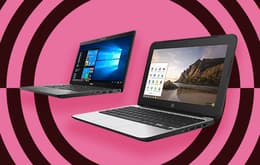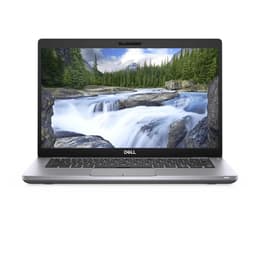
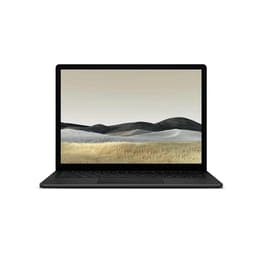

Dell Latitude 5410 14" vs Microsoft Surface Laptop 3 13"

Dell Latitude 5410 14"
Starting at

Refurbished price:$219.92

Versus $1,829.82 new

See options
Microsoft Surface Laptop 3 13"
Starting at

Refurbished price:$266.00

Versus $1,209.00 new

See options

The Dell Latitude 5410 14, released in 2020, and the Microsoft Surface Laptop 3 13, launched in 2019, are both Windows-based laptops designed for different user priorities. While the Latitude 5410 focuses on robust business functionality and extensive connectivity, the Surface Laptop 3 emphasizes a sleek design, portability, and a high-quality display. Both devices offer a familiar Windows operating system experience, but their core strengths cater to distinct usage scenarios.

Scores

Durability

When considering the long-term usability of these laptops, several factors come into play, including their release timelines, operating system support, and repairability.

  • Release Timeline and OS Support: The Dell Latitude 5410 was released in 2020, making it slightly newer than the Microsoft Surface Laptop 3 13, which launched in 2019. Both run on the Windows operating system, benefiting from Microsoft's ongoing software updates. However, the Surface Laptop 3's end-of-support date for firmware and drivers was July 30, 2024, meaning hardware-specific vulnerabilities discovered after this date will not be officially patched by Microsoft.
  • Repairability and Practical Lifespan: The Dell Latitude 5410 is generally considered to be more repairable, with components like RAM being upgradeable thanks to two SO-DIMM slots. The Surface Laptop 3's SSD is designed to be removable by a skilled technician, but it is not user-removable, and the RAM is soldered in place. The Latitude 5410 is described as an enduring business heavyweight, suggesting a design built for longevity in demanding environments. The Surface Laptop 3 is noted for its durable feel and precise build quality.
  • Expected Longevity: Users seeking maximum hardware longevity and ease of maintenance might find the Dell Latitude 5410 more appealing due to its design for upgradeability. Both devices, being Windows laptops, will continue to receive operating system updates for a considerable period, but the Dell may offer more flexibility for hardware maintenance over time.

Release Year

2019

2019

OS

Windows 11

Windows 11

Performance

The performance of a laptop is crucial for daily productivity and handling various applications. Both the Dell Latitude 5410 and the Microsoft Surface Laptop 3 13 are equipped to handle everyday tasks, but they offer different strengths.

  • Processor Capabilities and Responsiveness: Both laptops feature 10th Generation Intel Core processors, providing solid performance for general computing, office applications, and light creative tasks. The Dell Latitude 5410 delivers decent performance from its quad-core CPUs, suitable for productivity tasks. The Surface Laptop 3's 10th Gen Intel CPUs contribute to faster computing and graphics performance, making it responsive for multitasking and web browsing.
  • Battery Behavior: The Dell Latitude 5410 offers battery options, including a 68 Wh capacity, which can provide up to 15 hours in Wi-Fi tests, indicating strong endurance for extended work sessions. The Microsoft Surface Laptop 3 13.5-inch, with a 45.2 Wh or 45.8 Wh battery, is rated for up to 11.5 hours of typical usage, with real-world reports suggesting 8-9 hours for light use and around 5-6 hours for more intensive tasks.
  • Storage and RAM: Both models offer various SSD storage capacities for fast application loading and system responsiveness. The Dell Latitude 5410 can be configured with up to 32GB of RAM, providing ample capacity for demanding multitasking. The 13.5-inch Surface Laptop 3 typically comes with 8GB or 16GB of RAM, which is sufficient for most users, though the RAM is soldered and not upgradeable.

Memory (GB)

8 GB

8 GB

Processor

Core i3 - Gen 10 (U)

Core i5 - Gen 10 (G7)

Graphic card

Integrated Graphics

Integrated Graphics

Screen quality

The visual experience is a key differentiator between these two laptops, with each offering distinct display characteristics.

  • Display Technology and Resolution: The Dell Latitude 5410 typically features a 14-inch Full HD (1920x1080) IPS display, offering comfortable viewing angles. The Microsoft Surface Laptop 3 13.5-inch boasts a higher-resolution PixelSense touchscreen with 2256x1504 pixels and a 3:2 aspect ratio, providing a sharp and detailed image.
  • Clarity and Brightness: The Surface Laptop 3's display is noted for being bright and vivid, with a brightness of around 348 nits, making it suitable for indoor and some outdoor use. Its 3:2 aspect ratio is often preferred for productivity tasks like document editing and web browsing, offering more vertical screen space. In contrast, the Dell Latitude 5410's display has been described as a budget-quality IPS panel that covers a limited portion of the sRGB color gamut and may use aggressive Pulse-Width Modulation (PWM) at lower brightness levels.
  • Viewing Experience: While both offer touch-enabled displays in some configurations, the Surface Laptop 3's PixelSense display with its higher resolution and aspect ratio generally provides a more premium and immersive visual experience, particularly for tasks involving text and web content. The Dell's display, while functional, is more geared towards standard business use.

Resolution

1366 x 768

2256 x 1504

Screen type

IPS

LED

Audiovisual

For communication and media consumption, the audio and visual components of a laptop play a significant role.

  • Camera System: The Dell Latitude 5410 includes a 0.9-megapixel webcam, suitable for basic video conferencing. The Microsoft Surface Laptop 3 features a 720p HD front-facing camera, which also supports Windows Hello for secure facial authentication. Users have reported the Surface Laptop 3's webcam to be surprisingly clear and effective for video calls.
  • Microphone Quality: The Surface Laptop 3 is equipped with dual far-field Studio Mics, designed to capture clear audio for calls and voice commands. The Dell Latitude 5410 includes a standard microphone.
  • Speaker Output: The Microsoft Surface Laptop 3 incorporates Omnisonic speakers with Dolby Audio Premium, which users often praise for their loudness, clarity, and even some bass, providing a rich audio experience for media consumption. The Dell Latitude 5410 features stereo speakers, offering functional audio output for general use.

Miscellaneous

Beyond core performance and display, several practical elements contribute to the overall user experience of these laptops.

  • Connectivity Options: The Dell Latitude 5410 offers a comprehensive set of ports, including multiple USB-A ports, a USB-C port (with optional Thunderbolt 3 support), HDMI, an Ethernet port, and a microSD card reader, catering to a wide range of peripherals and network connections. It also supports Wi-Fi 6 and Bluetooth 5.1. The Microsoft Surface Laptop 3 13.5-inch has a more minimalist port selection, featuring one USB-C port, one USB-A port, a 3.5mm headphone jack, and a Surface Connect port for charging and accessories. It supports Wi-Fi 6 and Bluetooth 5.0.
  • Weight and Dimensions: The Dell Latitude 5410, with its 14-inch screen, starts at approximately 1.47 kg (3.25 lbs). The Microsoft Surface Laptop 3 13.5-inch is lighter and more compact, weighing between 1.25 kg and 1.29 kg (2.76 to 2.84 lbs), making it highly portable.
  • Build Materials and Security Features: The Latitude 5410 is built with a focus on business durability, often featuring a robust, primarily plastic chassis. It offers optional security features like a fingerprint reader and a SmartCard reader. The Surface Laptop 3 features a premium aluminum chassis, with some configurations offering an Alcantara fabric palm rest, contributing to its sleek aesthetic. It includes Windows Hello for facial recognition security.

Weight

3000 oz

96 oz

Screen size

14

13

The Dell Latitude 5410 14 and the Microsoft Surface Laptop 3 13 each present a compelling package, tailored for different user needs and preferences. User feedback often highlights the Latitude 5410's robust build, good battery life, and extensive port selection as key advantages, making it a reliable workhorse for business and productivity. Some users, however, have noted its display quality as a potential area for improvement.

Conversely, the Surface Laptop 3 is frequently praised for its premium design, high-resolution PixelSense display, comfortable keyboard and trackpad, and strong audio output, offering a refined user experience. Common criticisms include its more limited port selection compared to some competitors and the fact that its SSD, while removable by a technician, is not easily user-upgradeable. The glossy nature of its display can also lead to reflections in bright environments.

Users prioritizing a durable, highly connective, and easily serviceable laptop for demanding work environments or those who frequently connect to various peripherals may find the Dell Latitude 5410 14 to be a more suitable choice. Its focus on business-grade features and upgradeability aligns with a professional user profile. On the other hand, individuals who value a sleek, lightweight design, a vibrant high-resolution display for media consumption and productivity, and a premium tactile experience will likely gravitate towards the Microsoft Surface Laptop 3 13. It is well-suited for students, creative professionals, or anyone seeking a portable device with a refined aesthetic for everyday tasks.

Both models are available as quality-assured refurbished options, providing an eco-friendly alternative for consumers looking to make informed and sustainable choices.

See all articles

Our recent comparisons