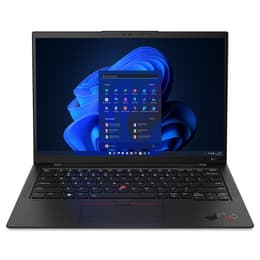

Dell Latitude 5520 15" vs Lenovo ThinkPad X1 Carbon G11 14"

Dell Latitude 5520 15"
Starting at

Refurbished price:$285.00

Versus $2,792.00 new

See options
Lenovo ThinkPad X1 Carbon G11 14"
Starting at

Refurbished price:$1,499.99

Versus $1,997.98 new

See options

Ratings

The Dell Latitude 5520 15 and the Lenovo ThinkPad X1 Carbon Gen 11 14 are business-oriented laptops designed for productivity and reliability. Both devices run on the Windows operating system, but they cater to slightly different user preferences through their form factors and feature sets. The Latitude 5520, released in early 2021, offers a larger screen and more internal upgradability, while the ThinkPad X1 Carbon Gen 11, launched in 2023, emphasizes portability and advanced display options.

Scores

Durability

When considering the long-term usability of these laptops, several factors come into play, including their release timelines, software support, and physical durability.

  • Release Timeline and Software Support: The Dell Latitude 5520 was released in early 2021, featuring 11th-generation Intel processors. The Lenovo ThinkPad X1 Carbon Gen 11, introduced in 2023, comes with 13th-generation Intel processors. This newer release date for the ThinkPad generally translates to a longer period of official operating system and security updates from Microsoft, potentially extending its software longevity by a couple of years compared to the Latitude.
  • Physical Durability: Both laptops are built for business use, implying a focus on robust construction. The Dell Latitude 5520 features a durable chassis and lid, with some models incorporating bioplastics for environmental considerations. The Lenovo ThinkPad X1 Carbon Gen 11 is crafted from carbon fiber and magnesium, and is tested against MIL-STD 810H standards, indicating resilience against various environmental stresses.
  • Repairability and Upgradability: The Dell Latitude 5520 offers two SODIMM slots for RAM upgrades and two M.2 storage slots, providing flexibility for users to extend its practical lifespan by enhancing components. In contrast, the Lenovo ThinkPad X1 Carbon Gen 11 typically has its RAM soldered to the motherboard, limiting memory upgrades, though its SSD is user-replaceable.

Release Year

2020

2023

Last Os Compatibility

Yes

Yes

OS

Windows 11

Windows 11

Performance

The performance of these laptops is primarily driven by their internal components, impacting how smoothly they handle daily tasks and more demanding workloads.

  • Processor Capabilities: The Dell Latitude 5520 utilizes 11th-generation Intel Core processors, which provide solid performance for general office applications, web browsing, and multitasking. The Lenovo ThinkPad X1 Carbon Gen 11, with its 13th-generation Intel Core processors (U-series and P-series options), offers a more current architecture, resulting in enhanced responsiveness and efficiency for demanding applications and complex multitasking scenarios.
  • Memory and Storage: The Latitude 5520 supports up to 64GB of DDR4 RAM across two upgradable slots, allowing for significant memory expansion. It also features two M.2 storage slots, one supporting faster PCIe 4.0 speeds. The ThinkPad X1 Carbon Gen 11 comes with up to 64GB of LPDDR5 RAM, which is soldered, meaning it cannot be upgraded after purchase. It offers a single M.2 PCIe Gen 4 SSD slot for storage.
  • Battery Behavior: The Dell Latitude 5520 is available with 42Wh or 63Wh battery options, with reported typical usage ranging from 8 to 12 hours on a full charge, and some tests showing up to 14 hours for web browsing. The Lenovo ThinkPad X1 Carbon Gen 11 features a 57Whr battery, often delivering around 10 to nearly 14 hours of light use. However, users report that higher-resolution screens or more powerful P-series processors on the ThinkPad can reduce actual battery life to a shorter duration.

Memory (GB)

8 GB

32 GB

Processor

Core i5-1135G7

Core i7-1365U

Graphic card

Integrated Graphics

Integrated Graphics

Screen quality

The visual experience on a laptop is largely defined by its display, with both models offering various options to suit different user needs.

  • Display Technology and Resolution: The Dell Latitude 5520 offers a 15.6-inch display with options including Full HD (1920x1080) IPS panels, and an optional 4K UHD (3840x2160) IPS display. The Lenovo ThinkPad X1 Carbon Gen 11 features a 14-inch display with a 16:10 aspect ratio, providing more vertical screen real estate. Its options include 1920x1200 IPS panels, a 2240x1400 IPS panel, and a high-resolution 2880x1800 OLED display.
  • Brightness and Clarity: Both laptops offer display options with brightness levels up to 400 nits, which is suitable for indoor and some outdoor use. The ThinkPad's optional OLED panel provides exceptional contrast and vibrant colors, while its IPS options are generally clear. The Latitude's Full HD IPS panels offer good clarity, though some base configurations might include lower-resolution options.
  • Refresh Rate and Special Features: Both models typically feature a standard 60Hz refresh rate, which is adequate for productivity tasks. The ThinkPad X1 Carbon Gen 11's displays are Eyesafe certified for low blue light, aiming to reduce eye strain. Some configurations of the ThinkPad also offer an ePrivacy filter to limit viewing angles for enhanced security.

Resolution

1366 x 768

1920 x 1200

Screen type

IPS

LED

Camera

Audiovisual

In an era of frequent virtual meetings, the audio and visual capabilities of a laptop's camera and speakers are increasingly important.

  • Webcam Quality: The Dell Latitude 5520 typically includes an HD IR webcam, with an optional 1080p FHD IR camera available for clearer video conferencing. The Lenovo ThinkPad X1 Carbon Gen 11 comes standard with a 1080p FHD webcam, often with an IR option for facial recognition. The ThinkPad's webcam is noted for its good image quality, even in varied lighting conditions, and some models include Computer Vision technology for enhanced security and user experience.
  • Microphone and Speaker Performance: The Latitude 5520 features dual 2W speakers and a microphone array, providing clear audio for calls and basic media consumption. The ThinkPad X1 Carbon Gen 11 boasts a more advanced audio setup with a quad-array speaker system (two 0.8W tweeters and two 2W woofers) and Dolby Atmos support, delivering a fuller sound profile. It also includes four 360-degree microphones with AI-based noise cancellation and Dolby Voice for superior call clarity.
  • Privacy Features: Both laptops prioritize user privacy with integrated webcam privacy shutters. The ThinkPad X1 Carbon Gen 11 further enhances this with facial recognition capabilities via its IR camera, allowing for secure and convenient logins.

Miscellaneous

Beyond core performance and display, various practical elements contribute to the overall user experience and suitability for different workflows.

  • Connectivity Options: Both laptops offer modern connectivity. The Dell Latitude 5520 includes Wi-Fi 6 and Bluetooth 5.1, with optional LTE mobile broadband. The Lenovo ThinkPad X1 Carbon Gen 11 steps up to Wi-Fi 6E and Bluetooth 5.1 (or optional 5.2), along with optional 4G/5G WWAN for robust mobile internet access.
  • Port Selection: The Latitude 5520 provides a comprehensive selection with two Thunderbolt 4 (USB-C) ports, two USB 3.2 Gen 1 (Type-A) ports, HDMI, an Ethernet (RJ45) port, a 3.5mm audio jack, and a microSD card reader. The ThinkPad X1 Carbon Gen 11 also offers two Thunderbolt 4 (USB-C) ports, two USB-A 3.2 Gen 1 ports, HDMI 2.1, and a 3.5mm combo audio jack, with an optional Nano SIM slot. The inclusion of a dedicated Ethernet port on the Latitude might be a deciding factor for some business environments.
  • Weight and Dimensions: The Dell Latitude 5520, with its 15.6-inch screen, starts at approximately 1.59 kg (3.51 lbs). The Lenovo ThinkPad X1 Carbon Gen 11 is significantly lighter and more compact, starting at just 1.12 kg (2.48 lbs) for its 14-inch form factor, making it highly portable for users constantly on the move.

Weight

60 oz

40 oz

Screen size

15

14

User feedback for the Dell Latitude 5520 often highlights its robust build, comfortable full-sized keyboard, and the flexibility offered by its upgradable RAM and dual storage slots. Some users appreciate the larger 15.6-inch display for productivity, though the quality of the base display options has sometimes been a point of criticism. Its comprehensive port selection, including a dedicated Ethernet port, is frequently praised by those in corporate environments.

The Lenovo ThinkPad X1 Carbon Gen 11 receives consistent acclaim for its exceptional portability, premium build quality, and the renowned ThinkPad keyboard, which is often considered a benchmark for laptop typing experiences. Users also commend its advanced webcam and microphone system for high-quality video conferencing, and the array of display options, particularly the vibrant OLED panel. Common concerns sometimes revolve around the soldered RAM limiting future upgrades and the potential for reduced battery life with higher-resolution screens or more powerful processors.

Users prioritizing a larger screen, extensive internal upgradability, and a full suite of traditional ports, including Ethernet, may find the Dell Latitude 5520 15 better suited to their needs. It serves well as a reliable workstation for those who value internal flexibility and a more stationary setup. Conversely, individuals who prioritize extreme portability, a superior typing experience, advanced audio-visual capabilities for remote work, and cutting-edge display technology will likely lean towards the Lenovo ThinkPad X1 Carbon Gen 11 14. Its lighter design and more modern processor make it an excellent choice for frequent travelers and executives. Both models are available as quality-assured refurbished options, providing an eco-friendly alternative for consumers seeking reliable business laptops.


See all articles

Our recent comparisons