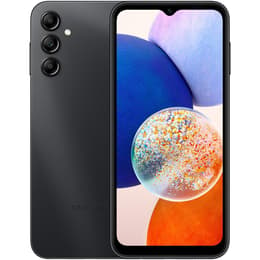
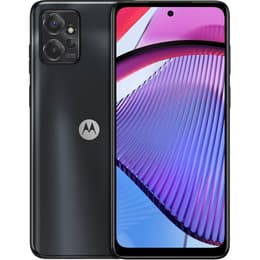

Galaxy A14 5G • Locked T-Mobile vs Motorola Moto G Power 5G • Unlocked

Galaxy A14 5G • Locked T-Mobile
Starting at

Refurbished price:$93.62

Versus $249.99 new

See options
Motorola Moto G Power 5G • Unlocked
See options

Ratings

The Samsung Galaxy A14 5G, released in January 2023, and the Motorola Moto G Power 5G (2024 model), launched in March 2024, are both smartphones designed to offer essential features and 5G connectivity. While both devices run on the Android operating system, they present different approaches to software longevity, camera capabilities, and charging technologies. This comparison will highlight their practical differences to help users make an informed decision.

Scores

Durability

The practical lifespan of a smartphone is significantly influenced by its release timeline, software support, and physical durability.

  • Release Timeline and Software Support: The Galaxy A14 5G, released in January 2023, typically receives two major Android OS updates and four years of security updates, extending its support until around 2027. The Moto G Power 5G (2024), being newer with a March 2024 release, generally receives one major OS update and three years of security updates, meaning its software support might conclude earlier than the Galaxy A14 5G.
  • Physical Durability: The Galaxy A14 5G features a plastic construction and lacks an official IP rating for dust and water resistance. The Moto G Power 5G (2024) also has a plastic build, but incorporates a vegan leather back and a water-repellent design, though it also lacks an official IP rating.
  • Repairability: The Galaxy A14 5G has been noted for its relatively high repairability, achieving a score of 8 out of 10, partly due to the use of pull tabs for easier battery replacement. The Moto G Power 5G (2024) has a lower repairability score, rated at 5.5 out of 10, indicating a more challenging repair process.

Release Year

2023

2023

OS

Android

Android

Foldable

No

No

Performance

Both devices are equipped to handle daily tasks, but they offer different levels of responsiveness and multitasking capabilities.

  • Overall System Responsiveness: The Moto G Power 5G (2024) generally offers a smoother experience for everyday tasks, app loading, and navigating the interface, benefiting from its more recent internal components and 8GB of RAM. The Galaxy A14 5G, with its 4GB, 6GB, or 8GB RAM configurations, provides solid performance for routine use, though some users might notice slight delays with demanding applications or extensive multitasking.
  • Storage Options: The Galaxy A14 5G is available with 64GB or 128GB of internal storage, while the Moto G Power 5G (2024) comes with 128GB of storage. Both devices support expandable storage via a microSD card, allowing users to increase their storage capacity significantly.
  • Battery Behavior: Both phones feature a 5000 mAh battery, designed to provide extended usage. The Moto G Power 5G (2024) is frequently praised for its long battery life, often lasting through a full day of heavy use and potentially longer with moderate usage. The Galaxy A14 5G also offers strong battery performance, with users reporting it can comfortably last a full day.

Memory (GB)

4 GB

6 GB

Screen quality

The visual experience on both smartphones is delivered through large displays, each with distinct characteristics.

  • Display Technology and Size: The Galaxy A14 5G features a 6.6-inch PLS LCD display, while the Moto G Power 5G (2024) offers a slightly larger 6.7-inch IPS LCD panel. Both technologies provide clear visuals, though neither offers the deep blacks and contrast of OLED displays.
  • Resolution and Clarity: Both devices offer Full HD+ resolutions (1080 x 2408 pixels for the A14 5G and 1080 x 2400 pixels for the Moto G Power 5G), ensuring sharp text and clear images for everyday viewing.
  • Refresh Rate and Brightness: The Moto G Power 5G (2024) boasts a 120Hz adaptive refresh rate, providing a smoother scrolling and gaming experience compared to the Galaxy A14 5G's 90Hz adaptive refresh rate. Both displays reach a peak brightness of around 500 nits, which can make outdoor visibility challenging in direct sunlight.

Resolution

1080 x 2408

1080 x 2400

Audiovisual

Both smartphones are equipped with multi-camera systems, offering different strengths for capturing photos and videos.

  • Rear Camera System: The Galaxy A14 5G includes a 50MP main camera, a 2MP macro lens, and a 2MP depth sensor. The Moto G Power 5G (2024) features a 50MP main camera with Optical Image Stabilization (OIS) and an 8MP ultrawide lens that also functions for macro photography. The inclusion of OIS and a more versatile ultrawide lens gives the Moto G Power 5G an advantage in capturing a wider range of shots and reducing blur.
  • Photography Performance: In well-lit conditions, both phones can produce decent photos with good detail. The Galaxy A14 5G's photos can sometimes appear saturated, and it struggles with low-light environments and fast-moving subjects. The Moto G Power 5G (2024) also performs well in good lighting, with OIS aiding in clearer shots, and its ultrawide camera is a notable improvement for capturing broader scenes. Low-light performance is acceptable but not exceptional on either device.
  • Video Recording Quality: Both devices are capable of recording video at 1080p resolution at 30 frames per second. The Moto G Power 5G (2024)'s main camera can also record at 60 frames per second, offering smoother video capture. Neither phone provides advanced video stabilization comparable to higher-end models.

Miscellaneous

Beyond core features, several practical elements contribute to the overall user experience of these devices.

  • Connectivity Options: Both smartphones support 5G connectivity, Wi-Fi, and Bluetooth. The Galaxy A14 5G features Bluetooth v5.2, while the Moto G Power 5G (2024) comes with Bluetooth 5.3, offering slightly improved efficiency and range. Both include NFC for contactless payments.
  • Port Types and Audio: Both devices retain a 3.5mm headphone jack, a convenient feature for many users. They both utilize a USB-C port for charging and data transfer. The Moto G Power 5G (2024) offers stereo speakers with Dolby Atmos support, providing a more immersive audio experience compared to the Galaxy A14 5G's audio output.
  • Design and Handling: The Galaxy A14 5G has a blocky design with a plastic back, weighing around 204 grams. The Moto G Power 5G (2024) features a vegan leather back, which can offer a more comfortable grip and a distinct aesthetic, weighing 201 grams. Both phones are relatively large, impacting one-handed use.

Weight

7 oz

7 oz

Screen size (inches)

6.6

6.5

Network

5G

5G

SIM card

Physical SIM

Physical SIM

Carrier compatibility

T-Mobile

Unlocked

The Samsung Galaxy A14 5G and the Motorola Moto G Power 5G (2024) both serve as capable smartphones, each with particular strengths that cater to different user priorities. User feedback for the Galaxy A14 5G often praises its reliable battery life and Samsung's commitment to software updates, which is a significant advantage for long-term usability. However, some users note its less powerful processor and camera performance in challenging conditions as areas for improvement.

The Moto G Power 5G (2024) is frequently lauded for its smooth performance in daily tasks, the inclusion of an ultrawide camera, and convenient features like wireless charging and faster wired charging. Criticisms sometimes point to its camera's limitations in low light and a shorter software update commitment compared to some competitors.

Users prioritizing extended software support and a higher repairability score may find the Galaxy A14 5G a more suitable choice. Its longer update cycle means the device will receive security patches and OS upgrades for a greater duration. Conversely, individuals who value a smoother day-to-day performance, a more versatile camera system with OIS, and advanced charging options, including wireless charging, might lean towards the Moto G Power 5G (2024). The Moto G Power 5G also offers a slightly larger and smoother display experience.

Ultimately, the decision hinges on whether software longevity and ease of repair are paramount, or if a more immediate and feature-rich performance, particularly in charging and camera versatility, takes precedence. Both devices offer a pathway to 5G connectivity and can be considered as quality-assured refurbished options, providing an eco-friendly alternative for consumers.


See all articles

Our recent comparisons