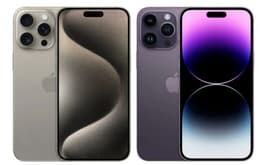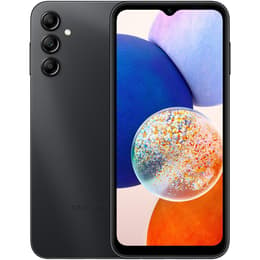
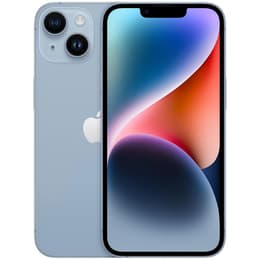
Galaxy A14 5G • Unlocked vs iPhone 14 • Locked Verizon

Galaxy A14 5G • Unlocked
Starting at

Refurbished price:$99.00

Versus $249.99 new

See options
iPhone 14 • Locked Verizon
Starting at

Refurbished price:$299.00

Versus $599.00 new

See options

Ratings

The Samsung Galaxy A14 5G, released in January 2023, and the Apple iPhone 14, launched in September 2022, represent distinct approaches to smartphone design and functionality. While both devices offer 5G connectivity, they cater to different user expectations through their respective operating systems and hardware philosophies. The Galaxy A14 5G operates on Android, providing a customizable experience, whereas the iPhone 14 runs on iOS, known for its integrated ecosystem.

Scores

Durability

When considering the longevity of these devices, several factors come into play, including their release timelines, software support, and physical construction.

  • Release and Software Support: The iPhone 14, released in September 2022, typically receives iOS updates for an extended period, often 5 to 7 years from its launch, potentially extending its feature and security support until around 2028. The Galaxy A14 5G, launched in January 2023, is expected to receive two major Android OS updates and four years of security updates, meaning it will likely be supported with new Android versions until Android 15 and security patches until 2027.
  • Physical Durability: The iPhone 14 features a Ceramic Shield front cover and an aerospace-grade aluminum frame, contributing to its overall durability and resistance to everyday impacts. The Galaxy A14 5G utilizes a plastic frame and back, with a glass front. While functional, some users have noted that its plastic construction can feel less robust.
  • Repairability: The Galaxy A14 5G has shown some advancements in repairability, particularly with its battery design, which includes a pull tab for easier removal. Information on the iPhone 14's repairability suggests a focus on internal design improvements to facilitate servicing.

Release Year

2023

2022

Last OS Compatibility

Yes

Yes

OS

Android

iOS

Foldable

No

No

Performance

The performance of a smartphone is crucial for daily tasks, from navigating applications to managing multiple processes simultaneously.

  • Processing Power: The iPhone 14 is equipped with a powerful processor that handles demanding applications and multitasking with notable smoothness. This allows for fluid navigation, quick app launches, and efficient performance in graphically intensive games. The Galaxy A14 5G features a processor that provides solid performance for its category, capably managing everyday tasks like browsing, social media, and light gaming.
  • Multitasking and Storage: The iPhone 14 comes with 6GB of RAM, which assists in keeping multiple applications open in the background without significant slowdowns. It offers storage options up to 512GB. The Galaxy A14 5G is available with various RAM configurations, including 4GB, 6GB, and 8GB, and offers up to 128GB of internal storage, which can be expanded using a microSD card.
  • Battery Behavior: The Galaxy A14 5G is known for its substantial 5000 mAh battery, which generally provides extended usage on a single charge, often lasting through a full day of heavy use for many users. The iPhone 14, with its 3279 mAh battery, offers good battery life for typical daily use, with some users reporting it can last a full day, though heavy usage might require more frequent charging.

Memory (GB)

4 GB

6 GB

Screen quality

The display is a primary interface for any smartphone, influencing everything from media consumption to daily interactions.

  • Display Technology and Clarity: The iPhone 14 features a 6.1-inch Super Retina XDR OLED display, offering deep blacks, high contrast, and vibrant colors. Its resolution provides sharp and clear visuals for text and images. The Galaxy A14 5G has a larger 6.6-inch PLS LCD display with a Full HD+ resolution, delivering clear visuals and good color reproduction.
  • Brightness and Refresh Rate: The iPhone 14's OLED panel can achieve high peak brightness levels, making it comfortable to view even in bright outdoor conditions. It operates at a standard 60Hz refresh rate. The Galaxy A14 5G offers a 90Hz refresh rate, which contributes to smoother scrolling and a more fluid visual experience, though its overall brightness might be less optimal in direct sunlight compared to the iPhone.
  • Viewing Experience: The iPhone 14's display size offers a compact viewing experience, suitable for one-handed use, while the Galaxy A14 5G's larger screen provides more expansive real estate for media consumption and multitasking.

Resolution

1080 x 2408

1170 x 2532

Screen type

PLS LCD

Super Retina XDR OLED

Audiovisual

Camera capabilities are a significant consideration for many smartphone users, impacting how they capture and share moments.

  • Rear Camera Systems: The iPhone 14 features a dual-camera system with a 12MP main sensor and a 12MP ultrawide lens. The main camera includes a larger sensor and a wider aperture, enhancing low-light performance and overall image quality. The Galaxy A14 5G is equipped with a triple camera setup, including a 50MP main sensor, a 2MP macro lens, and a 2MP depth sensor. Its main camera performs well in good lighting conditions.
  • Low-Light and Video Performance: The iPhone 14 excels in low-light photography due to its advanced sensor and image processing. It also offers advanced video features like Cinematic Mode for depth-of-field effects and Action Mode for stabilized footage. The Galaxy A14 5G's camera system is generally considered decent for its class, though its low-light performance and video stabilization may not match the iPhone's capabilities.
  • Front Camera: The iPhone 14 includes a 12MP front camera with autofocus, providing clear selfies and improved video call quality. The Galaxy A14 5G has a 13MP front camera, which delivers good results for selfies in well-lit environments.

Main camera

50 megapixels

12 megapixels

Front camera

13 megapixels

12 megapixels

Miscellaneous

Beyond core features, several practical elements contribute to the overall user experience and device utility.

  • Connectivity and Ports: Both devices support 5G connectivity. The iPhone 14 includes Wi-Fi 6 and Bluetooth 5.3, and uses a Lightning port for charging and data transfer. The Galaxy A14 5G supports Wi-Fi 5 and Bluetooth 5.2, and features a USB-C 2.0 port, along with a traditional 3.5mm headphone jack.
  • Biometric Security and Design: The iPhone 14 relies on Face ID for secure facial recognition. Its design features a glass front and back with an aluminum frame, giving it a refined feel. The Galaxy A14 5G incorporates a side-mounted fingerprint sensor for biometric authentication. Its construction primarily uses plastic for the back and frame, which contributes to its lighter feel.
  • Dimensions and Handling: The iPhone 14 is more compact and lighter, making it easier for one-handed use and pocketability. The Galaxy A14 5G is a larger and slightly heavier device, offering a more expansive screen but potentially requiring two hands for comfortable operation.

Weight

7 oz

6 oz

Screen size (inches)

6.6

6.1

Network

5G

5G

SIM card

Physical SIM

eSIM

Carrier compatibility

Unlocked

Verizon

The Samsung Galaxy A14 5G and the iPhone 14 cater to different user priorities, each offering a distinct set of strengths. User feedback often praises the Galaxy A14 5G for its robust battery life and the inclusion of expandable storage and a headphone jack, which are practical benefits for many. Some common criticisms point to its plastic build quality and camera performance in challenging lighting conditions.

The iPhone 14 is frequently lauded for its powerful performance, high-quality display, and advanced camera system, particularly its video capabilities and low-light photography. User concerns sometimes revolve around its battery life under heavy use and the absence of a high refresh rate display.

Users prioritizing an extensive software support timeline, a premium build, and advanced camera features for photography and videography may find the iPhone 14 well-suited to their needs. Conversely, individuals who value a larger display, exceptional battery longevity, expandable storage, and the flexibility of the Android ecosystem might lean towards the Galaxy A14 5G. Both devices offer reliable performance for their intended audiences, and considering a quality-assured refurbished option for either model can be an eco-friendly alternative to purchasing new.

See all articles

Our recent comparisons