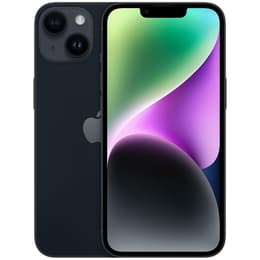
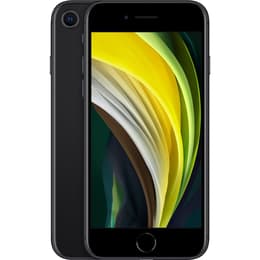
iPhone 14 • Locked Verizon vs iPhone SE (2020) • Unlocked

iPhone 14 • Locked Verizon
Starting at

Refurbished price:$300.94

Versus $599.00 new

See options
iPhone SE (2020) • Unlocked
Starting at

Refurbished price:$107.00

Versus $399.00 new

See options

Ratings

The iPhone 14, released in September 2022, and the iPhone SE 2020, launched in April 2020, are both smartphones from Apple, yet they cater to different user preferences and needs. While the iPhone SE 2020 offers a compact design with a traditional home button, the iPhone 14 presents a larger, more modern all-screen experience. Key differentiators include display technology, camera capabilities, and processing power, reflecting the two-year gap in their release cycles. Both devices operate on Apple's iOS ecosystem, ensuring a consistent software experience, though the newer iPhone 14 benefits from extended software support.

Scores

Durability

When considering the longevity of these devices, their release timelines and design philosophies play a significant role.

  • Release Timeline & OS Support: The iPhone 14, being released in September 2022, benefits from a longer expected period of iOS updates compared to the iPhone SE 2020, which was released in April 2020. This means the iPhone 14 will receive new software features and security patches for a greater duration, extending its practical lifespan for users who prioritize the latest software. The iPhone SE 2020 launched with iOS 13.4, while the iPhone 14 launched with iOS 16.
  • Repairability: The iPhone SE 2020 received an iFixit repairability score of 6 out of 10, noted for its modular components and relatively straightforward access to the display and battery, which are common repair needs. The iPhone 14 initially received a higher score due to an internal redesign that made back glass replacement easier. However, this score was later downgraded to 4 out of 10 by iFixit due to software locks that complicate repairs using non-authorized parts, potentially limiting independent repair options.
  • Expected Practical Lifespan: Given the difference in release dates and the typical support cycles for Apple devices, the iPhone 14 is expected to remain fully functional and supported for a longer period. Users seeking the longest possible device lifespan from a software perspective may find the iPhone 14 more suitable.

Release Year

2022

2020

Last OS Compatibility

Yes

Yes

OS

iOS

iOS

Foldable

No

No

Performance

The performance of a smartphone is largely dictated by its internal processing capabilities and how efficiently it manages tasks.

  • Processor Capabilities: The iPhone 14 features a more advanced processor, which translates to smoother operation for demanding applications, faster game loading times, and more efficient handling of complex computational tasks. This newer processor provides a noticeable advantage in overall speed and responsiveness, especially when multitasking or running graphically intensive applications. The iPhone SE 2020, while still capable, relies on an older generation processor.
  • Multitasking and Responsiveness: The iPhone 14 includes 6 GB of RAM, allowing it to manage more applications simultaneously without needing to reload them as frequently. In contrast, the iPhone SE 2020 comes with 3 GB of RAM, which can lead to more frequent app reloads when switching between many active applications. This difference impacts the fluidity of multitasking and overall system responsiveness, with the iPhone 14 offering a more seamless user experience for heavy multitaskers.
  • Battery Behavior: The iPhone 14 generally offers improved battery endurance, capable of lasting a full day for most users with typical usage patterns. Its larger battery capacity and more efficient components contribute to this. The iPhone SE 2020, with its smaller battery, may require more frequent charging, particularly for users with high usage demands.

Memory (GB)

6 GB

3 GB

Screen quality

The visual experience on a smartphone is heavily influenced by its display technology and specifications.

  • Display Technology and Size: The iPhone 14 features a 6.1-inch Super Retina XDR OLED display, offering deep blacks, vibrant colors, and excellent contrast. The iPhone SE 2020, on the other hand, utilizes a 4.7-inch Retina HD IPS LCD display. The OLED technology in the iPhone 14 provides a more immersive viewing experience, particularly for media consumption, due to its superior color reproduction and contrast.
  • Resolution and Brightness: The iPhone 14 boasts a higher resolution of 2532 x 1170 pixels at 460 ppi, resulting in sharper images and text. It also offers significantly higher typical brightness of 800 nits and a peak HDR brightness of 1200 nits, making it more legible in bright outdoor conditions. The iPhone SE 2020 has a resolution of 1334 x 750 pixels at 326 ppi and a lower typical brightness, which can be less ideal for outdoor viewing.
  • Refresh Rate: Both devices feature a standard 60Hz refresh rate. This means that while the iPhone 14's OLED panel offers better visual fidelity, neither device provides the smoother scrolling and animation experience found on displays with higher refresh rates.

Resolution

1170 x 2532

750 x 1334

Screen type

Super Retina XDR OLED

Retina IPS LCD

Audiovisual

The camera systems on both iPhones offer distinct capabilities for capturing photos and videos.

  • Rear Camera System: The iPhone 14 features a dual 12MP camera system, including a main camera with a wider f/1.5 aperture and sensor-shift optical image stabilization, alongside an Ultra Wide lens. This setup, combined with the Photonic Engine, significantly improves low-light performance and overall image quality. The iPhone SE 2020 has a single 12MP wide camera with an f/1.8 aperture and optical image stabilization. While capable in good lighting, it lacks the versatility and advanced low-light processing of the iPhone 14.
  • Computational Photography & Features: The iPhone 14 benefits from advanced computational photography features like Deep Fusion, Smart HDR 4, and a dedicated Night mode, which are absent on the iPhone SE 2020. The iPhone 14 also introduces Action mode for smoother video capture and an improved Cinematic mode for video with selective focus. Both support Portrait mode, but the iPhone SE 2020's is software-based and limited to detecting people.
  • Front Camera & Video Quality: The iPhone 14's 12MP front camera includes autofocus and a wider f/1.9 aperture, enhancing selfie quality and low-light performance. The iPhone SE 2020 has a 7MP front camera. Both devices can record 4K video at up to 60 frames per second, with the iPhone 14 offering more advanced video stabilization and HDR capabilities.

Main camera

12 megapixels

12 megapixels

Front camera

12 megapixels

7 megapixels

Miscellaneous

Beyond core features, several practical elements differentiate these two iPhone models.

  • Connectivity: A significant difference lies in network capabilities. The iPhone 14 supports 5G connectivity, offering faster download and upload speeds in areas with 5G coverage. The iPhone SE 2020 is limited to 4G LTE. Both support Wi-Fi 6 and Bluetooth, though the iPhone 14 features the newer Bluetooth 5.3 standard compared to the iPhone SE 2020's Bluetooth 5.0.
  • Biometric Authentication: The iPhone 14 relies on Face ID for secure authentication and unlocking, utilizing its TrueDepth camera system. The iPhone SE 2020 features the traditional Touch ID fingerprint sensor integrated into its home button.
  • Design and Materials: The iPhone 14 features a Ceramic Shield front cover and an aluminum design, offering enhanced durability and water resistance with an IP68 rating (up to 6 meters for 30 minutes). The iPhone SE 2020 has a glass front and back with an aluminum frame, and an IP67 rating (up to 1 meter for 30 minutes). The iPhone 14 is also slightly larger and heavier than the compact iPhone SE 2020.

Weight

6 oz

5 oz

Screen size (inches)

6.1

4.7

Network

5G

LTE

SIM card

eSIM

Physical SIM + eSIM

Carrier compatibility

Verizon

Unlocked

Connector

Lightning

Lightning

The iPhone 14 and iPhone SE 2020 offer distinct experiences, appealing to different user priorities. Users frequently praise the iPhone 14 for its vibrant OLED display, enhanced camera system with improved low-light performance, and longer battery life. Its 5G connectivity and Face ID are also often cited as modern conveniences. However, some users have noted concerns regarding battery degradation over time on the iPhone 14.

The iPhone SE 2020 is often lauded for its compact form factor, the familiarity of Touch ID, and its capable performance for everyday tasks, especially considering its release year. Criticisms sometimes point to its smaller LCD display, the absence of a dedicated Night mode for photography, and its more limited battery capacity compared to newer models.

Users prioritizing a modern, expansive display, advanced camera features for diverse shooting conditions, and future-proof 5G connectivity will find the iPhone 14 well-suited to their needs. Its stronger performance and longer software support also make it a compelling choice for those seeking a device with extended longevity. Conversely, users who prefer a smaller, more traditional design with a physical home button and Touch ID, and who primarily use their phone for standard daily tasks, may lean toward the iPhone SE 2020. It remains a practical option for those who value a compact device.

For consumers evaluating these options, considering quality-assured refurbished alternatives can provide an eco-friendly way to access either device, extending their lifecycle and offering a sustainable choice.

See all articles

Our recent comparisons