Compare models
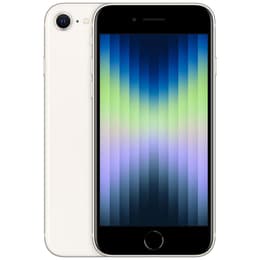
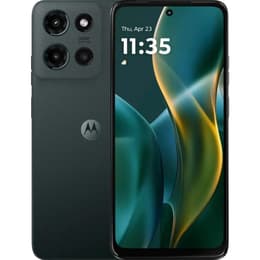
iPhone SE (2022) • Locked Verizon vs Motorola Moto G (2025) • Unlocked
- 1-year warranty
- Free standard shipping
- Free 30-day returns
Differences at a glance
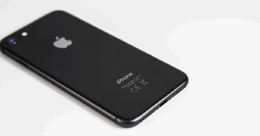
The iPhone SE (2022), locked to Verizon, and the unlocked Motorola Moto G (2025) represent two distinct approaches to everyday mobile technology, combining a compact classic footprint with a modern expansive build. While the iPhone SE relies on an established Apple ecosystem framework and biometric home button navigation, the Motorola Moto G delivers an updated Android experience featuring a high-refresh display and large-capacity battery. Operating on entirely different software platforms, these devices cater to users looking for distinct physical and digital environments.
Available Models
Color
Storage (GB)
Scores
Durability
When examining longevity and structural endurance, both smartphones offer contrasting support lifecycles and build philosophies tailored to different user expectations.
- Software lifecycle: The iPhone SE receives extended Apple operating system updates spanning several years from its release, whereas the Motorola Moto G operates on Android 15 with a standard manufacturer update timeline. Repairability: Both models feature widely documented repair pathways, though internal component availability and regional service options differ between Apple and Android ecosystems. Expected lifespan: Users choosing a quality-assured refurbished option through Back Market can extend the operational life of either device as a sustainable, eco-friendly alternative.
Release Year
2022
2025
OS
iOS
Android
Foldable
No
No
Performance
Underneath the surface, system responsiveness and daily power handling differ significantly based on hardware architecture and battery design.
- Multitasking and speed: Both devices handle daily web browsing, messaging, and streaming smoothly, though heavier applications and intense gaming benefit from the high-performance processor architecture found in the iPhone SE. Storage availability: The iPhone SE offers configurations starting at 64GB up to 256GB, while the Motorola Moto G provides flexible capacity options complemented by expandable storage via a microSD card slot. Battery behavior: The Motorola Moto G features a larger capacity battery designed to comfortably stretch through heavy daily use, whereas the smaller battery inside the iPhone SE typically requires a midday charge during intensive tasks.
Screen quality
Display characteristics define how media, text, and everyday interfaces appear during standard viewing sessions.
- Panel technology: The iPhone SE features a compact 4.7-inch IPS LCD screen with traditional thick bezels and a physical Touch ID sensor, while the Motorola Moto G offers a sprawling 6.7-inch IPS LCD display with modern punch-hole framing. Refresh rate and fluidity: The Motorola Moto G utilizes a smooth 120Hz refresh rate for fluid scrolling, whereas the iPhone SE standardizes at a conventional 60Hz refresh rate. Outdoor legibility: Both screens reach adequate brightness levels for outdoor visibility, though the larger canvas of the Motorola Moto G provides an expansive viewing space for media consumption.
Resolution
750 x 1334
720x1604
Screen type
Retina IPS LCD
IPS LCD
Audiovisual
Photography and media output vary widely depending on lens configurations and built-in acoustic hardware.
- Camera capabilities: The iPhone SE utilizes a single rear 12-megapixel camera supported by advanced computational photography software, while the Motorola Moto G equips a dual rear setup featuring a 50-megapixel main sensor alongside a macro lens. Video and low-light: The iPhone SE handles detailed 4K video recording efficiently, whereas the Motorola Moto G focuses on everyday snapshot versatility and standard 1080p recording. Audio output: The Motorola Moto G incorporates stereo speakers with spatial audio enhancements and a traditional 3.5mm headphone jack, while the iPhone SE relies on stereo speakers integrated without a legacy audio port.
Miscellaneous
Practical physical attributes and connectivity standards shape how each phone integrates into daily routines.
- Connectivity: Both models support 5G cellular networks, Wi-Fi connectivity, Bluetooth, and NFC capabilities for contactless transactions. Port architecture: The iPhone SE utilizes a proprietary Lightning connector, whereas the Motorola Moto G adopts the universal USB-C standard alongside wired fast-charging support. Handling and dimensions: The iPhone SE measures 138.4 mm in height and weighs 144 grams for single-handed portability, while the Motorola Moto G measures 167.1 mm tall and weighs 193 grams to accommodate its larger screen and battery.
Weight
3 oz
7 oz
Screen size (inches)
4.7
6.7
Network
5G
5G
SIM card
Physical SIM + eSIM
Physical SIM + eSIM
Carrier compatibility
Verizon
Unlocked
What the community thinks
Community feedback highlights distinct preferences for each device across public tech forums and user reviews. Owners of the iPhone SE frequently praise its pocket-friendly dimensions, familiar biometric home button, and smooth app execution, though some express concerns over its restricted battery capacity and dated screen bezels. Conversely, Motorola Moto G users frequently commend the extended battery endurance, high screen refresh rate, and inclusion of expandable storage, while noting that the plastic build and lower screen resolution do not match flagship display standards.
Users prioritizing a compact form factor, physical button navigation, and deep iOS software integration will find the iPhone SE well-suited to their needs, provided they remain within the Verizon network ecosystem. Meanwhile, users prioritizing a large viewing area, extended battery staying power, and Android versatility will lean toward the unlocked Motorola Moto G. Exploring quality-assured refurbished models through Back Market provides an eco-friendly path toward acquiring either device with verified functional standards.