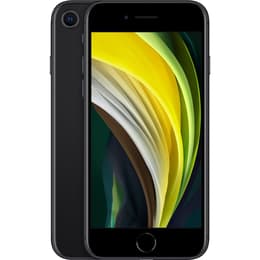
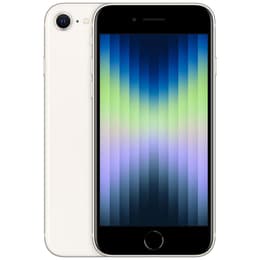
iPhone SE (2020) • Unlocked vs iPhone SE (2022) • Locked Verizon

iPhone SE (2020) • Unlocked
Starting at

Refurbished price:$107.00

Versus $399.00 new

See options
iPhone SE (2022) • Locked Verizon
Starting at

Refurbished price:$124.00

Versus $429.00 new

See options

Ratings

The iPhone SE 2020, released in April 2020, and the iPhone SE 2022, launched in March 2022, represent Apple's approach to offering core iPhone functionality in a familiar design. While sharing a similar compact form factor and the iOS operating system, the newer 2022 model brings notable enhancements in processing power, cellular connectivity, and subtle durability improvements. This comparison will explore the practical differences between these two smartphones to help users determine which aligns best with their needs.

Scores

Durability

When considering the longevity of a smartphone, several factors come into play, including software support, physical resilience, and repairability.

  • Software Updates: The iPhone SE 2020, released in April 2020, shipped with iOS 13.4 and has received updates to iOS 26 as of 2025. The iPhone SE 2022, launched in March 2022, started with iOS 15.4 and is also eligible for iOS 26. Due to its later release and more advanced internal components, the iPhone SE 2022 is expected to receive software updates for a longer period, offering extended access to new features and security patches. [1, 2]
  • Physical Durability: Both models feature an IP67 rating for water and dust resistance, meaning they can withstand immersion in up to 1 meter of water for 30 minutes. The iPhone SE 2022 incorporates stronger glass on its front, similar to the back glass of the iPhone 13 series, which may offer enhanced resistance to drops and scratches compared to its predecessor. [10, 15, 30]
  • Practical Lifespan: Given Apple's consistent software support, both devices are built to last. However, the iPhone SE 2022's newer processor and extended update cycle suggest it will remain a capable and secure device for a longer practical lifespan, making it a more future-proof option for users seeking maximum longevity. [19]

Release Year

2020

2022

Last OS Compatibility

Yes

Yes

OS

iOS

iOS

Foldable

No

No

Performance

The performance of a smartphone significantly impacts daily user experience, from launching applications to handling demanding tasks.

  • Processing Power: The iPhone SE 2020 is equipped with a capable processor that handles everyday applications, multitasking, and moderate gaming smoothly. The iPhone SE 2022, however, features a more advanced processor, which provides a substantial boost in speed and efficiency. This translates to faster app loading times, more fluid navigation, and superior performance in graphically intensive games and augmented reality applications. [1, 5, 24]
  • Multitasking and Responsiveness: While both phones offer a responsive user experience, the iPhone SE 2022's enhanced processing power and increased RAM (4GB compared to the 2020 model's 3GB) contribute to more seamless multitasking. Users switching between multiple applications or running several background processes will likely notice a smoother transition and less lag on the newer model. [1, 4, 13]
  • Battery Behavior: The iPhone SE 2022 includes a slightly larger battery capacity (2018 mAh) compared to the iPhone SE 2020 (1821 mAh). Combined with the more power-efficient processor, the 2022 model generally offers improved battery life, allowing for longer usage between charges, particularly for heavy users. [5, 7, 24]

Memory (GB)

3 GB

4 GB

Screen quality

The display is a primary interface for any smartphone, and while these two models share many similarities, understanding their characteristics is key.

  • Display Technology and Clarity: Both the iPhone SE 2020 and iPhone SE 2022 feature a 4.7-inch Retina HD IPS LCD display with a resolution of 1334 x 750 pixels, resulting in a pixel density of 326 pixels per inch (ppi). This provides clear and sharp visuals for general use, web browsing, and media consumption. Both displays also support True Tone and a wide color gamut (P3), ensuring accurate and vibrant color reproduction. [3, 15]
  • Brightness and Outdoor Visibility: Both models offer a typical maximum brightness of 625 nits. This level of brightness is generally sufficient for indoor viewing and provides adequate visibility in most outdoor conditions, though direct sunlight might still pose a challenge for optimal readability. [3, 15]
  • Refresh Rate and Smoothness: Both the iPhone SE 2020 and iPhone SE 2022 utilize a standard 60Hz refresh rate. This means the screen updates 60 times per second, providing a smooth experience for typical scrolling and video playback. Users accustomed to higher refresh rate displays found on some other smartphones might notice a difference, but for most, the 60Hz rate is perfectly functional. [15]

Resolution

750 x 1334

750 x 1334

Screen type

Retina IPS LCD

Retina IPS LCD

Audiovisual

The camera systems on both iPhone SE models are designed for reliable everyday photography, with the newer model benefiting from computational advancements.

  • Rear Camera Capabilities: Both the iPhone SE 2020 and iPhone SE 2022 feature a single 12-megapixel wide camera with an f/1.8 aperture. This hardware is capable of capturing detailed photos with good color accuracy in well-lit conditions. The iPhone SE 2022, however, leverages its more powerful processor to introduce computational photography enhancements such as Smart HDR 4, Photographic Styles, and Deep Fusion, which can result in improved dynamic range, better texture detail, and more consistent image quality, especially in challenging lighting. [1, 10, 15, 21]
  • Front Camera and Video Recording: Both models include a 7-megapixel front-facing camera with an f/2.2 aperture, suitable for selfies and video calls. For video recording, both support 4K video at up to 60 frames per second (fps) with optical image stabilization. The iPhone SE 2022's processor also enables extended dynamic range for video up to 30 fps and cinematic video stabilization, offering slightly more refined video capture. [1, 5, 21]
  • Low-Light Performance and Audio: While both cameras perform well in good lighting, neither model excels in very low-light conditions compared to multi-lens systems found in more advanced smartphones, as they lack a dedicated Night mode. Both devices offer stereo recording for videos and provide clear speaker output for media consumption and calls. [1, 31]

Main camera

12 megapixels

12 megapixels

Front camera

7 megapixels

7 megapixels

Miscellaneous

Beyond the core features, several practical elements contribute to the overall user experience of these smartphones.

  • Connectivity Options: A key differentiator is cellular connectivity. The iPhone SE 2020 supports 4G LTE, Wi-Fi 6, and Bluetooth 5.0. The iPhone SE 2022 upgrades to 5G (sub-6GHz), offering faster download and upload speeds in areas with 5G coverage, alongside Wi-Fi 6 and Bluetooth 5.0. This makes the 2022 model more suitable for users who require or anticipate needing faster mobile data speeds. [1, 5, 19, 33]
  • Physical Design and Handling: Both devices share an identical physical design, featuring a 4.7-inch display with prominent bezels and a Home button with Touch ID. They have similar dimensions (138.4 x 67.3 x 7.3 mm) and are lightweight, with the SE 2020 at 148 grams and the SE 2022 at 144 grams. This compact size makes them easy to handle with one hand and pocket-friendly. Both utilize a Lightning port for charging and data transfer and lack a traditional 3.5mm headphone jack. [4, 7, 10, 17, 31]
  • Security and Build Materials: Both models rely on Touch ID for secure authentication, a feature many users prefer over facial recognition. They are constructed with an aluminum frame and glass front and back. The iPhone SE 2022 benefits from stronger glass on the front, enhancing its resistance to everyday wear and tear. [10, 15, 30, 32]

Weight

5 oz

3 oz

Screen size (inches)

4.7

4.7

Network

LTE

5G

SIM card

Physical SIM + eSIM

Physical SIM + eSIM

Carrier compatibility

Unlocked

Verizon

Connector

Lightning

Lightning

The iPhone SE 2020 and iPhone SE 2022 offer a compelling choice for users seeking a compact iPhone experience with the reliability of the iOS ecosystem. User feedback often praises the iPhone SE line for its familiar design, including the physical Home button and Touch ID, which many find intuitive and convenient. Common criticisms tend to revolve around the dated design with thick bezels and the smaller screen size compared to modern full-screen smartphones. Some users also note that while the camera is good for general use, it lacks advanced features like Night mode found in higher-end models. [31, 32]

Users prioritizing a balance of performance and a slightly longer software support window, along with the benefit of 5G connectivity, will find the iPhone SE 2022 to be a well-suited option. It offers a more future-proof experience for those who want to stay current with mobile network speeds and benefit from the latest computational photography features. Conversely, individuals who primarily use their phone for basic tasks, don't require 5G, and prefer a device that still delivers solid performance for everyday apps may find the iPhone SE 2020 to be a capable choice. Both models represent a practical entry into the iPhone ecosystem, and for those looking for an eco-friendly alternative, quality-assured refurbished options are available for both devices, extending their lifecycle and reducing electronic waste.
See all articles

Our recent comparisons