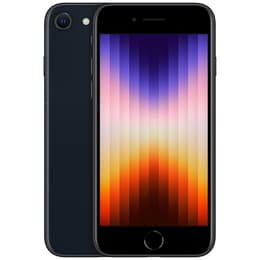
iPhone 13 Pro • Unlocked vs iPhone SE (2022) • Locked T-Mobile

iPhone 13 Pro • Unlocked
Starting at

Refurbished price:$327.00

Versus $999.00 new

See options
iPhone SE (2022) • Locked T-Mobile
Starting at

Refurbished price:$133.00

Versus $429.00 new

See options

Ratings

The iPhone 13 Pro, released in September 2021, and the iPhone SE (2022), launched in March 2022, are two distinct Apple smartphones offering different user experiences. While both devices operate on Apple's iOS platform and share the same core processor, they diverge significantly in design, display technology, and camera capabilities. This comparison aims to highlight these practical differences to help consumers make an informed decision.

Scores

Durability

When considering the longevity of a smartphone, factors like software support, physical durability, and ease of repair play a crucial role. The iPhone 13 Pro and iPhone SE (2022) offer varying propositions in these areas.

  • Software Support: The iPhone 13 Pro, released in September 2021, and the iPhone SE (2022), released in March 2022, both shipped with iOS 15. Historically, Apple provides major iOS updates for approximately seven years from a device's release. This suggests the iPhone 13 Pro could receive updates until around 2028-2029, while the iPhone SE (2022) might extend to 2029.
  • Physical Durability: The iPhone 13 Pro features a Ceramic Shield front cover and an IP68 rating for water and dust resistance, indicating a higher level of protection against submersion. The iPhone SE (2022) also includes a Ceramic Shield front and an IP67 rating, offering robust protection against dust and splashes, and limited submersion.
  • Repairability: The iPhone 13 Pro received a repairability score of 5 out of 10 from iFixit, noting that while display and battery replacements are prioritized, the rear glass is difficult to replace, and software limitations can complicate third-party repairs for features like Face ID. The iPhone SE (2022) generally scores slightly higher, around 5.5 to 6 out of 10, and is considered relatively repair-friendly for common components like the battery and screen.

Release Year

2021

2022

Last OS Compatibility

Yes

Yes

OS

iOS

iOS

Foldable

No

No

Performance

Both the iPhone 13 Pro and the iPhone SE (2022) are equipped with the same generation of processor, leading to strong performance across various tasks, though differences in RAM and thermal management can influence sustained usage.

  • Processing Power: Both devices utilize a current-generation processor, enabling smooth operation for demanding applications, multitasking, and graphics-intensive games. Users can expect rapid app loading and fluid navigation on both models.
  • Multitasking and Responsiveness: The iPhone 13 Pro includes 6GB of RAM, which contributes to its ability to handle numerous applications simultaneously and switch between them without noticeable delays. The iPhone SE (2022) comes with 4GB of RAM, providing capable multitasking performance for most users, though it may manage fewer active background applications compared to the Pro model.
  • Battery Behavior: The iPhone 13 Pro generally offers extended battery life, often lasting a full day or more for many users, even with heavier usage. The iPhone SE (2022), while improved over its predecessor, typically provides average battery life, often requiring a charge by the end of a day of moderate use.

Memory (GB)

6 GB

4 GB

Screen quality

The visual experience is a significant differentiator between these two iPhone models, primarily due to their underlying display technologies and physical dimensions.

  • Display Technology and Clarity: The iPhone 13 Pro features a 6.1-inch Super Retina XDR OLED display, which delivers deep blacks, vibrant colors, and high contrast. In contrast, the iPhone SE (2022) uses a 4.7-inch Retina HD LCD display, offering good color accuracy but with less contrast and brightness compared to OLED technology.
  • Resolution and Brightness: The iPhone 13 Pro boasts a resolution of 2532x1170 pixels at 460 pixels per inch (ppi), providing sharp and detailed visuals. It also achieves a typical brightness of 1000 nits and a peak HDR brightness of 1200 nits, making it highly visible in bright outdoor conditions. The iPhone SE (2022) has a resolution of 1334x750 pixels at 326 ppi and a maximum brightness of 625 nits, which is suitable for most indoor and outdoor viewing but may struggle more in direct sunlight.
  • Refresh Rate and Smoothness: A key feature of the iPhone 13 Pro is its ProMotion technology, offering an adaptive refresh rate that can scale from 10Hz to 120Hz. This results in exceptionally smooth scrolling, more responsive gaming, and efficient battery use. The iPhone SE (2022) maintains a standard 60Hz refresh rate, providing a consistent but less fluid visual experience compared to the ProMotion display.

Resolution

1170 x 2532

750 x 1334

Screen type

Super Retina XDR OLED

Retina IPS LCD

Audiovisual

The camera systems on the iPhone 13 Pro and iPhone SE (2022) cater to different photographic needs, with the Pro model offering a more versatile and advanced setup.

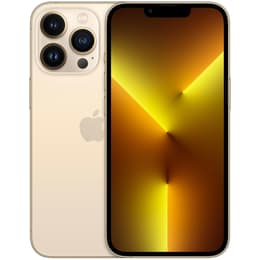
  • Camera System Configuration: The iPhone 13 Pro is equipped with a triple 12-megapixel camera system, including a wide, ultra-wide, and telephoto lens, alongside a LiDAR scanner for enhanced depth sensing. The iPhone SE (2022) features a single 12-megapixel wide camera on the rear and a 7-megapixel front camera.
  • Photography Features: The iPhone 13 Pro offers a comprehensive suite of advanced features such as Night mode on all cameras, Macro photography, Cinematic Mode for video with depth effects, and ProRes video recording for professional workflows. The iPhone SE (2022) benefits from computational photography enhancements powered by its processor, including Smart HDR 4, Deep Fusion, and Photographic Styles, but it lacks Night mode, Cinematic Mode, and macro capabilities.
  • Low-Light and Video Performance: The iPhone 13 Pro excels in low-light conditions due to its larger sensors and Night mode, producing detailed and well-exposed images. Its video recording capabilities are also more advanced, supporting 4K at various frame rates with Dolby Vision HDR. While the iPhone SE (2022) can record 4K video at up to 60 frames per second, its low-light photo performance is less robust due to the absence of Night mode, often resulting in noisier images.

Main camera

12 megapixels

12 megapixels

Front camera

12 megapixels

7 megapixels

Miscellaneous

Beyond core performance and display, several practical elements contribute to the overall user experience of these two iPhone models, from connectivity to physical design.

  • Connectivity and Ports: Both the iPhone 13 Pro and iPhone SE (2022) support 5G cellular connectivity, Wi-Fi 6, and Bluetooth 5.0, ensuring fast and reliable wireless communication. Both devices utilize a Lightning port for charging and data transfer.
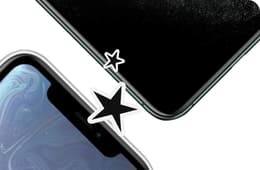
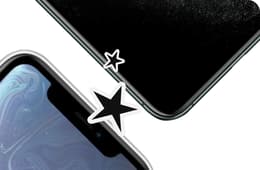
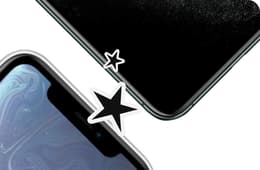
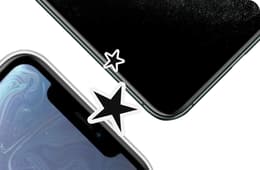
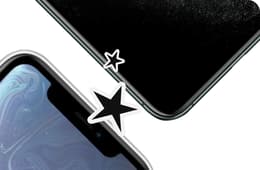
  • Authentication and Design: The iPhone 13 Pro features Face ID for secure facial recognition and a modern, edge-to-edge display design with a notch. The iPhone SE (2022) retains the classic iPhone design with a Home button that integrates Touch ID for fingerprint authentication, and features thicker bezels around its display.
  • Size, Weight, and Materials: The iPhone 13 Pro is a larger and heavier device, measuring approximately 146.7 x 71.5 x 7.65 mm and weighing 204 grams, with a matte glass back and stainless steel frame. The iPhone SE (2022) is more compact and lighter, at about 138.4 x 67.3 x 7.3 mm and 144 grams, featuring a glass back and an aluminum frame.

Weight

6 oz

3 oz

Screen size (inches)

6.1

4.7

Network

5G

5G

SIM card

Physical SIM + eSIM

Physical SIM + eSIM

Carrier compatibility

Unlocked

T-Mobile

Connector

Lightning

Lightning

The iPhone 13 Pro and iPhone SE (2022) cater to different user priorities, reflecting their distinct design philosophies and feature sets. User feedback often praises the iPhone 13 Pro for its exceptional camera system, vibrant ProMotion display, and robust battery life, making it a strong choice for those who prioritize multimedia creation and consumption. Some common criticisms, however, point to its larger size and weight, which might not appeal to users seeking a more compact device.

Conversely, the iPhone SE (2022) is frequently lauded for its compact form factor, the familiarity and convenience of Touch ID, and its powerful internal processor, which ensures smooth performance for everyday tasks. Users appreciate its ability to handle modern applications despite its more traditional design. However, common concerns include its smaller, less advanced LCD display, average battery life compared to larger iPhones, and the absence of advanced camera features like Night mode.

Users prioritizing a premium visual experience, advanced photography and videography capabilities, and extended battery endurance will find the iPhone 13 Pro well-suited to their needs. This device is ideal for creative professionals, avid photographers, or anyone who spends significant time consuming high-quality media. On the other hand, users who value a compact design, the security of Touch ID, and reliable performance for daily communication and general app usage may lean toward the iPhone SE (2022). It serves well for those who prefer a more traditional smartphone experience without compromising on core processing power.

Both models are available as quality-assured refurbished options, providing an eco-friendly alternative for consumers looking to make sustainable choices while still enjoying Apple's technology.

See all articles

Our recent comparisons