
Galaxy A15 5G • Unlocked vs iPhone 16 • Unlocked

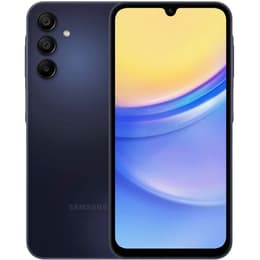
Galaxy A15 5G • Unlocked
Starting at

Refurbished price:$108.00

Versus $207.99 new

See options
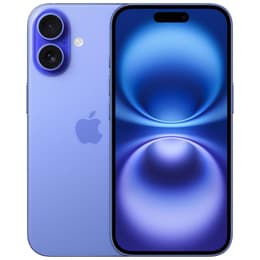
iPhone 16 • Unlocked
Starting at

Refurbished price:$516.00

Versus $729.00 new

See options

Ratings

The Samsung Galaxy A15 5G, released in late 2023 and early 2024, and the Apple iPhone 16, launched in September 2024, represent distinct offerings in the smartphone market. While both devices provide essential communication and entertainment functionalities, they cater to different user ecosystems and priorities. The Galaxy A15 5G operates on Android, emphasizing accessibility and practical features, whereas the iPhone 16 runs on iOS, focusing on integrated experiences and advanced capabilities. This comparison will highlight their core differences to help users make an informed decision, considering quality-assured refurbished options as a sustainable choice.

Scores

Durability

When considering the long-term usability of a smartphone, software support and physical resilience are key factors. The Galaxy A15 5G and iPhone 16 offer differing timelines for updates and varying levels of inherent durability.

  • Software Longevity: The iPhone 16, running on iOS, typically receives major operating system updates for approximately five to seven years from its release, with security patches often extending beyond that period. This suggests potential support until around 2031-2033 for major updates and longer for security. In contrast, the Samsung Galaxy A15 5G, launched with Android 14, is promised four years of Android operating system upgrades and five years of security updates, extending its support until approximately 2028 for OS updates and 2029 for security patches.
  • Physical Durability: The iPhone 16 features an IP68 rating, indicating a high level of resistance to dust and water immersion. The Galaxy A15 5G, while designed for everyday use, does not carry an official IP rating, suggesting less protection against dust and water exposure. Both devices feature glass fronts, with the Galaxy A15 5G utilizing AGC Dragontrail protection, and both have plastic frames and backs.
  • Repairability Considerations: While specific repairability scores can vary, Apple has historically maintained a more controlled repair ecosystem. Samsung's A-series devices often present more straightforward repair processes for common components, though official repair options and part availability can influence practical lifespan.

Release Year

2023

2024

Last OS Compatibility

Yes

Yes

Foldable

No

No

Performance

The performance of a smartphone significantly impacts daily user experience, from app responsiveness to handling demanding tasks. The Galaxy A15 5G and iPhone 16 are built with different hardware philosophies, leading to distinct performance profiles.

  • Processing Power: The iPhone 16 is equipped with Apple's A18 chip, engineered to deliver robust performance for complex applications, advanced gaming, and integrated AI features. This allows for smooth multitasking and efficient handling of intensive computational tasks. The Samsung Galaxy A15 5G is powered by the MediaTek Dimensity 6100+ processor, which provides competent performance for general daily use, including web browsing, social media, and light gaming. However, users may experience occasional lag or slower loading times with more demanding applications or extensive multitasking.
  • Multitasking and Storage: The iPhone 16 comes with 8GB of RAM and offers storage options up to 512GB, providing ample space and efficient memory management for numerous open applications. The Galaxy A15 5G is available with 4GB, 6GB, or 8GB of RAM and 128GB or 256GB of internal storage, with the added flexibility of expandable storage up to 1TB via a microSD card.
  • Battery Endurance: The Galaxy A15 5G features a substantial 5000mAh battery, consistently delivering extended usage, often lasting up to two days on a single charge for many users. The iPhone 16 includes a 3561 mAh battery (standard model), which, combined with iOS optimization, provides reliable all-day power for typical usage. Both devices support fast charging, with the iPhone 16 also offering MagSafe and Qi2 wireless charging.

Memory (GB)

4 GB

8 GB

Screen quality

The display is a primary interface for any smartphone, and both the Galaxy A15 5G and iPhone 16 offer vibrant viewing experiences, though with differences in technology and features.

  • Display Technology and Clarity: Both devices feature OLED display technology, known for deep blacks and high contrast. The Galaxy A15 5G utilizes a 6.5-inch Super AMOLED display with a 1080x2340 (FHD+) resolution, resulting in sharp visuals. The iPhone 16 features a Super Retina XDR OLED display, offering a high pixel density for exceptional clarity and detail.
  • Brightness and Refresh Rate: The Galaxy A15 5G's display offers a 90Hz refresh rate for smoother scrolling and animations, with a peak brightness of 800 nits in High Brightness Mode, providing good visibility in various lighting conditions. The iPhone 16's display typically offers higher peak brightness levels, enhancing outdoor visibility and HDR content viewing. Its refresh rate is standard for non-Pro iPhone models.
  • Screen Features: A notable difference is the iPhone 16's inclusion of the Dynamic Island, an interactive area around the front camera and sensors that dynamically displays alerts and activities. The Galaxy A15 5G features a traditional notch for its front camera. The iPhone 16 is also expected to feature thinner bezels, maximizing screen real estate.

Resolution

1080 x 2340

1179 x 2556

Screen type

Super AMOLED

Super Retina XDR OLED

Audiovisual

Camera capabilities are a significant consideration for many users, and both smartphones offer systems designed to capture moments, albeit with different strengths and features.

  • Rear Camera Systems: The iPhone 16 features a dual-camera system with a 48MP main sensor and a 12MP ultrawide sensor, arranged in a redesigned vertical layout. This configuration supports advanced computational photography and is capable of capturing Spatial Video. The Galaxy A15 5G sports a triple-camera setup, including a 50MP main sensor, a 5MP ultrawide lens, and a 2MP macro lens. The 50MP main camera performs well in good lighting conditions, producing detailed images.
  • Photography Performance: The iPhone 16's larger main sensor and advanced image processing contribute to strong low-light performance and improved dynamic range, with expectations for an enhanced Night Mode. While the Galaxy A15 5G's main camera is competent for its class, its ultrawide and macro lenses offer more limited utility, and it lacks optical image stabilization (OIS) on the main sensor.
  • Video and Front Camera: Both devices are capable of recording high-quality video. The iPhone 16's ability to capture Spatial Video is a unique feature. For selfies and video calls, the iPhone 16 has a 12MP front camera, while the Galaxy A15 5G features a 13MP front camera.

Main camera

50 megapixels

48 megapixels

Front camera

13 megapixels

12 megapixels

Miscellaneous

Beyond the core specifications, several practical elements contribute to the overall user experience and differentiate these two devices.

  • Connectivity and Ports: Both the Galaxy A15 5G and iPhone 16 support 5G connectivity for fast mobile data. The iPhone 16 also includes Wi-Fi 7 and Bluetooth 5.3, offering advanced wireless capabilities. The Galaxy A15 5G supports Wi-Fi 5 (802.11ac) and Bluetooth 5.3. Both devices have adopted USB-C for charging and data transfer. A notable difference is the Galaxy A15 5G's retention of a 3.5mm headphone jack, which is absent on the iPhone 16.
  • Biometric Security and User Interface: The iPhone 16 relies on Face ID for secure facial recognition. The Galaxy A15 5G features a side-mounted fingerprint sensor for biometric authentication. The iPhone 16 introduces a customizable Action Button and a new Capture Button, enhancing quick access to specific functions and camera controls.
  • Design and Handling: The Galaxy A15 5G has dimensions of 160.1 x 76.8 x 8.4 mm and weighs 200g, featuring a plastic build. The standard iPhone 16 measures 147.6 × 71.6 × 7.8 mm and weighs 170g, offering a more compact and lighter profile.

Weight

7 oz

6000 oz

Screen size (inches)

6.5

6.1

Network

5G

5G

SIM card

Physical SIM

eSIM

Carrier compatibility

Unlocked

Unlocked

Connector

USB-C

USB-C (USB 2)

The Samsung Galaxy A15 5G and iPhone 16 cater to distinct user needs and preferences. User feedback for the Galaxy A15 5G often praises its exceptional battery life, vibrant Super AMOLED display, and the inclusion of a headphone jack and expandable storage, making it a practical choice for budget-conscious users who prioritize these features. Criticisms sometimes point to its performance, which, while adequate for everyday tasks, can show limitations with more demanding applications.

For the iPhone 16, users frequently highlight its powerful processing capabilities, the seamless integration of the iOS ecosystem, advanced camera features including Spatial Video, and the introduction of new physical controls like the Action Button and Capture Button. The longer software support timeline is also a significant advantage for users seeking extended device longevity. Potential concerns might revolve around the absence of a headphone jack and expandable storage, which are standard on the A15 5G.

Users prioritizing a long-lasting battery, expandable storage, and a traditional headphone jack for media consumption may find the Galaxy A15 5G well-suited to their needs. Conversely, individuals seeking cutting-edge performance, a highly integrated software experience, advanced camera features, and extended software support will likely lean towards the iPhone 16. Both devices offer compelling features within their respective categories, and considering quality-assured refurbished options can provide an eco-friendly alternative for either model.

See all articles

Our recent comparisons