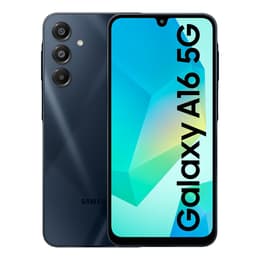


Galaxy A16 5G • Unlocked vs Google Pixel 9 • Unlocked

Galaxy A16 5G • Unlocked
Starting at

Refurbished price:$141.00

Versus $195.00 new

See options
Google Pixel 9 • Unlocked
Starting at

Refurbished price:$379.00

Versus $799.00 new

See options

Ratings

The Samsung Galaxy A16 5G (released in late 2024 and early 2025) and the Google Pixel 9 (released in August 2024) represent distinct offerings in the smartphone market. While the Galaxy A16 5G focuses on delivering essential features and extended software support, the Pixel 9 emphasizes advanced camera capabilities, a premium user experience, and deep integration with artificial intelligence. Both devices run on the Android operating system, but they cater to different user priorities through their hardware and software philosophies.

Scores

Durability

When considering the long-term usability of a smartphone, software support and physical resilience are key factors. Both the Galaxy A16 5G and the Pixel 9 offer substantial longevity through their update policies and build characteristics.

  • Software Updates: The Samsung Galaxy A16 5G is notable for its commitment to extended software support, promising six years of Android operating system updates and security patches, with support expected to continue until October 2030. The Google Pixel 9 surpasses this with an impressive seven years of OS and security updates, ensuring support until 2031.
  • Physical Durability: The Galaxy A16 5G features a plastic frame and a 'Glastic' back, which is a plastic designed to mimic glass, and offers an IP54 rating for dust and splash resistance. The Pixel 9, on the other hand, utilizes a frame made from 100% recycled aluminum and boasts a more robust IP68 rating, indicating higher resistance to both dust and water immersion.
  • Repairability: The repairability of the Galaxy A16 5G is considered average, with some sources giving it a score of 8.0 out of 10, noting that the battery is accessible with pull tabs, though adhesive is used. The Pixel 9 has a provisional repairability score of 5 out of 10 from iFixit, primarily due to strong battery adhesive and the difficulty of screen removal, though other sources give it an 8.0 out of 10.

Release Year

2024

2024

OS

Android

Android

Foldable

No

No

Performance

The performance of these two smartphones varies significantly, reflecting their different market segments and intended user experiences. The core components dictate how smoothly applications run, how quickly tasks are completed, and the overall responsiveness of the device.

  • Processing Power: The Samsung Galaxy A16 5G is powered by either an Exynos 1330 or MediaTek Dimensity 6300 processor, depending on the region. This hardware is designed to handle everyday tasks and light gaming smoothly. The Google Pixel 9 features Google's Tensor G4 processor, which is engineered for demanding applications, advanced AI features, and a highly responsive user interface, making it suitable for more intensive multitasking and gaming.
  • Memory and Storage: The Galaxy A16 5G offers various configurations, including 4GB, 6GB, or 8GB of RAM, paired with 128GB or 256GB of internal storage, which is expandable via a microSD card up to 1.5TB. The Pixel 9 comes with 12GB of RAM and storage options of 128GB or 256GB, without expandable storage.
  • Battery Behavior: The Galaxy A16 5G is equipped with a 5000mAh battery, providing over a full day of mixed use for many users. The Pixel 9 has a 4700mAh battery, which Google claims can last 24 hours or more with typical usage, and up to 100 hours with Extreme Battery Saver mode.

Memory (GB)

4 GB

12 GB

Screen quality

The display is a primary interface for any smartphone, and both devices offer different visual experiences tailored to their respective categories.

  • Display Technology and Resolution: The Samsung Galaxy A16 5G features a 6.7-inch Super AMOLED display with a resolution of 2340 x 1080 pixels (FHD+). The Google Pixel 9 comes with a slightly smaller 6.3-inch OLED 'Actua' display, also with a 2424 x 1080 pixel resolution (FHD+), resulting in a higher pixel density due to its smaller size.
  • Brightness and Refresh Rate: The Galaxy A16 5G's display offers a 90Hz refresh rate and a maximum brightness of 800 nits. The Pixel 9 features an adaptive refresh rate that can dynamically switch between 60Hz and 120Hz, and boasts significantly higher brightness levels, reaching up to 1800 nits for HDR content and a peak brightness of 2700 nits.
  • Protection: The Pixel 9's display is protected by Corning Gorilla Glass Victus 2. Information on specific screen protection for the Galaxy A16 5G is less consistently detailed across sources, though some mention Gorilla Glass.

Resolution

1080x2340

1080 x 2424

Screen type

Super AMOLED

OLED

Audiovisual

Camera capabilities are a significant consideration for many users, and these two phones approach photography with different strengths.

  • Rear Camera System: The Samsung Galaxy A16 5G includes a triple rear camera setup: a 50MP main sensor, a 5MP ultrawide lens, and a 2MP macro camera. The main camera typically produces 12MP binned images. The Google Pixel 9 features a dual-camera system on the rear, consisting of a 50MP main camera with optical image stabilization (OIS) and a 48MP ultrawide camera that also supports Macro Focus. The main sensor also outputs 12.5MP binned images.
  • Photography Performance: The Galaxy A16 5G's camera performs well for its category, with decent detail and dynamic range in good lighting, though some reviews note occasional issues with white balance and colors. The Pixel 9 is praised for its excellent image processing, particularly in low-light conditions, producing consistent and reliable results with accurate colors and balanced shadows.
  • Video Recording and Front Camera: The Galaxy A16 5G supports video recording up to 1080p at 30 frames per second (fps), without optical image stabilization, which can lead to jittery handheld footage. It has a 13MP front-facing camera. The Pixel 9 offers 4K video recording at up to 60fps for both its rear and front cameras, with OIS on the main rear camera for smoother video. Its front camera is 10.5MP.

Miscellaneous

Beyond the core specifications, several practical elements contribute to the overall user experience and daily functionality of a smartphone.

  • Connectivity and Ports: Both devices support 5G connectivity. The Samsung Galaxy A16 5G includes Wi-Fi 5 (802.11ac) and Bluetooth 5.3, featuring a USB Type-C port for charging and data transfer, but it does not include a 3.5mm headphone jack. The Google Pixel 9 also uses a USB-C 3.2 port and supports wireless charging and reverse wireless charging, features absent on the A16 5G.
  • Biometrics and Sensors: The Galaxy A16 5G incorporates a side-mounted fingerprint scanner for secure unlocking. The Pixel 9 utilizes an ultrasonic fingerprint reader for biometric authentication.
  • Design and Handling: The Galaxy A16 5G measures 164.4 x 77.9 x 7.9mm and weighs 200g, featuring a larger screen in a slightly taller and wider form factor. The Pixel 9 is more compact and lighter at 152.8 x 72.0 x 8.5mm and 198g, which can contribute to easier one-handed use.

Weight

7 oz

7 oz

Screen size (inches)

6.7

6.3

Network

5G

5G

SIM card

Physical SIM

Physical SIM + eSIM

Carrier compatibility

Unlocked

Unlocked

Connector

USB-C

USB-C

The Samsung Galaxy A16 5G and the Google Pixel 9 cater to different user needs and expectations, reflecting their distinct positions in the smartphone market. User feedback for the Galaxy A16 5G often praises its solid battery life, vibrant Super AMOLED display, and Samsung's commitment to long-term software updates, making it a reliable option for everyday use. Some common criticisms include its plastic build, the absence of stereo speakers, and performance that, while adequate for basic tasks, may show stutters with more demanding applications.

The Google Pixel 9, conversely, receives high marks for its exceptional camera performance, particularly in low-light conditions, and its integration of advanced AI features. Users also appreciate its premium design, bright OLED display, and Google's extended software support. Frequent points of discussion for the Pixel 9 include its battery life, which, while improved over previous Pixel generations, may not be class-leading for heavy users, and its repairability, which some experts find challenging due to internal design choices.

Users prioritizing a device with a large, vibrant display, expandable storage, and a strong commitment to software longevity for general daily tasks may find the Samsung Galaxy A16 5G well-suited to their needs. It offers a practical and dependable experience. For those who value cutting-edge camera technology, robust performance for advanced applications, a more compact and premium build, and the latest AI innovations, the Google Pixel 9 presents a compelling choice. Both devices offer an eco-friendly alternative through quality-assured refurbished options, allowing consumers to make informed and sustainable choices that align with their preferences.

See all articles

Our recent comparisons