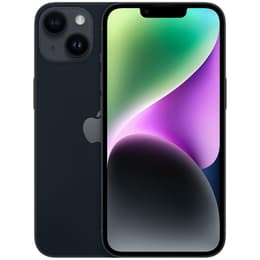
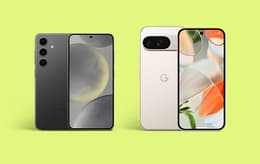
Google Pixel 9 • Unlocked vs iPhone 14 • Unlocked

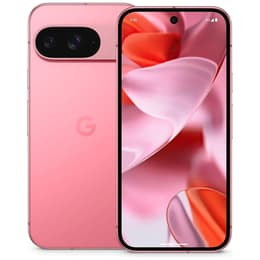
Google Pixel 9 • Unlocked
Starting at

Refurbished price:$379.00

Versus $799.00 new

See options
iPhone 14 • Unlocked
Starting at

Refurbished price:$256.00

Versus $629.00 new

See options

Ratings

The Google Pixel 9, released in late 2024, and the Apple iPhone 14, launched in September 2022, represent distinct approaches to the modern smartphone experience. While both offer capable performance and advanced camera systems, the Pixel 9 emphasizes artificial intelligence integration and a longer software support commitment, whereas the iPhone 14 focuses on a refined user experience within the iOS ecosystem and robust video capabilities. These differences cater to varying user preferences in terms of operating system and feature priorities.

Scores

Durability

When considering the long-term usability of these devices, their release timelines and software support policies are key factors.

  • Software Longevity: The Google Pixel 9 benefits from Google's commitment to providing seven years of operating system and security updates from its August 2024 release, extending its software lifespan significantly. The iPhone 14, released in September 2022, typically receives iOS updates for an estimated five to seven years, suggesting support might extend until around 2028. This means the Pixel 9 is likely to receive new features and security patches for a longer duration.
  • Physical Durability: Both devices feature robust builds designed for everyday resilience. The iPhone 14 incorporates a Ceramic Shield front cover and an aluminum frame, alongside an IP68 rating for dust and water resistance, allowing submersion up to 6 meters for 30 minutes. The Pixel 9 also carries an IP68 rating and utilizes Gorilla Glass Victus 2 for screen protection, offering comparable resistance to environmental elements.
  • Repairability: While specific repairability scores can vary, both manufacturers offer repair services. The availability of parts and independent repair options can influence the practical lifespan of either device, with refurbished options providing a quality-assured alternative for extending product life.

Release Year

2024

2022

Last OS Compatibility

Yes

Yes

OS

Android

iOS

Foldable

No

No

Performance

The performance of a smartphone is largely determined by its internal components and how efficiently they handle daily tasks and demanding applications.

  • Processing Power: The Google Pixel 9 is equipped with Google's Tensor G4 processor, designed to optimize on-device artificial intelligence tasks and deliver smooth performance across various applications. The iPhone 14 features the A15 Bionic chip, known for its strong general performance and graphical capabilities, ensuring a fluid experience for most users. While both processors are highly capable, the Tensor G4 is a newer generation, potentially offering more advanced AI processing.
  • Multitasking and Responsiveness: The Pixel 9 typically comes with 12GB of RAM, which supports efficient multitasking and keeps numerous applications running in the background without significant slowdowns. The iPhone 14 includes 6GB of RAM, which, combined with iOS's memory management, provides a responsive user experience for switching between apps and handling everyday tasks.
  • Battery Behavior: The Pixel 9 houses a 4700mAh battery, with real-world usage often yielding a full day of mixed use and around 10-12 hours under heavy 5G usage. The iPhone 14, with its 3279mAh battery, is generally reported to last a full day for most users, achieving approximately 9 hours and 28 minutes in continuous web surfing tests. The Pixel 9's larger battery capacity and newer, more efficient processor may offer a slight edge in overall endurance for power users.

Memory (GB)

12 GB

6 GB

Screen quality

The display is a primary interface for smartphone interaction, and both devices offer high-quality viewing experiences with distinct characteristics.

  • Display Technology and Clarity: The Google Pixel 9 features a 6.3-inch OLED display with a resolution of 1080x2424 pixels, resulting in a pixel density of 422 ppi, providing clear and vibrant visuals. The iPhone 14 sports a 6.1-inch Super Retina XDR OLED display with a resolution of 2532x1170 pixels and a pixel density of 460 ppi, known for its deep blacks and accurate color reproduction.
  • Brightness and Refresh Rate: The Pixel 9's display offers an adaptive refresh rate that can range from 60Hz to 120Hz, contributing to smoother scrolling and more fluid animations, and can reach up to 1800 nits of local brightness and 2700 nits peak brightness for excellent outdoor visibility. The iPhone 14 has a standard 60Hz refresh rate and achieves a typical brightness of 800 nits, with a peak HDR brightness of 1200 nits, which is sufficient for most viewing conditions.
  • Viewing Experience: The Pixel 9's slightly larger screen and higher refresh rate may offer a more immersive and responsive experience for media consumption and gaming. The iPhone 14's display, while smaller and with a lower refresh rate, delivers consistent color accuracy and contrast, which is a hallmark of Apple's display technology.

Resolution

1080 x 2424

1170 x 2532

Screen type

OLED

Super Retina XDR OLED

Audiovisual

Both smartphones offer advanced camera systems, but they approach photography and videography with different strengths and feature sets.

  • Rear Camera Systems: The Google Pixel 9 features a dual-camera setup with a 50MP main sensor (f/1.68, with optical image stabilization) and a 48MP ultrawide lens (f/1.7, 123° field of view, with autofocus and macro capabilities). The iPhone 14 also has a dual-camera system, comprising a 12MP main sensor (f/1.5, with sensor-shift optical image stabilization) and a 12MP ultrawide lens (f/2.4, 120° field of view). The Pixel 9's higher resolution ultrawide offers more detail and versatility.
  • Computational Photography and AI: The Pixel 9 heavily leverages Google's computational photography and Gemini AI features, including Face Unblur, Photo Unblur, Astrophotography, and AI-powered editing tools like Magic Editor, Add Me, and Reimagine, enhancing image quality and offering creative post-capture options. The iPhone 14 utilizes Apple's Photonic Engine, Deep Fusion, and Smart HDR 4 for impressive image processing, particularly in challenging lighting conditions.
  • Video Capabilities: Both devices are capable of recording 4K video at 60 frames per second. The iPhone 14 stands out with its Cinematic Mode, which provides a shallow depth of field effect for videos, and Action Mode, offering enhanced video stabilization for dynamic shots. The Pixel 9 also offers Super Res Zoom for video, allowing for digital zoom while maintaining quality.

Main camera

50 megapixels

12 megapixels

Front camera

10.5 megapixels

12 megapixels

Miscellaneous

Beyond core performance and camera, several practical elements contribute to the overall user experience of these smartphones.

  • Connectivity and Ports: The Google Pixel 9 supports 5G connectivity and features a USB-C port for charging and data transfer, aligning with modern universal standards. The iPhone 14 also supports 5G but utilizes Apple's proprietary Lightning port, which may require specific accessories. Both devices support Wi-Fi 6 and Bluetooth for wireless connectivity.
  • Biometric Security: The Pixel 9 incorporates an ultrasonic fingerprint sensor for secure unlocking and authentication, offering a convenient and reliable method. The iPhone 14 relies on Face ID, Apple's facial recognition system, which provides secure and seamless unlocking.
  • Design and Handling: The Pixel 9 measures 152.8 x 72 x 8.5 mm and weighs 198 grams, offering a comfortable feel in hand. The iPhone 14 is slightly more compact and lighter at 146.7 x 71.5 x 7.8 mm and 172 grams, which can be a factor for users preferring a smaller device. Both phones feature premium build materials, with the Pixel 9 using Gorilla Glass Victus 2 and the iPhone 14 featuring Ceramic Shield on the front.

Weight

7 oz

6 oz

Screen size (inches)

6.3

6.1

Network

5G

5G

SIM card

Physical SIM + eSIM

eSIM

Carrier compatibility

Unlocked

Unlocked

Connector

USB-C

Lightning

User sentiment for the Google Pixel 9 often highlights its strong integration of artificial intelligence, particularly in photography and daily tasks, making it appealing to those who value smart features and a clean Android experience. Users frequently praise its extended software support and the versatility of its camera system, especially the AI-enhanced editing capabilities. Some common feedback points to its battery life being a significant improvement over previous Pixel generations, providing reliable all-day usage for many.

The iPhone 14 is consistently lauded for its consistent performance, the intuitive nature of iOS, and its robust video recording features, including Cinematic Mode and Action Mode. Users appreciate the device's build quality and the reliability of its ecosystem. While its battery life is generally considered sufficient for a full day, some users have noted that it might require more frequent charging under heavy use compared to some competitors, and there have been discussions regarding battery degradation over time.

Users prioritizing cutting-edge artificial intelligence features, a longer software support window, and a higher refresh rate display may find the Google Pixel 9 well-suited to their needs. Its larger battery capacity and USB-C port also offer practical advantages for some. Conversely, individuals who prefer the established iOS ecosystem, strong video capabilities, and a slightly more compact design might lean towards the iPhone 14. Both devices offer compelling experiences, and choosing between them often comes down to personal preference for operating system and specific feature emphasis. Considering a quality-assured refurbished option for either model can be a sustainable choice for consumers.
See all articles

Our recent comparisons