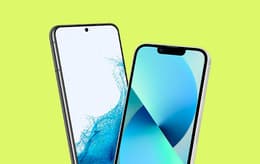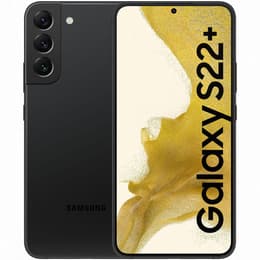
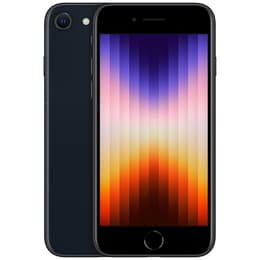

Galaxy S22+ 5G • Unlocked vs iPhone SE (2022) • Locked T-Mobile

Galaxy S22+ 5G • Unlocked
Starting at

Refurbished price:$159.99

Versus $999.00 new

See options
iPhone SE (2022) • Locked T-Mobile
Starting at

Refurbished price:$124.00

Versus $429.00 new

See options

Ratings

The Samsung Galaxy S22 Plus 5G, an Android smartphone, was released in February 2022, while Apple's iPhone SE (3rd generation), running iOS, followed in March 2022. These devices cater to different user preferences, primarily differing in their display technology, camera versatility, and overall form factor. The Galaxy S22 Plus offers a larger, more advanced screen and a multi-lens camera system, contrasting with the iPhone SE's compact design and single rear camera.

Scores

Durability

When considering the long-term usability of these smartphones, both offer substantial software support, though with different timelines and approaches.

  • Release Timeline and Age: The Galaxy S22 Plus 5G was released in February 2022, and the iPhone SE (2022) in March 2022, making them close in age.
  • OS Support Duration: The Galaxy S22 Plus is expected to receive four years of major Android OS updates and five years of security updates, extending through 2027. The iPhone SE (2022), equipped with the same processor as the iPhone 13 series, is anticipated to receive iOS updates for approximately 5 to 7 years, potentially until 2028-2030.
  • Repairability: The iPhone SE (2022) has been noted for its average repairability, with scores ranging from 5.5 to 7 out of 10, indicating that common repairs like screen and battery replacements are feasible, though some components may require specialized tools or can trigger warnings if not genuine. Information on the specific repairability score for the Galaxy S22 Plus is less readily available, but modern flagship Android devices generally present similar challenges due to integrated designs.

Release Year

2022

2022

Last OS Compatibility

Yes

Yes

OS

Android

iOS

Foldable

No

No

Performance

Both devices deliver robust performance for everyday tasks, but their underlying hardware and resulting user experience differ in certain aspects.

  • Processor Capabilities: The Galaxy S22 Plus is powered by a current-generation processor, enabling smooth handling of demanding applications and efficient multitasking. The iPhone SE (2022) features a highly capable processor, ensuring excellent responsiveness and longevity for running the latest apps and games.
  • System Responsiveness: Users of both devices can expect fluid navigation and quick app loading times. The iPhone SE's processor is particularly noted for providing significant performance headroom, allowing it to remain fast for an extended period.
  • Storage and RAM: The Galaxy S22 Plus typically comes with 8GB of RAM and storage options of 128GB or 256GB. The iPhone SE (2022) offers 4GB of RAM and storage configurations of 64GB, 128GB, or 256GB. The higher RAM in the Galaxy S22 Plus can be beneficial for intensive multitasking, while the iPhone SE's optimized iOS ecosystem often achieves comparable fluidity with less RAM.

Memory (GB)

8 GB

4 GB

Screen quality

The visual experience on these two smartphones presents a clear distinction, primarily due to their display technologies and physical dimensions.

  • Display Technology and Size: The Galaxy S22 Plus features a larger 6.6-inch Dynamic AMOLED 2X display, known for its deep blacks, vibrant colors, and high contrast. In contrast, the iPhone SE (2022) utilizes a more compact 4.7-inch Retina HD IPS LCD display.
  • Resolution and Clarity: The Galaxy S22 Plus offers a resolution of 1080 x 2340 pixels, resulting in a pixel density of approximately 393 ppi, providing sharp images and text. The iPhone SE (2022) has a resolution of 1334 x 750 pixels, with a pixel density of 326 ppi, which is clear for its size but less dense than the S22 Plus.
  • Brightness and Refresh Rate: The Galaxy S22 Plus boasts a peak brightness of 1750 nits and a 120Hz adaptive refresh rate, contributing to smoother scrolling and better visibility in bright conditions. The iPhone SE (2022) has a typical maximum brightness of 625 nits and a standard 60Hz refresh rate.

Resolution

1080 x 2340

750 x 1334

Screen type

Dynamic AMOLED 2X

Retina IPS LCD

Audiovisual

The camera systems of the Galaxy S22 Plus and iPhone SE (2022) offer different capabilities, catering to varying photographic needs and preferences.

  • Rear Camera System: The Galaxy S22 Plus features a versatile triple-camera setup, including a 50 MP wide-angle lens with optical image stabilization (OIS), a 10 MP telephoto lens with 3x optical zoom and OIS, and a 12 MP ultrawide lens. The iPhone SE (2022) comes with a single 12 MP wide-angle rear camera with OIS.
  • Photography Performance: The Galaxy S22 Plus provides flexibility for various shooting scenarios, from expansive landscapes to zoomed-in subjects, and generally produces good daylight shots. The iPhone SE (2022) delivers very good images in decent light with accurate colors and detail, benefiting from its advanced image processing, but it lacks a dedicated Night mode for low-light conditions.
  • Video Recording and Audio: Both phones are capable of recording high-quality video. The Galaxy S22 Plus supports up to 8K video recording at 24fps and 4K at 30/60fps. The iPhone SE (2022) can record 4K video at up to 60fps and offers slow-motion video at 1080p 240fps. Both devices feature stereo speakers for media consumption.

Main camera

50 megapixels

12 megapixels

Front camera

10 megapixels

7 megapixels

Miscellaneous

Beyond core specifications, several practical elements contribute to the overall user experience and differentiate these two devices.

  • Connectivity Options: Both smartphones support 5G connectivity, enabling faster mobile data speeds. The Galaxy S22 Plus also supports Wi-Fi 6E and Bluetooth 5.2, while the iPhone SE (2022) features Wi-Fi 6 and Bluetooth 5.0.
  • Port Types: The Galaxy S22 Plus uses a USB-C port for charging and data transfer. The iPhone SE (2022) retains Apple's proprietary Lightning port. Neither device includes a 3.5mm headphone jack.
  • Biometric Security and Design: The Galaxy S22 Plus incorporates an in-display fingerprint sensor for secure unlocking. The iPhone SE (2022) features Touch ID, a fingerprint sensor integrated into its physical home button. The Galaxy S22 Plus has a modern, nearly bezel-less design with a glass front and back and an aluminum frame, offering IP68 dust and water resistance. The iPhone SE (2022) maintains a more traditional design with larger bezels, also featuring a glass and aluminum build with IP67 water and dust resistance.

Weight

7 oz

3 oz

Screen size (inches)

6.6

4.7

Network

5G

5G

SIM card

Physical SIM + eSIM

Physical SIM + eSIM

Carrier compatibility

Unlocked

T-Mobile

Connector

USB-C

Lightning

User sentiment often highlights the Galaxy S22 Plus 5G for its vibrant display, versatile camera system, and modern design. Common praise points include its bright screen, solid performance, and good daylight photography. Some users, however, have noted that while its battery life is decent, it might not be exceptional compared to some competitors.

The iPhone SE (2022) is frequently lauded for its powerful processor, ensuring smooth performance and long-term software support, making it a reliable choice for those who prioritize speed and longevity. Its compact form factor and the continued presence of Touch ID are also often appreciated. Criticisms typically revolve around its dated design, smaller LCD display, and the absence of advanced camera features like Night mode.

Users prioritizing a large, high-refresh-rate OLED display, a multi-lens camera system for diverse photography, and a contemporary design may find the Galaxy S22 Plus 5G better suited to their needs. Conversely, individuals who prefer a compact device, value a physical home button with Touch ID, and prioritize raw processing power and extended software support over cutting-edge display or camera technology, may lean towards the iPhone SE (2022). Both devices offer a quality-assured refurbished option, providing an eco-friendly alternative for consumers.

See all articles

Our recent comparisons